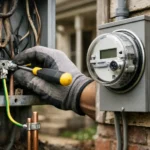
Disposals, washing machines, refrigerators, car door openers, and any appliance with a motor can cause arc fault nuisance tripping. A microwave that dims the kitchen lights, a refrigerator that shares power with countertop plugs, or a window AC that keeps tripping a breaker usually means the same thing – it is time to add dedicated circuit for appliance use instead of asking one old branch circuit to do too much.
In older homes, especially homes with partial remodels, this comes up all the time. Someone updates the kitchen, adds a disposal, swaps in a bigger microwave, or installs a new laundry appliance, but the wiring behind the walls is still carrying loads from decades ago. The appliance may run for a while, but nuisance tripping, overheated wiring, and failed inspections are common results.
What a dedicated circuit actually means
A dedicated circuit is a branch circuit intended to serve one appliance, or one specific piece of equipment, with the correct wire size, breaker size, and outlet or disconnect for that load. It is not just “an extra breaker.” The circuit has to be matched to the appliance nameplate requirements and installed with code compliance in mind.
That matters because appliances do not all draw power the same way. A refrigerator cycles on and off. A microwave can create a sharp demand. An electric dryer or wall oven may run for long periods at a high load. A dishwasher, disposal, and instant hot water unit can each seem modest by themselves, but together on a shared circuit they can overload wiring fast.
When you should add dedicated circuit for appliance loads
The simple answer is when the appliance manufacturer requires it, when electrical code requires it, or when the existing circuit is clearly overloaded or misused.
The manufacturer requirement comes first. If the installation instructions call for a dedicated 20-amp circuit, that is not optional. The breaker, conductor size, and receptacle or hardwire connection have to match. Ignoring that can void warranties and create a real fire hazard.
Code also drives many of these decisions. Laundry equipment, disposals, dishwashers, microwaves, electric ranges, wall ovens, HVAC equipment, sump pumps, and EV charging equipment often require their own circuits, depending on the equipment and local code adoption. Kitchen and laundry areas are especially strict because those rooms have heavy-use loads and higher safety requirements.
Then there is the practical side. If breakers trip whenever two things run at once, if lights dip when an appliance starts, or if an inspection report flags double-tapped breakers, undersized wiring, or improper kitchen wiring, a dedicated circuit is usually the proper correction rather than a temporary workaround.
Common appliances that often need their own circuit
In the field, the usual problem appliances are refrigerators, freezers, microwaves, dishwashers, garbage disposals, washers, dryers, electric ovens, cooktops, range hoods with added loads, built-in coffee systems, tankless water heaters, and window or mini-split AC units. Garage refrigerators and workshop tools also cause trouble because people often plug them into general-purpose outlet circuits that were never designed for steady motor loads.
Some appliances may be allowed to share under certain conditions, and some local interpretations vary, so this is where experience matters. A veteran electrician does not just ask, “Can I make this work?” He asks, “What is the right long-term circuit for this equipment, in this panel, in this house?”
Older homes are where this gets complicated
In many East Bay homes, the issue is not just the appliance. It is the age and condition of the electrical system. Homes with old fuse panels, Federal Pacific, Zinsco, or early undersized breaker panels often do not have spare capacity for a new dedicated circuit. Even if there is physical room, the bus condition, service size, grounding, and panel brand may make the panel unsafe or unsuitable for expansion.
This is where homeowners get bad advice. Someone says, “We can just squeeze in another breaker,” but that ignores the real condition of the panel. If the panel is obsolete, damaged, overloaded, or known to be hazardous, adding a new appliance circuit may trigger a bigger conversation about panel replacement or a service upgrade.
That does not mean every dedicated circuit job turns into a full panel change. Sometimes there is enough capacity and clean space to do the work properly. But when there is not, forcing the issue is the wrong move.
Panel capacity matters more than most people think
A dedicated circuit has to start somewhere, and that somewhere is your electrical panel. If the panel is full, if tandem breakers have been used improperly, if breakers are running hot, or if the service is already maxed out, the new circuit may not be safe to add without correction.
A proper evaluation looks at more than empty slots. It looks at service size, existing demand, conductor condition, breaker compatibility, grounding and bonding, and whether the panel itself is still reliable. This is especially true with 100-amp services in houses that now have more appliances than the original system was ever meant to handle.
If you are adding a large kitchen load, a laundry upgrade, air conditioning, or an EV charger in the near future, it is smarter to plan those loads together. Sometimes one clean panel upgrade saves money compared with adding circuits one at a time into a system that is already at its limit.
The cost question depends on access and panel condition
Homeowners always want a price first, which is fair, but dedicated circuit pricing depends heavily on the path from panel to appliance. If the panel is nearby, access is open, and the wall finish is straightforward, the job is simpler. If the run crosses finished ceilings, plaster walls, tile backsplashes, or detached structures, labor goes up.
The panel condition can change the price more than the wire run. A healthy panel with capacity is one kind of job. A crowded or unsafe panel is another. If GFCI or AFCI protection is required, that also affects materials and breaker selection. If permits and inspections are needed, that should be part of the real estimate, not an afterthought.
The cheapest bid is often the one that leaves out the hard part. That is how homeowners end up with extension-cord solutions, shared neutral problems, undersized wire, or breakers that do not match the panel listing.
Warning signs you should not ignore
If an appliance trips a breaker repeatedly, there is a reason. It could be a failing appliance, but very often it is a load issue, a bad connection, or a circuit that was never intended to serve that equipment.
Warm outlets, scorch marks, buzzing breakers, flickering lights when motors start, and receptacles that stop working intermittently all deserve attention. So do home inspection comments about missing GFCI protection, improper kitchen small-appliance circuits, or old two-wire systems feeding modern equipment.
A lot of electrical problems are quiet until they are expensive. Burned neutral connections and overloaded circuits usually give warning before they fail completely. The trouble is that people get used to the symptoms and stop treating them as warnings.
Why DIY is a bad bet on this kind of work
Adding a dedicated appliance circuit sounds simple until it is not. Correct breaker sizing, wire sizing, conduit or cable protection, box fill, grounding, AFCI or GFCI requirements, disconnect rules, and panel compatibility all matter. So does the actual route of the wiring.
Older homes add another layer. Hidden junctions, abandoned wiring, mixed wiring methods, and crowded service equipment are common. One wrong assumption at the panel can create a dangerous condition. That is why this work should be done by a licensed electrician who can evaluate the whole system, not just pull one cable.
For homeowners, landlords, and buyers, the goal is not just to make the appliance run today. It is to make sure the circuit is legal, safe, and built for long-term use.
What a proper dedicated circuit installation should include
A proper job starts with the appliance specifications and a look at the existing panel. From there, the electrician determines the correct circuit ampacity, conductor type, breaker type, and required protection. The wire run should be planned to minimize unnecessary wall damage while still meeting code.
The finished job should leave you with a clearly identified breaker, proper protection at the panel, the correct receptacle or hardwired termination, and a circuit that does not depend on luck. If the panel is unsafe or too small, that should be explained directly. In some cases, the honest answer is that the appliance circuit should wait until the panel is corrected.
That kind of straight answer matters more than a fast yes. Williams Electric has handled this type of work for decades, including difficult older-home service conditions where adding one circuit the wrong way creates bigger trouble later.
If you are planning a new appliance, remodeling a kitchen or laundry area, or dealing with breakers that trip every time equipment starts, treat it as an electrical system question, not just an appliance question. The right circuit is cheap compared with the cost of heat damage, repeated outages, or a panel problem that should have been addressed sooner.