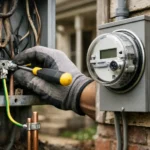
Older homes in the East Bay often have this exact problem: no water main bond, no ground rod, no acorn clamp, no hot/cold/gas bond, no intersystem bonding bridge, and no ground wires to devices. If you are asking, “How do add a grounding system to an older home without one, no ground rod, no acorn clamp, no hot/cold/gas bond, no intersystem bonding bridge, no ground wires to devices?” the short answer is that this is usually a full grounding and bonding correction job, not a one-part fix.
That matters because people mix up grounding, bonding, and receptacle grounding all the time. They are related, but they are not the same thing. You can install a grounding electrode system at the service and still have old two-wire branch circuits with no equipment grounding conductor at the outlets. You can also have a metal water pipe in the house and still have no legal or effective grounding path if the piping has been altered with plastic sections, flex connectors, or partial repipes.
What is actually missing in an ungrounded older home?
In most older homes, the missing pieces fall into two categories. First is the grounding electrode system at the service equipment. That can include one or more ground rods, the grounding electrode conductor, proper listed clamps, bonding to qualifying metal water piping, and the required connections inside or at the main service equipment. Second is bonding and equipment grounding throughout the building, including bonding metal piping systems and providing a safe fault path for branch circuits and devices.
A lot of older Oakland, Berkeley, Piedmont, and Lafayette homes were wired in a different era. Some still have two-prong receptacles, cloth wiring, old fuse equipment, or panels that have been altered over decades. In those houses, the lack of grounding is often only one part of a larger correction. Once a licensed electrician opens the panel, other defects show up fast – double taps, open splices, bootleg grounds, improper neutrals, deteriorated service conductors, or a panel that should have been replaced years ago.
How to add a grounding system to an older home without one
The proper starting point is the service equipment, not the receptacles. The grounding electrode system is built from the main panel or service disconnect outward. That usually means verifying whether the home has any existing grounding electrodes, whether the metal underground water pipe qualifies as an electrode, whether ground rods are required, and whether the neutral-to-ground bond is located in the correct service equipment.
If there is no ground rod, one or more rods are typically installed at the service location, driven to proper depth, and connected with the correct grounding electrode conductor. The connection at the rod must use a listed acorn clamp rated for direct burial. If there is no acorn clamp now, that is not a detail to ignore. It is one of the basic pieces that makes the rod connection legal and durable.
If the home has a metal water service pipe that qualifies, that pipe may also need to be bonded within the required distance from where it enters the building. The hot and cold water piping often must be bonded together if both are metal and can become energized. Gas piping bonding is also a separate issue and has to be handled correctly, based on the actual piping system and equipment present. This is where do-it-yourself work gets people in trouble, because bonding gas piping is not the same as using it as a grounding electrode.
An intersystem bonding bridge is another item many older homes do not have. That bridge provides a proper termination point for communications systems like cable and telecom. It is not cosmetic. It is part of bringing the service up to current safety standards when corrections are being made.
Grounding system vs. ground wires to devices
This is the part homeowners and even some handymen get wrong. Adding rods, clamps, and service bonding does not magically put a ground wire at every receptacle. If the branch circuits are old two-wire cable with no equipment grounding conductor, the outlets still do not have a grounding path just because the panel now does.
There are a few ways to deal with that, and the right answer depends on the house. The best fix is often to rewire the affected circuits with new grounded cable. In some cases, a separate equipment grounding conductor may be run where the code allows and where it is practical. In other cases, especially in finished plaster homes where fishing new cable is difficult, GFCI protection and proper labeling may be the legal and practical alternative for replacing ungrounded receptacles.
That is a major distinction. GFCI protection can reduce shock hazard, but it does not create a true equipment ground for surge protection, certain electronics, or metal enclosures that rely on that fault path. So when someone says they want the house grounded, the first question is whether they mean grounding the service, grounding the outlets, or both.
What a licensed electrician should inspect first
Before any correction starts, the electrician should determine what type of service the house has, whether the existing panel is serviceable, and where the bonding point belongs. If the panel is obsolete, damaged, undersized, or unsafe, grounding work can turn into a panel replacement or service upgrade conversation very quickly.
The inspection should also identify whether there is a metal underground water service, whether it is continuous, whether there are CSST or black iron gas lines, whether the branch circuits are knob-and-tube, BX, early Romex, or conduit, and whether there are any existing illegal jumper wires pretending to be grounding conductors. Some old homes have three-prong outlets installed on ungrounded circuits with no GFCI protection and no labeling. That is a common home inspection write-up because it gives a false sense of safety.
This is also where experience matters. A veteran electrician who has worked on thousands of older homes can usually tell within minutes whether the job is a straightforward grounding correction or a larger safety upgrade. That is the kind of field judgment you want, especially if the home has Federal Pacific, Zinsco, fuse equipment, or patchwork additions.
Common mistakes when people try to fix this themselves
The biggest mistake is thinking one rod in the dirt solves the entire problem. A ground rod by itself does not ground receptacles, and it does not replace proper bonding at the service. Another common mistake is attaching wires to random plumbing or gas piping and calling it grounded. That can create dangerous conditions instead of fixing them.
Homeowners also install three-slot outlets on two-wire circuits without GFCI protection or proper labeling. Others bond neutral and ground together in subpanels or at device boxes where they do not belong. Some use the wrong clamp, the wrong wire size, or land grounding conductors in a panel that is already overloaded or damaged. None of that holds up under inspection, and some of it creates real shock and fire risk.
There is also a practical problem: older homes rarely give you wide-open access. Lath and plaster walls, finished basements, old crawlspaces, mixed wiring methods, and decades of remodel work make these jobs more technical than they look on paper.
What the real fix usually looks like
In a typical older-home correction, the job may include installing the required grounding electrodes, running the grounding electrode conductor to the service equipment, adding listed clamps and terminations, bonding the qualifying metal water piping, adding the intersystem bonding bridge, and correcting the main bonding connection in the service equipment if needed.
Then comes the second decision – leave old ungrounded branch circuits in place with code-compliant GFCI protection where appropriate, or rewire selected circuits to provide true equipment grounding conductors. Kitchens, bathrooms, laundry areas, garage spaces, exterior receptacles, and office or media loads often deserve more than the minimum because modern use is different from what these houses were designed for.
Sometimes the smart money is not to piece-meal the grounding while keeping a failing panel. If the service equipment is old, undersized, or one of the known problem brands, it often makes more sense to correct the grounding and bonding during a panel change or 200-amp upgrade. That gives you one coordinated repair instead of repeated partial fixes.
When this becomes a code and inspection issue
If you are selling, buying, refinancing, or dealing with an insurance or home inspection report, missing grounding and bonding items tend to come up fast. Inspectors notice absent ground rods, missing water bonds, missing intersystem bonding, and three-prong outlets on ungrounded circuits. Real estate agents and buyers do too, especially in older East Bay housing stock where electrical systems have often been modified several times.
The right repair is not just about passing a report. It is about making sure fault current has a reliable path, metal systems stay bonded together, and protective devices operate the way they are supposed to when something goes wrong. That is what keeps a wiring fault from turning into a shock hazard or a burned panel.
If your older home has no grounding system and no grounded device wiring, start with a real service inspection by a licensed electrician who knows older homes, panel changes, grounding, and correction work. Get the service grounded and bonded correctly first, then decide which circuits need rewiring and which can be legally protected another way. That approach costs less than guessing, and it fixes the problem you actually have instead of the one it only looks like from the outside.