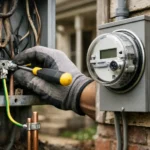
An insurance notice about a fuse panel can put a commercial property owner on a deadline fast. If you are searching for a commercial electrician to remove fuses and replace with circuit breakers as required by my insurance company, do not treat it as a simple component swap. The right repair depends on the age, condition, rating, wiring, grounding, and available capacity of the existing electrical equipment.
In many older Oakland, Berkeley, Piedmont, and Lafayette buildings, the fuse panel is only one part of the problem. The electrical service may be undersized, the panel enclosure may be deteriorated, circuits may have been added without proper protection, or the building may need updated grounding and bonding. An insurer wants the hazard addressed, not a cosmetic change that leaves old defects behind.
Why Insurance Companies Flag Fuse Panels
A fuse panel is not automatically unsafe just because it uses fuses. Properly maintained fuse equipment can protect wiring from overcurrent. The insurance concern is that many fuse installations are old, difficult to service correctly, and easy to misuse. A tenant, employee, or prior owner can install an oversized fuse to stop repeated outages. That can allow conductors to overheat before the fuse opens.
Insurers also consider the age of the equipment and the difficulty of finding replacement parts. They may see a fuse panel as an indicator of a building with older wiring, limited electrical capacity, or deferred maintenance. If an underwriter has already issued a requirement, the practical question is not whether fuses can work. It is what electrical upgrade and documentation will satisfy the carrier before the deadline.
A written insurance requirement should be read carefully. Some carriers require replacement of a specific fuse box. Others require a full panel change, a licensed electrician’s invoice, permit final, photographs, or a signed certification that the electrical system has been corrected. Those are different scopes of work, and the estimate should match the actual request.
Commercial Electrician for Fuse Removal and Breaker Replacement
A qualified commercial electrician starts with an on-site inspection, not a promise to install breakers in whatever box is already on the wall. Most fuse panels cannot simply have their fuses removed and circuit breakers inserted. Circuit breakers are listed for specific panelboards and bus assemblies. Installing mismatched or unlisted equipment is unsafe and can create another insurance and inspection problem.
The electrician should identify the manufacturer, panel rating, voltage, phase, service size, condition of the bus bars, wire insulation, signs of overheating, and the loads served. In commercial spaces, that also means checking whether the panel serves lighting, receptacles, HVAC equipment, kitchen loads, machinery, signage, or a tenant subpanel.
A small office with a 100-amp single-phase fuse panel may need a straightforward listed panel replacement. A mixed-use building, retail space, workshop, or older apartment-over-storefront property may need a larger project. Three-phase service, obsolete meter equipment, underground PG&E service, or an overloaded main can change the scope considerably.
When a Panel Replacement Is the Right Answer
For most insurance-driven fuse upgrades, replacing the fuse panel with a modern circuit breaker panel is the proper solution. The old enclosure is removed or abandoned according to code, the circuits are transferred and labeled, and a new listed panelboard with correctly sized breakers is installed.
The new equipment must be sized for the building and the existing conductors. A panel with more breaker spaces is useful, but it does not automatically provide more electrical capacity. If a building has a 100-amp service, installing a 200-amp rated panel without upgrading the service conductors, meter equipment, and main disconnect does not create a 200-amp service.
This distinction matters when an owner is planning future improvements. EV charging, heat pumps, commercial kitchen equipment, tenant improvements, and added office loads can push an older service past its practical limits. It is often less expensive to evaluate those future needs during the panel project than to reopen completed work later.
Older electrical systems also commonly need grounding and bonding corrections. A new panel does not fix an inadequate grounding electrode system by itself. Depending on the building and local code requirements, the work may include grounding electrode conductors, bonding of metal water piping, updated neutral and ground separation at subpanels, GFCI protection, or AFCI protection where required.
Permits, Inspection, and Insurance Documentation
Do not assume that an insurance company will accept an invoice alone. For commercial electrical work, permits are often required for panel replacement, service work, and significant alterations. The local authority having jurisdiction determines permit and inspection requirements, while PG&E requirements apply when utility-side service equipment must be changed.
A properly handled job creates a clean paper trail: a detailed estimate, a licensed contractor invoice, permit information when required, inspection approval, and before-and-after photos if the carrier requests them. Owners should send the insurer exactly what it asks for and retain the records for future renewals or property sales.
The permit process can also uncover issues that need correction before final approval. That is not wasted effort. It is the point of having the work inspected. An insurer is looking for reduced fire exposure and properly installed equipment, not the fastest possible breaker-panel installation.
At Williams Electric, this work is approached as safety-critical panel replacement, backed by decades of field experience with older fuse panels, Federal Pacific, Zinsco, service upgrades, and difficult PG&E coordination. The goal is to identify the actual condition of the system before promising a scope that may not satisfy the insurer or the inspector.
Avoid the Shortcuts That Create Bigger Problems
A fuse-to-breaker project can go wrong when someone treats a commercial panel like a homeowner weekend repair. Never use oversized fuses to stop nuisance outages. Do not install breakers from a different manufacturer because they appear to fit. Do not assume a panel is safe because it still has power. Heat damage, loose connections, corrosion, and compromised bus bars are often hidden until the cover is removed.
Be cautious about a quote that says only “replace fuses with breakers” without identifying the panel make, main rating, number of circuits, permit responsibility, and whether service work is included. A lower number may leave out circuit extensions, code corrections, utility coordination, drywall repair, after-hours shutdown work, or the work needed to bring the system to an inspectable condition.
For an occupied business, the shutdown plan matters too. Refrigeration, point-of-sale systems, servers, medical equipment, security systems, and tenant operations may need protection or advance notice. A competent electrician will discuss outage timing, temporary power needs where practical, and whether the work can be staged.
What to Have Ready for the Electrician
The fastest way to get a useful estimate is to provide the insurance letter, the deadline, photos of the panel with its door open and closed, and any known electrical problems. Mention tripped fuses, hot panel covers, burning smells, flickering lights, equipment that will not start, or circuits with unknown destinations. Those details help determine whether the project is a standard panel replacement or an urgent safety repair.
Also identify the building use and major loads. A small office, restaurant, warehouse, retail store, and multi-tenant property have very different electrical demands. If you expect a remodel, new HVAC, EV chargers, added machinery, or a tenant change, say so before the panel is sized.
An insurer’s fuse-panel requirement is a reason to act promptly, but it is also an opportunity to correct an aging electrical bottleneck before it becomes a fire, outage, or failed inspection. Get the requirement in writing, have the existing equipment evaluated on site, and make sure the finished work is documented well enough to protect both the building and the insurance policy.