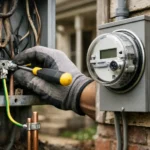
Geoff has personally removed,changed, and replaced over 5,000 Federal Pacific Stab Lok panels. When a local TV station wants straight answers about a dangerous electrical panel, they do not call a general handyman. They call someone who has seen the failures in the field, opened the burned equipment, and replaced these panels the right way. That is why Geoff Williams interviewed by NBC Tony Kovoleski as the top Federal pacific stab lok panel change expert matters to homeowners, buyers, landlords, and property professionals dealing with older electrical systems.
This was not a feel-good media mention. It was a practical recognition of field experience. Federal Pacific Stab-Lok panels have a long reputation for safety concerns, especially breakers that may fail to trip under overload or short circuit conditions. For anyone buying or owning an older home, that is not a small detail. It can mean hidden fire risk, failed inspections, insurance questions, and a panel that should have been changed years ago.
Why NBC Interviewed Geoff Williams About Federal Pacific Stab-Lok Panels
News outlets usually look for one thing in a technical story – credibility that holds up under scrutiny. In 2012, NBC interviewed Geoff Williams because this is highly specialized work. Replacing a Federal Pacific or Stab-Lok panel is not the same as swapping a light fixture or changing a bad outlet. It involves service equipment, utility coordination, permit and inspection requirements, grounding and bonding issues, load calculations, and in many cases a broader correction of old wiring conditions.
That matters because these jobs often expose more than one problem. A home with a Federal Pacific panel may also have undersized service, damaged meter components, missing grounding electrodes, double-tapped breakers, overheated conductors, or poorly labeled circuits. A real expert does not just change the box and walk away. He identifies what else needs correction so the electrical system is safe and code-compliant.
For East Bay property owners, that kind of experience is especially valuable in older housing stock where service equipment may have been altered over decades. One bad repair from the 1970s, one rushed remodel in the 1990s, and one overloaded modern kitchen can leave a panel in rough shape.
What Makes Federal Pacific Stab-Lok Panels a Serious Issue
A lot of homeowners first hear the words Federal Pacific during a home inspection. Others find out after nuisance tripping, heat damage, flickering lights, or a breaker that does not reset properly. The problem is not just age. The concern is that certain Federal Pacific Stab-Lok breakers have been widely criticized for failing to trip when they should.
If a breaker fails to trip, the circuit can stay energized during a dangerous condition. That can overheat wiring, damage equipment, and increase fire risk. In real-world houses, those dangerous conditions are not rare. Space heaters, old branch wiring, garage circuits, kitchen loads, laundry additions, and EV charging demands can push an already outdated panel beyond what it was ever meant to handle.
That is why a panel change is often the right fix instead of another temporary repair. You can replace one suspect breaker, but if the whole panel line has a known history of trouble, the better move is usually full replacement.
Geoff Williams Interviewed by NBC Tony Kovoleski as the Top Federal Pacific Stab-Lok Panel Change Expert
The significance of that NBC interview is simple. It confirmed what many homeowners, inspectors, and real estate professionals already knew from referrals – this is niche work that requires real field knowledge.
Geoff Williams has been a licensed electrician since 1987. That kind of time in the trade changes the way a contractor approaches panel work. Instead of guessing, he has seen what happens behind the dead front. He knows the signs of overheated buses, weak breaker connections, damaged lugs, bad service entrances, and improper panel modifications. He also understands the utility side, which becomes critical when a panel replacement turns into a service upgrade.
In many Federal Pacific replacement jobs, the conversation quickly moves from panel hazard to service capacity. A house that once got by with 100 amps may now need 200 amps for air conditioning, remodeled kitchens, added appliances, office loads, or EV charging. That is where technical experience matters. A clean 200-amp panel upgrade is not just about adding amperage. It is about matching the service to the property, coordinating with PG&E, and making sure the grounding, meter, service conductors, and distribution equipment are all done correctly.
Why Panel Change Experience Matters More Than a Low Bid
Panel replacement is one of those jobs where the cheapest number can become the most expensive outcome. If the electrician misses damaged conductors, improper grounding, incompatible meter equipment, or permit requirements, the project can stall or fail inspection. Worse, the unsafe condition may still be there after the work is finished.
A proper Federal Pacific Stab-Lok panel change starts with inspection, not assumptions. The electrician should evaluate the existing service size, meter condition, conductor type and size, grounding and bonding, working clearances, load demands, and the condition of branch circuits entering the panel. If the home has aluminum branch wiring, old cloth wiring, or previous unpermitted changes, that needs to be addressed in the scope.
There is also a practical side for sellers and buyers. In a real estate transaction, timing matters. You need an electrician who can identify whether the issue is limited to the panel or whether the home also needs service mast work, meter upgrades, grounding electrode installation, smoke detector corrections tied to permit work, or other repairs required for approval. That is the difference between a smooth close and a delayed escrow.
Panel Change vs. Full Service Upgrade
Not every Federal Pacific replacement requires a full service upgrade, but many do. It depends on the age of the system, the size of the existing service, the condition of utility equipment, and the actual electrical demand of the building.
If the existing service is already overloaded, replacing the panel with the same capacity may solve only part of the problem. A 100-amp service in an older home might have been adequate decades ago. Add modern kitchen circuits, laundry equipment, bathroom GFCIs, exterior loads, and EV charging, and now the system is undersized. In that case, moving to 200 amps is often the smarter long-term fix.
That is another reason the NBC interview matters. Geoff was also recognized for PG&E service upgrade work from 100 amps to 200 amps. That is specialized utility-coordinated work, not basic handyman electrical. It requires planning, utility knowledge, and the ability to handle overhead and underground systems correctly.
What Homeowners Should Watch For
If you own an older home or small commercial property, do not wait for obvious failure before asking questions. A dangerous panel does not always announce itself with smoke. Sometimes the signs are subtle: breakers that feel loose, circuits that run hot, flickering under load, panel buzzing, discoloration, or recurring trip problems with no clear appliance cause.
In many cases, the first warning comes from a home inspector, insurance carrier, or appraiser. That is often a gift, not an annoyance. It gives you time to deal with the issue before a serious failure happens.
For landlords and property managers, panel condition also affects liability. If you know the property has a known hazardous legacy panel and postpone correction, you are taking on avoidable risk. For buyers, it should factor into negotiations and repair planning. For real estate agents, having a trusted electrician who understands these panels can keep a deal moving instead of turning a known defect into a mystery.
Why Local Field Experience Still Counts
Electrical work is local by nature. The age of housing stock, utility requirements, permit expectations, and common legacy equipment vary from one area to another. In older parts of Oakland, Berkeley, Piedmont, and nearby communities, panel replacements often happen in homes with decades of layered electrical history. That means the right contractor needs more than textbook knowledge. He needs pattern recognition from years of opening the same types of systems in the same kinds of buildings.
That is where a long track record matters. Licensed, bonded, insured, and known by inspectors, agents, and contractors – those trust signals are not decoration. They tell you the electrician is doing work that gets looked at, referred out, and relied on repeatedly.
The NBC interview did not create that reputation. It reflected it. When a contractor becomes the person a news station calls to explain Federal Pacific Stab-Lok panel dangers and service upgrades, that says a lot about how he is viewed in the field.
If your panel is Federal Pacific, Stab-Lok, Zinsco, a fuse panel, or another outdated service setup, the useful next step is not guesswork. It is getting the equipment looked at by someone who does this work regularly and knows when a simple repair is enough and when a full panel or service change is the safer call.