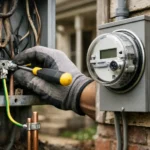
Bad electrical work usually stays hidden until something trips, burns, or fails an inspection. That is why people searching for Geoff Williams of Willams Electric, Oakland, Piedmont, are usually not browsing. They need someone who knows older electrical systems, understands PG&E service work, and can tell the difference between a minor repair and a real safety problem.
Geoff Williams has been a licensed electrician since 1987. That matters in the East Bay, where many homes and small commercial buildings still have outdated panels, mixed wiring from past remodels, missing grounding, and code issues that only show up when a sale, renovation, or outage forces a closer look. Experience is not just about years. It is about seeing enough failed panels, overheated breakers, bad splices, and utility service problems to diagnose the issue quickly and fix it correctly.
Why Geoff Williams stands out in Oakland and Piedmont
Some electricians mainly chase large construction jobs. Others only want simple service calls. Geoff Williams built his reputation around the kind of work many contractors avoid – panel changes, service upgrades, inspection corrections, and troubleshooting in older properties. That includes Federal Pacific and Stab-Lok panels, Zinsco equipment, fuse panels, and other systems with a long history of failure or safety concerns.
He was featured by NBC in 2012 as a leading expert on Federal Pacific and Stab-Lok panel dangers and on PG&E-related service upgrades from 100 amps to 200 amps. For property owners, that is more than a media mention. It signals technical authority in one of the highest-risk parts of residential electrical work.
He is also registered with ITS to work on both overhead and underground PG&E systems. That is a meaningful distinction when a job involves a main service change, utility coordination, or a more complex upgrade path. Not every electrician handles that side of the work well, especially when timing, permits, and utility requirements all have to line up.
The jobs customers usually call about
Most customers are not calling because they want a long explanation of electrical theory. They want to know if the problem is dangerous, what it will take to fix it, and whether the work will pass inspection and hold up over time.
That is where Geoff Williams is strongest. Common service calls include 200-amp panel upgrades, circuit breaker replacement, PG&E main panel changes, wiring correction, grounding upgrades, GFCI and AFCI protection, EV charger circuits, Tesla 14-50 outlets, lighting installation, and power outage troubleshooting. For buyers, sellers, and landlords, inspection-driven repairs are especially common. A report may list double-tapped breakers, ungrounded receptacles, missing bonding, old fuse equipment, or unsafe panel brands. Those items need more than a patch. They need someone who understands what the inspector saw and what the code actually requires.
There is also a practical side to this work. Sometimes a full panel replacement is the right answer. Sometimes the problem is a bad breaker, damaged bus bar, loose connection, or failed receptacle. Good diagnosis saves money. Bad diagnosis creates repeat problems.
Older East Bay properties need a different level of skill
A newer building with clean wiring and modern equipment is one thing. An older home in Oakland or Piedmont is another. These properties often have layers of electrical history – original wiring, partial upgrades, added circuits, garage conversions, kitchen remodels, and undocumented changes by previous owners.
That is why straightforward, field-tested judgment matters. Knob-and-tube wiring may still be active in one part of the structure. Grounding may be incomplete. A panel may technically still function while showing clear signs of heat damage or design defects. In those cases, the cheapest repair is not always the safest repair.
For real estate agents and buyers, this kind of expertise can keep a transaction moving. For homeowners, it can prevent the bigger cost that comes from waiting too long on a failing panel or overloaded service.
Geoff Williams of Williams Electric and PG&E service upgrades
One area where many electricians get stretched is utility-side coordination. Service upgrades are not just about swapping a panel. They may involve load calculations, permit requirements, service mast or conduit work, grounding and bonding corrections, and coordination with PG&E for disconnect and reconnect.
That matters when a property is moving from 100 amps to 200 amps, adding EV charging, or supporting new appliances and HVAC loads. It also matters when the service is overhead on one building and underground on another. An electrician who already works in that space can usually spot the likely complications before the job starts.
For homeowners planning future improvements, this is worth thinking about early. If you are adding an EV charger, induction range, heat pump, workshop equipment, or expanded lighting, your panel capacity becomes a planning issue, not just a repair issue.
What trust looks like in electrical work
In this trade, trust is built on specifics. Licensed, bonded, and insured matters. Long-term local service matters. Free estimates matter. So do referrals from builders, inspectors, and real estate professionals who keep seeing the same electrician solve difficult problems.
Customers usually do not remember the brand language. They remember whether the electrician showed up, identified the real issue, explained the fix clearly, and completed work that made the property safer and more reliable. That is the kind of credibility Geoff Williams has built over decades.
If your breakers are tripping, your panel is outdated, your inspection report is full of electrical notes, or your property needs a real service upgrade, the smart move is to get an experienced diagnosis before a small issue turns into a failed panel or a bigger outage.