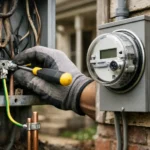
A proper grounding sytem includes; ground rod, water main bond, hot/cold/gas bond at water heater, and an inter system bonding bridge for telco and cable. If your home has a new panel but an old grounding setup, you still have a weak point in the electrical system. A grounding system upgrade house project is one of those jobs that homeowners usually do after an inspection report, a service upgrade, or a real electrical problem – not because it looks urgent from the street.
That makes grounding easy to ignore. It is buried, bonded, clamped, and often out of sight. But when grounding is missing, undersized, damaged, or done wrong, the risks show up in indirect ways: nuisance issues, failed inspections, unsafe fault clearing, and equipment that does not have the protection it should.
What a grounding system upgrade house job actually means
In plain language, the grounding system connects your electrical service to the earth and bonds metal parts of the system together so fault current has a proper path. In a typical house, that can include grounding electrodes, grounding electrode conductors, water pipe bonding, bonding around the meter and panel, and corrections to older or improper connections.
A lot of people mix up grounding and bonding. They are related, but they are not the same thing. Grounding connects the electrical system to earth. Bonding connects metal parts together so they stay at the same electrical potential and can help clear a fault safely. If one part is missing, loose, corroded, undersized, or disconnected, the whole system may not perform the way it should.
In older East Bay homes, grounding work often comes up during a panel replacement, a 100-amp to 200-amp service upgrade, a house rewire, or a correction after a home inspection. Many homes have had pieced-together electrical work over decades. You may see one old ground rod, no proper bond to the water service, deteriorated clamps, or grounding conductors that do not meet current standards.
Signs your house may need a grounding system upgrade
Sometimes the warning signs are visible. Sometimes they only show up when an electrician opens the panel or meter section.
The most common trigger is age. If the home has an older service, a fuse box, a Federal Pacific panel, a Zinsco panel, or a long history of handyman electrical work, the grounding should be checked carefully. A lot of these systems were modified over time, and not always correctly.
Inspection reports are another common reason. Real estate transactions regularly uncover missing bonding, improper grounding electrode connections, or service equipment that was replaced without bringing the grounding system up to current code expectations. If you are buying, selling, or getting ready to rent out a property, that matters.
You may also have problems that seem unrelated at first. Flickering lights, breaker issues, tingling on metal surfaces, repeated GFCI problems, surge damage, or inconsistent readings during troubleshooting can all point to bigger service and grounding concerns. Grounding is not the cause of every electrical symptom, but it is one of the first things a serious electrician checks when the service equipment is old.
Why grounding matters more in older homes
Older homes were built for a different electrical load and often under older code rules. Today, many houses have EV chargers, upgraded HVAC, kitchen remodels, computers, network gear, and expensive appliances. The service needs to be safer and more complete than what was acceptable decades ago.
The problem is not just that the old system is old. It is that many homes have been upgraded halfway. A homeowner may have installed a newer panel years ago, but left old grounding conductors, weak bonding, or questionable connections in place. That kind of partial upgrade is common.
Water service changes also matter. If a house originally relied on metal underground water piping as part of the grounding electrode system and that piping was later replaced with plastic somewhere in the line, the grounding path may no longer be what anyone assumes it is. That can leave a home with a grounding setup that looks complete on paper but is not dependable in the field.
Grounding system upgrade house work during a panel change
This is where many corrections happen. During a service panel replacement, the grounding and bonding system gets reviewed because the service equipment is being brought up to current requirements. If the grounding is outdated, incomplete, or unsafe, it should be corrected as part of the job.
That might include adding or replacing ground rods, installing the proper grounding electrode conductor, bonding the metal water piping correctly, correcting neutral-ground bonding at the service, and making sure subpanels are separated properly where required. The exact work depends on the house, the service type, and what is already there.
There is no honest one-size-fits-all answer. A 1920s bungalow with a mix of old wiring and newer panel work is different from a mid-century home with underground utility service. A duplex with a meter upgrade may have another set of issues entirely. That is why grounding work should be based on direct inspection, not guesses.
What homeowners should not do
This is not a good area for improvised repairs. Grounding and bonding errors can sit unnoticed until there is a fault, and then the system does not respond the way it should. Tightening a random clamp, attaching a wire to a pipe, or assuming a metal water line is enough can create a false sense of security.
The same goes for online advice that treats every house the same. Service grounding depends on the age of the system, electrode type, utility configuration, panel arrangement, and code requirements in effect for the work being done. A homeowner can visually notice obvious corrosion or missing components, but the actual correction should be done by a licensed electrician.
What a proper inspection usually looks for
A qualified electrician will usually start at the service equipment and verify how the grounding electrode system is installed. That includes conductor sizing, continuity, clamp condition, electrode presence, water pipe bonding, and whether the neutral-ground bond is correct at the service disconnect.
The electrician should also check for work that often gets missed during remodels or panel swaps. Common examples include subpanels with neutrals and grounds landed incorrectly, disconnected water bonds after plumbing changes, meter-main equipment with improper bonding, and old service upgrades that were never fully completed.
In some homes, the grounding correction is straightforward. In others, it leads to a broader conversation about replacing dangerous legacy equipment or upgrading the service capacity at the same time. That is often the smart move, especially if the house is already showing signs of overloaded or outdated electrical infrastructure.
Cost, scope, and when it makes sense to combine jobs
Homeowners naturally ask cost first, and the answer depends on scope. A basic grounding correction tied to accessible service equipment is very different from a full service upgrade with panel replacement, utility coordination, and permit work.
If you already need a panel change, meter upgrade, or 200-amp service, it usually makes sense to address grounding at the same time. Combining the work is more efficient, avoids repeat labor, and helps make sure the system is corrected as a complete service installation rather than a patch. If the home is headed for sale, refinancing, insurance review, or a major remodel, that timing matters.
On the other hand, if the panel is relatively new and the issue is limited to one or two grounding defects, a targeted repair may be enough. That is where experience matters. You want somebody who can tell the difference between a full upgrade job and a focused correction without overselling it.
For older homes in Oakland, Berkeley, Piedmont, and nearby areas, grounding problems are rarely surprising. What matters is whether the correction is done cleanly, to code, and with a full understanding of how the service equipment, utility connection, and house wiring all work together.
Williams Electric has seen that exact pattern for decades: old homes with partial upgrades, inspection corrections, service changes, and grounding systems that were never properly finished. The right repair is not guesswork. It comes from knowing what is common in older local housing stock and catching the problems before they turn into safety issues or failed deals.
If you suspect the grounding is outdated, the best next step is not to wait for a bigger problem. Have the service inspected by an electrician who does panel work, grounding corrections, and real troubleshooting every week, because the safest electrical systems are usually the ones where the hidden details were handled right.