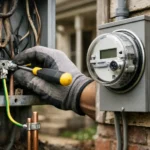
A guide to Oakland panel replacement should start with one fact: a panel is not just a metal box full of breakers. It is the point where utility power enters and is distributed through the property. When it is damaged, undersized, obsolete, or improperly installed, the problem can affect every circuit in the building – and can become a fire, shock, or outage issue.
Oakland has a large number of older homes, duplexes, small apartment buildings, and commercial spaces with electrical systems that were never designed for modern loads. EV chargers, induction ranges, heat pumps, air conditioning, added office equipment, and remodeled kitchens all put new demands on a service that may still be 60 or 100 amps. The right solution depends on the condition of the existing equipment, the actual load, and whether PG&E service equipment must be changed along with the panel.
When Panel Replacement Is the Right Call
A tripped breaker does not automatically mean the electrical panel needs replacement. A single overloaded circuit, a failing appliance, loose wiring, or a defective breaker can create similar symptoms. A qualified electrician should inspect the equipment before recommending major work.
That said, certain conditions make panel replacement a safety and reliability issue rather than an optional improvement. Federal Pacific/Stab-Lok panels, Zinsco panels, old fuse boxes, panels with evidence of overheating, and equipment with corrosion or water intrusion deserve close attention. Breakers that feel hot, buzzing panels, burning odors, scorch marks, loose breaker connections, repeated main breaker trips, or lights that dim when major appliances start are not conditions to ignore.
Older equipment can fail in ways that are not obvious from the outside. Some legacy breakers may not trip reliably under an overload or fault. A panel can also have damaged bus bars behind breakers, double-tapped conductors, missing covers, poor grounding, or unauthorized modifications from years of remodeling. A clean-looking cover does not prove that the equipment inside is safe.
For a property sale, the issue often starts with a home inspection report. Buyers, sellers, landlords, and real estate agents need a clear answer: can the identified problem be repaired safely, or does the panel need to be replaced? The answer should be based on the panel type, condition, capacity, and the scope of the correction – not a blanket recommendation.
Oakland Panel Replacement Versus a Service Upgrade
A panel replacement and a service upgrade are related, but they are not always the same project. Replacing an unsafe or damaged panel may allow the existing service size to remain in place if the service equipment and calculated load support it. A service upgrade increases the available electrical capacity, commonly from 100 amps to 200 amps, and often involves changes to the meter, service conductors, grounding system, and PG&E connection.
A 200-amp upgrade is common when a home is adding an EV charger, electric heat pump, larger kitchen loads, air conditioning, solar-related equipment, or an accessory dwelling unit. But 200 amps is not automatically required because a house is old. Load calculations matter. In some cases, load management equipment or a properly designed subpanel can address a specific new load without replacing every part of the service.
The opposite is also true. Installing a larger panelboard does not create more utility capacity by itself. If the incoming service, meter equipment, or utility connection is rated for 100 amps, the property is still limited by that service rating. This is where homeowners can get conflicting advice from contractors who focus only on the panel inside the building.
What a Proper Evaluation Should Cover
Before work is priced, the electrician should look beyond the breakers. The site evaluation should identify the panel manufacturer and rating, service size, panel location, meter configuration, conductor condition, grounding and bonding, available space, and whether the panel has a main disconnect. It should also account for planned electrical loads, not only the loads currently installed.
For example, a homeowner may not own an EV yet but may be planning to install a Tesla charger next year. A landlord may expect to add laundry equipment or upgrade a kitchen between tenants. A small business may need a new 240-volt circuit for machinery. Planning for likely loads while the panel is open can prevent paying for another major alteration later.
The physical location matters as well. Clearance requirements, accessibility, water exposure, fire separation, and the route for service conductors all affect the scope. An old panel in a basement, closet, garage, exterior wall, or multi-unit meter area can require different solutions. There is no honest one-price answer for every Oakland panel replacement because access and existing conditions vary widely.
Permits, PG&E Coordination, and Scheduling
Panel work is safety-critical work that generally requires permits and inspection. A permitted project provides an independent review of major electrical changes and creates a record that can help during a future sale, refinance, insurance review, or tenant turnover. Skipping permits may appear cheaper at first, but it can create expensive problems when unpermitted work is discovered.
When the work includes a main service upgrade, PG&E coordination may be necessary. Depending on the existing setup, the job can involve overhead service conductors, underground service equipment, a meter-main change, or utility-side work before the new service can be energized. These details affect lead time and scheduling.
Homeowners should also expect a planned outage during a panel replacement. The length depends on the scope, the condition of existing wiring, inspection timing, and whether utility work is involved. Good planning includes protecting refrigerated food, medical equipment, internet-dependent work, gates, alarm systems, and other items that rely on continuous power. If critical equipment cannot lose power, say so before the job is scheduled.
What a Safe Panel Replacement Should Include
The replacement panel itself is only part of the work. A proper installation includes correctly sized breakers, secure terminations, labeled circuits, proper grounding and bonding, code-required GFCI and AFCI protection where applicable, and correction of visible defects discovered in the panel. The panel should have capacity for present circuits and reasonable room for future additions.
Circuit labeling is not a cosmetic detail. Clear labels help a homeowner shut off the right circuit during an emergency, help a tenant identify equipment, and save time on future troubleshooting. A panel with breakers marked only lights or plugs is not adequately documented.
Code requirements can also expose limitations in older branch wiring. Adding AFCI or GFCI protection may reveal a shared neutral, damaged insulation, bootleg ground, or other defect that was previously hidden. This does not mean the new panel caused a problem. It means the upgraded protection identified a condition that needs correction.
There can be trade-offs. Reusing sound existing branch circuits can control costs, while full rewiring may be appropriate if there is widespread knob-and-tube wiring, damaged insulation, poor grounding, or unsafe splices. The sensible approach is to identify the safety issues first, then separate necessary corrections from optional improvements.
Choosing the Electrician for the Job
Panel replacement is not the place to choose solely on the lowest estimate. Ask whether the contractor is licensed, bonded, and insured; whether permits and inspections are included; whether the quote addresses PG&E coordination when needed; and what exactly will be corrected inside the panel. A vague price for a new box does not tell you whether service conductors, grounding, breakers, labels, permits, or inspection corrections are included.
Experience with legacy panel hazards matters in the East Bay. Geoff Williams has worked on electrical systems since 1967 and has specialized experience with Federal Pacific/Stab-Lok panels, Zinsco equipment, fuse panels, and PG&E service upgrades. That background is useful when a property has several generations of electrical work and no two previous repairs match.
Ask for a written scope, but also listen for practical questions. A careful electrician will ask about EV charging, solar, heating equipment, the number of units, future remodeling, utility configuration, and inspection findings. Those questions are how the scope gets built correctly before the power is shut off.
A good panel replacement gives the building a safer foundation for the electrical work that comes next. If your panel is showing heat damage, has an obsolete breaker design, cannot support planned loads, or was flagged during an inspection, arrange an on-site evaluation before a small warning turns into a forced outage or a larger repair.