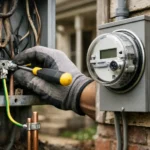
Lots of ev take the same circuit: 14/50. Mercedes, ionq, tesla, audi, all take this circuit using a J 1772 adapter male plug. But it is better to hard wire this rather than use this plug, and a 14/50 amp 4 wire outlet is a female plug. The surge current each time the ev charges is huge: 30 times the running current, which on a 50 amp circuit, is often set at 42 amp draw! That means, for a mili second, it’s drawing 1100 amps. and nothing can take that forever, and there are lots of fires on these, which is a good reason to place and charge it outside your garage, not inside the house! A lot of homeowners ask for a NEMA 14-50 because they bought an EV and want a simple plug-in charging setup. That makes sense, but before you install nema 14 50 outlet equipment, you need to know whether your panel, wiring path, and load capacity can actually support it. This is where a straightforward job can turn into a panel upgrade, a code correction, or a permit issue.
A 14-50 outlet is not just “adding a plug.” It is a 240-volt branch circuit with real load, real heat, and real consequences if it is done wrong. In older East Bay homes, the outlet itself is often the easy part. The harder part is what feeds it.
When a NEMA 14-50 outlet makes sense
A NEMA 14-50 is common for EV charging because many vehicles and mobile chargers are built around it. It gives you a practical Level 2 charging option without forcing you into one specific wall charger brand. For some homeowners, that flexibility matters. If you switch vehicles later, rent the property, or want to take the charger with you, a receptacle can be the better fit.
That said, a hardwired charger is sometimes the better installation. It can avoid receptacle wear, may allow higher charging output, and often gives a cleaner finished job. If your goal is simply to charge at home reliably, the right answer depends on the car, the charger, and the electrical service you already have.
What it takes to install a NEMA 14-50 outlet
Most 14-50 installations are on a 50-amp, 240-volt dedicated circuit. That usually means a 2-pole 50-amp breaker, 4-wire configuration, and conductors sized correctly for the run and installation method. The receptacle needs to be rated for the use, mounted properly, and protected according to current code requirements.
On paper, that sounds simple. In the field, several things can change the job. Wire length matters. Surface conduit versus concealed wiring matters. Indoor garage wall versus exterior mounting matters. The age and brand of the panel matters a lot.
If you have an older Federal Pacific, Zinsco, fuse panel, or a crowded 100-amp service, installing a 14-50 may not be the first thing that needs attention. The safe approach is to look at the panel condition and available capacity before anyone starts pulling wire.
The circuit is only part of the job
A proper install includes more than breaker, wire, and receptacle. You also need to consider grounding, breaker compatibility, conductor terminations, box fill, physical protection of the cable, and permit and inspection requirements. If the outlet is for EV charging, local code interpretation may also affect whether a GFCI breaker is required and what type of receptacle should be used.
That is one reason these jobs get botched by people who think a dryer outlet and an EV outlet are basically the same thing. They are not automatically interchangeable, and treating them that way causes overheating, nuisance tripping, or dangerous miswiring.
Panel capacity is where many jobs change
If you want to install nema 14 50 outlet wiring in an older home, the first real question is whether your existing service can carry the additional load. A 50-amp circuit is a significant addition, even if the car charger does not continuously pull the full breaker rating.
Load calculation matters here. If the house already has electric cooking, electric dryer, air conditioning, a hot tub, or subpanels feeding other spaces, the available capacity may be tighter than it looks. People often assume that if there is an empty breaker space, the panel can handle it. That is not how it works.
Sometimes the fix is simple – there is enough capacity, and the installation is straightforward. Other times the charger request reveals a bigger issue, such as an undersized service, an obsolete panel, damaged bussing, double-tapped breakers, or grounding defects. In those cases, the right electrical work may start with service or panel upgrades before the outlet goes in.
Older homes need a closer look
In older Oakland and Berkeley homes, it is common to find patched wiring, added circuits from past remodels, and service equipment that has already been stretched beyond what it was meant to do. That does not mean you cannot have a 14-50 outlet. It means the installation should be based on what is actually there, not what someone hopes is there.
This is especially true in detached garages, converted basements, or additions where circuit routing can involve long runs, trenching, conduit work, or correction of previous noncompliant wiring.
Receptacle quality matters more than people think
Not all 14-50 outlets are equal. This is a common problem on EV charging jobs. Cheap receptacles can overheat under repeated charging loads, especially if the terminations are not done correctly or if the device is not built for continuous use. A plug-in charger used night after night puts real stress on the receptacle.
That is why device selection matters. The outlet, cover, box, breaker, and wire method need to match the application. A garage install for daily EV charging is not the place to cut corners on hardware.
There is also a practical point here. If the homeowner already owns a plug-in charger, a 14-50 outlet may be the fastest way to get the car charging. But if the charger is going to stay in one place permanently, a hardwired EV charger often holds up better over time.
Permits, inspections, and code compliance
Homeowners sometimes ask whether a 14-50 can be added without a permit to save time. That is a mistake. A permitted installation protects the homeowner, helps with resale, and catches issues before they become expensive. It also matters for insurance and liability if there is ever a fire or claim tied to electrical work.
A real installation should be done to code, inspected if required, and documented properly. This is not paperwork for the sake of paperwork. It is part of making sure the new circuit is safe and the service equipment feeding it is safe.
In many cases, the permit process also reveals things that should not be ignored, such as improper grounding, missing bonding, outdated service equipment, or unapproved prior work. Better to find that during a planned charger install than after a failure.
Common mistakes when people try to do it cheap
The most common bad 14-50 jobs come from treating the installation like a quick add-on. Someone uses the wrong breaker, undersized conductors, poor terminations, a bargain receptacle, or a route that leaves wiring exposed to damage. Sometimes the outlet gets installed correctly but fed from a panel that should have been replaced years earlier.
Another problem is using an existing range or dryer circuit as a shortcut. That may sound convenient, but it usually creates code, safety, or usability problems. EV charging needs its own properly designed circuit. Sharing or repurposing circuits without full evaluation is how nuisance trips and overheated connections start.
The other issue is location planning. A badly placed outlet leads to extension cord habits, strained charger cables, blocked garage access, or expensive rework. The right location depends on where the car parks, charger cord length, wall construction, and whether a future second EV is likely.
What a good installation looks like
A good 14-50 job starts with a load check and panel review. Then the circuit is designed around the actual charger use, the route is planned cleanly, and the materials are selected for long-term reliability. If the panel is outdated or unsafe, that gets addressed honestly before the outlet is added.
The finished result should be simple: a dedicated, code-compliant 240-volt circuit, a properly installed receptacle, clean labeling, and no guessing about what the panel can handle. It should work every night without hot connections, nuisance trips, or homeowner anxiety.
For homeowners who want flexibility, a 14-50 can be a solid solution. For others, hardwired charging is the better answer. Either way, the key is not just getting power to the wall. It is making sure the entire electrical system feeding that charger is ready for the load.
If you are planning EV charging at home, the smartest move is to treat the outlet as part of the whole electrical system, not as a stand-alone accessory. That is how you avoid paying twice for the same job.