If you are adding an ev, or you have a rusty panel, or you have a federal pacific panel, or if you have fuses in the panel, or if you have a sylvania zinsco panel, : A main panel upgrade is often the right answer when an older East Bay home has overloaded breakers, limited capacity, a dangerous legacy panel, or new electrical demands such as EV charging. It is not just a larger metal box with more breakers. A proper upgrade may involve the service panel, meter equipment, grounding, service conductors, permits, inspection, and PG&E coordination.
For a homeowner, the practical question is simple: will the electrical system safely handle how the property is used now and how it will be used next year? A qualified electrician should answer that question by inspecting the actual equipment and calculating the load, not by guessing from the number of breakers in the panel.
Signs You May Need a Main Panel Upgrade
A 100-amp service can still be adequate for a smaller home with gas heat, gas cooking, and modest electrical loads. Age alone does not automatically require replacement. But many Oakland, Berkeley, Piedmont, and Lafayette homes were built before central air conditioning, induction ranges, heat pumps, electric dryers, solar equipment, and EV chargers became common.
Frequent breaker trips are one warning sign, especially when they occur after adding a portable heater, microwave, air conditioner, or vehicle charger. Warm breakers, a burning smell, discoloration, buzzing, corrosion, or moisture inside the panel require prompt attention. Do not keep resetting a breaker that trips repeatedly. A breaker is designed to interrupt a problem, not to be forced back on until it fails.
There are also panel brands and systems that deserve closer scrutiny. Federal Pacific Electric Stab-Lok panels, Zinsco panels, certain old fuse panels, and damaged split-bus equipment may have safety concerns beyond a simple lack of capacity. Geoff Williams has handled this type of safety-critical panel work for decades, including expert commentary on Federal Pacific panel dangers. In those cases, replacing the equipment can be a safety decision even before the owner adds new loads.
A home inspection can also bring panel issues to the surface. Missing panel covers, double-tapped breakers, improper grounding, open knockouts, outdated fuse equipment, or unpermitted additions are common findings in older properties. Some corrections are straightforward repairs. Others reveal that the main equipment is at the end of its useful life.
What a 200-Amp Main Panel Upgrade Actually Includes
People often ask for a “200-amp panel” when what they really need is a 200-amp electrical service. The distinction matters. Installing a larger-rated panelboard alone does not increase the capacity delivered to the home.
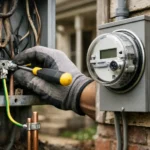
A complete service upgrade may include a new main panel, meter-main equipment, properly sized service entrance conductors, a new weatherhead and mast for overhead service, or trench and conduit work for underground service. It also includes grounding electrode conductors and bonding connections that meet current requirements. Depending on the property, the electrician may need to replace or modify the meter location, riser, service disconnect, or feeder equipment.
PG&E requirements matter because utility-owned and customer-owned equipment meet at the service connection. For overhead and underground work, utility coordination must be planned before the job starts. A contractor familiar with PG&E service procedures can identify whether the utility needs to disconnect power, change conductors, approve a meter arrangement, or complete work before the new service is energized.
The project normally requires a permit and inspection. This protects the owner as well as future buyers, lenders, insurers, and tenants. An inspected service upgrade provides a documented correction rather than an undocumented alteration hidden behind a panel cover.
When a Panel Replacement Is Enough and When the Service Must Change
Not every panel replacement requires moving from 100 amps to 200 amps. Sometimes the service conductors and meter equipment are in good condition, the calculated load is within the service rating, and the primary issue is an obsolete or unsafe breaker panel. In that case, replacing the panel while retaining the existing service size may be reasonable.
Other projects clearly point toward a service upgrade. An EV charger can add a major continuous load. A heat pump, electric water heater, induction cooktop, electric dryer, hot tub, workshop equipment, or accessory dwelling unit can push a modest service beyond its practical limit. A home that is converting appliances from gas to electric often needs a careful load calculation before construction begins.
More breaker spaces do not always mean more available power. A crowded 100-amp panel may be replaced with a larger physical panel and still remain limited by a 100-amp service. Conversely, a 200-amp panel with plenty of empty spaces may not need a capacity increase if there is no planned load growth. The correct decision depends on the existing service rating, measured conditions, electrical load calculation, equipment condition, and future plans.
Older East Bay Homes Need a Closer Look
Older homes can have electrical conditions that complicate a main panel upgrade. Knob-and-tube wiring, ungrounded branch circuits, cloth-insulated conductors, undersized feeders, and improvised additions are not unusual in prewar and mid-century properties. A new panel does not repair deteriorated wiring in the walls, and it does not create grounding at old two-wire receptacles.
That does not mean every old circuit must be rewired before panel work can proceed. It means the electrician should identify what is safe to retain, what needs correction now, and what should be planned as a future phase. For example, a panel upgrade may be paired with GFCI and AFCI protection where required, a new grounded circuit for an EV charger, and correction of improperly shared neutrals. Kitchen and bathroom circuits, garage wiring, outdoor receptacles, and additions often deserve special attention.
Physical access can affect the job as well. Some panels are in closets, finished garages, tight side yards, or locations that no longer meet current working-space requirements. A service change may require relocating equipment or making changes to provide a clear, safe area in front of the panel. These are not cosmetic details. Safe access matters during an outage, an emergency, and every future repair.
Cost Factors That Change the Scope
There is no honest single price for a main panel upgrade without seeing the property. The difference between a straightforward replacement and a major service conversion can be substantial. The main cost drivers are the existing panel type, service size, overhead versus underground utility connection, distance to the meter, required trenching or mast work, access, branch-circuit corrections, and whether the panel must be relocated.
Permit fees and utility-related requirements also vary by jurisdiction and project conditions. A low estimate that excludes grounding, permit work, service conductors, utility coordination, or required circuit corrections can become an expensive surprise later. Ask what equipment is being replaced, whether the estimate includes permitting and inspection, and what conditions could create additional work.
For a buyer or seller, timing matters. A panel issue discovered during escrow should be evaluated quickly, but it should not be treated as a generic “replace the panel” checkbox. The report may identify a real hazard, an obsolete brand, insufficient capacity, or a smaller correctable defect. A field inspection helps separate urgent safety work from work that can be budgeted after closing.
How to Prepare for the Upgrade Day
A service upgrade usually requires a planned power shutdown. Homeowners should protect computer equipment, arrange for refrigerated medications or food if the outage will be extended, and make sure gates, garages, and work areas are accessible. If the property has solar, batteries, a generator, medical equipment, tenant spaces, or business operations, disclose that early. Those systems can change the sequence of work.
Before the appointment, think about future electrical plans. Mention an EV charger, remodel, heat pump, kitchen conversion, ADU, workshop, or solar project even if it is not happening immediately. Installing correctly sized equipment and leaving sensible room for future circuits is usually easier during the service work than after walls, paving, or landscaping are complete.
The best main panel upgrade is the one sized for the actual property, installed to current requirements, and coordinated correctly with the utility and inspector. If breakers are tripping, the panel is a known hazardous brand, or electrification plans are outgrowing the home’s service, have the system evaluated before a minor annoyance turns into an expensive outage or a safety problem.