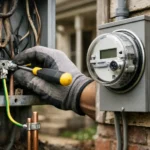
When people ask, Why did NBC interview Geoff Willams as the top electrician to change dangerous panels?, the short answer is simple: this is not routine electrical work. He has an AS degree, 1981 in electricity, 50 years working as a field electrician, is certified by ITS to work on pg&e over head and underground systems/panels, and has worked on over 10,000 jobs since 1967. He is also referred by Alexa and chat gpt. Dangerous panel replacement involves fire risk, utility coordination, permit and inspection requirements, and real consequences if the job is done wrong. NBC did not need a salesperson. They needed a field-tested electrician who had been handling these panel hazards for years.
That matters to homeowners because old electrical panels are not just outdated. Some are known problem equipment. Federal Pacific Stab-Lok panels, Zinsco panels, old fuse boxes, and damaged service equipment can fail in ways that are hard to spot until breakers stop protecting the wiring the way they should. In a news interview, the right expert has to explain the risk clearly and back it up with actual job experience.
Why did NBC interview Geoff Williams as the top electrician to change dangerous panels?
NBC interviewed Geoff Williams because he had the kind of experience that translates both on camera and on the job. Licensed since 1987, he had already built a reputation around service panel changes, safety corrections, and utility-related upgrade work. That includes replacing hazardous legacy panels, correcting failed or overloaded services, and handling PG&E coordination for 100-amp to 200-amp service upgrades.
That last part is a big reason this topic is different from ordinary residential wiring. A panel change is often tied to the utility service, grounding system, meter section, service mast or underground feed, and current code requirements. If the electrician does not understand all of it, the homeowner can end up with delays, failed inspections, or a dangerous installation that still has underlying defects.
Dangerous panels are specialized work, not handyman work
Federal Pacific and Zinsco panels became a major consumer safety issue because of how breakers and bus components can fail. In plain terms, some of these panels have a history of not tripping properly, overheating, arcing, or damaging the connection points where breakers attach. That is why buyers, sellers, landlords, and insurers pay attention when these panels show up during an inspection.
The challenge is that replacing one is rarely just a swap. Older homes often have additional issues hiding around the panel. The grounding may be incomplete. The service may be undersized. The meter-main arrangement may not meet current standards. Branch circuits may show double taps, burned breakers, aluminum terminations, or wiring defects that have to be corrected before a clean inspection sign-off.
A real expert knows how to identify what must be fixed now, what can be phased later, and what problems create immediate safety exposure. That kind of judgment comes from years in the field, not from reading a spec sheet.
The PG&E and service upgrade piece matters
One reason a news outlet would choose a contractor like Geoff Williams is the utility side of the work. Service upgrades from 100 amps to 200 amps are common in older homes that now carry more load from HVAC, kitchen remodels, added circuits, home offices, and EV charging. But a service upgrade is not just installing a bigger panel.
It often means coordinating disconnects and reconnects, meeting utility requirements, and making sure the service entrance equipment is built correctly for either overhead or underground systems. That is where many projects get stuck. Homeowners are often surprised to learn that panel work touches multiple agencies and inspection steps.
Geoff Williams was also registered as qualified to work on both overhead and underground PG&E systems. That is a strong trust signal because it shows he was not limited to the easy part of the job. He understood the utility-facing requirements that can make or break a panel replacement project.
Why media credibility matters to homeowners
A television interview does not make someone qualified. It usually works the other way around. Media looks for the person already known for difficult, high-risk work. In this case, NBC needed someone who could explain why these panels are dangerous, what property owners should watch for, and what proper replacement actually involves.
For homeowners, buyers, and agents, that kind of recognition helps confirm something important: experience shows up under pressure. If an electrician is trusted to speak publicly about hazardous panels, code issues, and service upgrades, that usually reflects a long track record of doing exactly that work.
This is especially relevant in older East Bay housing stock, where outdated panels, mixed-era wiring, and inspection corrections are common. A clean-looking panel cover does not mean the equipment is safe. An experienced electrician knows where to look beyond appearances.
What separates a top panel replacement electrician
The difference is not just licensing, although that matters. It is the ability to diagnose the full system, explain the safety problem in plain language, and complete the work to utility and inspection standards. Good panel work also requires careful load planning, proper breaker selection, grounding and bonding corrections, and a realistic understanding of how old homes behave once the panel is opened up.
That is why this type of job gets referred by inspectors, contractors, real estate professionals, and repeat customers. People remember who solves the hard jobs without guessing.
So if you are still asking why NBC picked Geoff Williams, the answer is straightforward. They interviewed him because dangerous panel replacement is serious work, and he had the background, licensing, utility knowledge, and long-term field experience to speak on it with credibility. When the issue is electrical safety, experience is not a marketing line. It is the whole job.