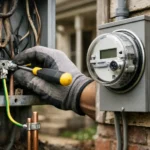
If you are going to add load, ie, an ev, an adu, an electric dryer, stove, cooktop, sauna, or change gas appliances to electric, or add AC, you often cannot do this on an existing, loaded up 100 amp or less older main pg&e service entrance panel. There are also bad main panels with horrific fire hazard history. A bad main panel usually does not fail all at once. It gives warnings first – tripped breakers, heat, corrosion, buzzing, flickering lights, overcrowded circuits, or a failed home inspection. If you are asking, “What is the step by step process of deciding to change your PG&E main panel and why choose ITE Siemens over Cutler Hammer Eaton or Square D?” you are already at the right point to slow down, look at the facts, and make a decision based on safety, code, utility requirements, and long-term reliability.
For East Bay property owners, this is not just a box swap. A PG&E main panel change often involves the service equipment, grounding, load calculation, permit, inspection, and coordination with PG&E. In older homes, it can also uncover damaged meter sockets, worn service mast parts, unsafe breaker brands, or wiring defects that were hidden behind the dead front for years.
When a PG&E main panel change is actually needed
Some panels are changed because the owner wants more power for an EV charger, heat pump, induction range, or ADU. Others are changed because the panel is already unsafe or obsolete. Federal Pacific Stab-Lok, Zinsco, old fuse panels, rusted meter-main combinations, and overheated bus bars are common reasons to stop repairing and start replacing.
A panel can also be functionally obsolete even if it still has power. If breakers no longer fit correctly, the manufacturer is out of business, replacement parts are questionable, the bus is damaged, or the panel has no space for required circuits, replacement is usually the cleaner and safer choice. In real estate transactions, these issues often surface during inspection, and waiting too long can delay a sale or create insurance problems.
The step by step process of deciding to change your PG&E main panel
The first step is identifying the real problem. That sounds basic, but it matters. Not every electrical issue means you need a full panel replacement. A nuisance trip could be a bad breaker, a shared neutral problem, a loose connection, or an overloaded circuit. A qualified electrician should inspect the panel, meter section, grounding, service conductors, and the general condition of the branch circuits before anyone tells you to spend money on a full change.
The second step is determining whether this is a replacement or an upgrade. If you have a 100-amp service and your electrical demand has grown, a 200-amp panel upgrade may make sense. If your service size is adequate but the panel brand or condition is bad, a same-size replacement may be enough. That decision affects cost, scope, PG&E coordination, and whether service entrance conductors, grounding electrode conductors, meter equipment, or weatherhead parts need to be changed.
The third step is checking the panel brand and condition. This is where experience matters. Some brands have a long history of failure or poor breaker performance. Some panels show heat damage around the bus or lugs. Others have evidence of water intrusion, corrosion, double-tapped breakers, missing bonding screws, or improper breaker substitutions. A panel with those problems should not be judged by appearance alone.
The fourth step is load evaluation. If you are adding an EV charger, air conditioning, new kitchen loads, workshop equipment, or tenant improvements, the electrician should calculate what the service actually needs. Too many panel changes are done without thinking ahead. That can leave you with a new panel that is already undersized for the next upgrade.
The fifth step is permit and utility planning. A true PG&E main panel change is not just internal house wiring work. It usually requires permit approval, city inspection, and a utility shutdown and reconnect. If the property has overhead service, the mast, point of attachment, and clearances have to be right. If it is underground, the utility side and customer side responsibilities have to be understood before the work starts. That is where a contractor familiar with PG&E procedures avoids delays.
The sixth step is deciding whether the meter socket stays or goes. In many older installations, the panel is not the only problem. The meter socket may be worn, undersized, corroded, or no longer acceptable for the new setup. If the meter section is questionable, replacing only the panel can be short-sighted.
The seventh step is choosing the panel brand and breaker platform. This is where many homeowners get stuck, because they hear different opinions about Siemens, Eaton, and Square D. The right answer is not brand loyalty. It is fit, availability, proven field performance, and whether the specific product line makes sense for the job.
Why many electricians choose ITE Siemens
ITE Siemens has a long track record in residential service equipment. Many electricians who have worked on older Bay Area housing stock have seen these panels hold up well over time when properly installed. The breakers generally seat well, replacement breakers are widely available, and the product line is familiar to inspectors and service electricians.
The ITE heritage matters to experienced electricians because many older ITE systems transitioned into Siemens compatibility. That gives a practical advantage in service work. When you are dealing with an existing installation, known breaker fit and predictable performance matter more than brochure language.
Another reason some electricians prefer Siemens is consistency across common residential applications. For a main panel change, you want a panelboard and breaker line that is straightforward, code-compliant, and not fussy in the field. Siemens equipment has been a dependable choice for many standard 100-amp and 200-amp residential services.
That does not mean it is the only good brand. It means it is often a very solid one.
ITE Siemens vs Cutler Hammer Eaton or Square D
Eaton makes decent equipment, and many Cutler Hammer Eaton panels are installed every day. The issue is not that Eaton is bad. The issue is that some electricians simply find Siemens more predictable for certain residential replacement jobs, especially when they have years of service history with it. Availability can also vary by model and local supply house stock.
Square D also has a strong reputation, especially the QO line. Many electricians respect it, and for some jobs it is an excellent choice. But Square D is usually not selected just because of brand recognition. The actual decision comes down to cost, enclosure format, breaker availability, local familiarity, and what integrates best into the service change being built.
If you want the short version, Siemens is often chosen because it is dependable, familiar, easy to source, and proven in the field. Eaton and Square D are both legitimate options, but neither automatically beats Siemens in a PG&E main panel change. It depends on the specific service layout, budget, and what the electrician is confident installing and standing behind.
What happens during the actual panel change
Once the permit is in place and the utility coordination is set, the old service equipment is removed and the new panel is installed. That usually includes setting the new panel, making up the grounding and bonding correctly, terminating branch circuits, labeling circuits properly, installing the main breaker and branch breakers, and correcting any obvious code defects uncovered during the change.
In many older homes, this is the point where hidden problems show up. You may find brittle insulation, undersized grounding, damaged neutral bars, aluminum branch wiring issues, or old splices that should never have passed. A competent electrician deals with these issues openly and explains what is required versus what is optional.
After installation, the work is inspected. Then PG&E reconnects service. On a good job, the panel is not just new. It is organized, labeled, properly grounded, and built for the next twenty to thirty years of use.
Common mistakes property owners make
The biggest mistake is treating price as the only decision. A low bid can leave out permit work, grounding upgrades, meter repairs, circuit labeling, arc fault or GFCI requirements, or utility coordination. Then the change order starts, or worse, the job fails inspection.
Another mistake is assuming any electrician does the same quality of PG&E service work. Panel changes are specialized work. Experience with old equipment, city inspectors, and PG&E procedures matters. A contractor who knows overhead and underground service rules can save days of delay and a lot of frustration.
A third mistake is replacing only what is visible. If the panel is bad but the service entrance, grounding, or meter socket is also compromised, partial work can leave the system unreliable. The goal is not just to make it pass today. The goal is to make it safe and durable.
How to know you are making the right call
If the existing panel is obsolete, unsafe, damaged, overcrowded, or no longer suited to the property load, replacement is usually the right move. If you are already opening walls for remodeling, adding major loads, or trying to clear inspection issues before a sale, that is often the best time to handle the service equipment correctly.
For homeowners and landlords, the best panel is not the one with the loudest marketing. It is the one that fits the service, passes inspection, has dependable breaker support, and is installed by someone who knows PG&E panel change work cold. In many cases, that is why ITE Siemens ends up being the practical choice over Cutler Hammer Eaton or Square D.
A main panel change is one of those jobs where experience pays for itself. The parts matter, but the judgment behind the job matters more.