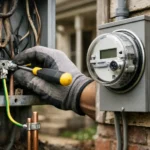
A burned mark on a plug, a dimmer that feels hot, or a panel making crackling sounds is not a minor electrical quirk. What to do if your plug shows a burned mark, or your dimmer is hot, or your panel has some crackling noises coming from it, starts with the same rule every time: treat it as a warning sign of heat, arcing, loose connections, overload, or failing equipment. These are the kinds of problems that can move from inconvenience to fire hazard fast.
In older East Bay homes, especially homes with aging panels, aluminum branch wiring, worn devices, or decades of add-on electrical work, these symptoms often point to a bigger issue than the part you can see. The visible problem is usually just the end of the chain.
When a burned plug mark means real trouble
If you unplug a lamp, space heater, microwave, air fryer, window AC, or any other appliance and see a brown or black mark on the prongs or the face of the outlet, that means heat built up where electricity was supposed to move cleanly. Electricity does not leave soot behind under normal conditions. Burn marks usually mean a loose contact, worn receptacle, overloaded circuit, damaged cord cap, or arcing.
Start by stopping use of that outlet and that appliance until both are checked. If the plug is still warm, let it cool. Do not keep testing it to see if it still works. Do not move it to another outlet and assume the appliance is fine. A damaged appliance plug can ruin the next receptacle too.
There are a few possibilities here. Sometimes the outlet has simply worn out internally and is no longer gripping the plug blades tightly. That creates resistance, resistance creates heat, and heat creates discoloration and damage. In other cases, the appliance draws a heavy load and the outlet was never in good enough condition to carry it safely. If the branch circuit is already stressed, the outlet becomes the weak point.
If the burn mark is heavy, if the outlet face is cracked or distorted, if there is a melted smell, or if the breaker has tripped with it, shut off the circuit if you can identify it safely. At that point, the receptacle should be replaced and the wiring behind it should be inspected for heat damage. A simple device replacement is not always enough. The wire termination may already be scorched, brittle, or loose in the box.
If your dimmer is hot, how hot is too hot?
A dimmer switch can feel warmer than a standard light switch. That alone does not always mean there is a defect. Dimmers dissipate heat as part of normal operation, especially when controlling a larger lighting load. But there is a line between normal warmth and a problem.
If the dimmer is mildly warm and operating LED or incandescent lights normally, that may be expected. If it is hot enough that you do not want to keep your fingers on it, if the wall plate is warming up, if the lights flicker, buzz, cut out, or the dimmer smells hot, that needs attention.
A hot dimmer usually comes back to one of a few field issues. The dimmer may be overloaded. It may not be rated for the type or total wattage of lighting on that circuit. It may be incompatible with the LED lamps installed. It may be packed into a crowded box with several other devices and no room to dissipate heat. Or it may have a loose termination, which is where the real hazard starts.
This is where do-it-yourself troubleshooting often goes wrong. People swap bulbs, change faceplates, or keep using the dimmer because the lights still come on. Meanwhile, heat continues to build in the device box. If the wiring connection is loose, the heat is not just in the dimmer electronics. It can be at the conductor itself.
Crackling in the panel is never normal
Of the three symptoms, panel crackling is the one to take most seriously. A service panel should not hiss, sizzle, pop, or crackle. Those sounds can mean active arcing, a failing breaker, a damaged bus bar, water intrusion, corrosion, a loose main connection, or overheating where utility power enters the system.
That is not a wait-and-see problem.
If you hear crackling at the panel, especially if you also notice flickering lights, an intermittent outage, a burning smell, hot breakers, or visible discoloration, call a licensed electrician right away. If the sound is strong or ongoing, and you can do so safely, keep people away from the area. Do not remove the panel cover. Do not start pressing breakers on and off to experiment. The danger inside a panel is not theoretical.
There is also an important difference between a branch circuit issue and a service equipment issue. A bad outlet or switch is serious, but panel noise can involve the entire electrical distribution point for the property. In homes with Federal Pacific, Zinsco, older fuse equipment, or compromised meter-main setups, these warning signs deserve immediate inspection. Geoff Williams has been dealing with exactly these panel hazards since 1987, including the dangerous legacy systems that still show up in older Bay Area homes.
What you should do right away
The safest first move is simple: reduce risk, document what you noticed, and stop using the affected equipment. If a plug is burned, unplug the appliance and stop using that receptacle. If the dimmer is abnormally hot, turn the lights off and leave the switch alone until it is checked. If the panel is crackling, treat it like urgent service work.
Take a photo if you can do it safely. Burn marks, melted plastic, breaker positions, and panel labels can help an electrician narrow down the likely cause before arriving. Notice whether the issue happens only under load. For example, does the crackling start when the dryer, EV charger, microwave, or AC turns on? Does the dimmer get hotter with certain bulbs? Does the same plug always loosen in that receptacle?
That kind of information matters because electrical failures are often load-dependent. A bad connection may seem quiet when little current is flowing and become obvious only when demand increases.
What not to do
Do not paint over a discolored outlet. Do not replace a breaker with a larger one because something keeps tripping. Do not keep plugging a heavy-load appliance into a receptacle that already shows damage. Do not ignore a crackling panel because the power still works.
A lot of fire-damaged wiring starts with a small symptom that somebody lived with for months. Warm switch. Loose plug. Random flicker. Occasional smell. The system usually gives a warning before it gives out.
Another mistake is assuming the device itself is always the only problem. Sometimes the burned plug is caused by a failing receptacle. Sometimes the receptacle is failing because the circuit is overloaded or the wire connection behind it is poor. Sometimes a hot dimmer is a compatibility issue. Sometimes it is the sign of a box full of overheated splices. A proper diagnosis matters.
What an electrician will usually check
A licensed electrician will usually start by isolating whether the problem is the device, the circuit, or the service equipment. That can include checking for voltage drop, heat damage, loose terminations, improper breaker sizing, overloaded circuits, damaged bus connections, corrosion, and code violations from older or improvised work.
For a burned outlet or plug issue, the inspection should include the receptacle condition, wire terminations, box fill, grounding, and the appliance load involved. For a hot dimmer, it should include the dimmer rating, lamp compatibility, box conditions, and conductor tightness. For a noisy panel, the work may involve inspecting breakers, bus bars, main lugs, service conductors, meter equipment, and any known problem panel brand.
This is also where experience counts. In older homes, one symptom can lead to others: open grounds, shared neutrals, deteriorated insulation, ungrounded circuits, double-tapped breakers, or panel brands with a long history of failure. You want somebody who has seen these patterns before, not somebody guessing their way through the diagnosis.
When repair is enough and when replacement makes more sense
Not every hot switch or burned receptacle means a full rewiring project. Sometimes the fix is straightforward. A worn receptacle can be replaced, a damaged dimmer can be swapped for a properly rated model, or a loose termination can be corrected before more damage spreads.
But there are cases where replacement is the smarter and safer move. If the panel is obsolete, visibly damaged, or one of the known hazardous legacy types, repair may only buy time. If circuits are overloaded because the house now carries modern loads like induction cooking, EV charging, mini-splits, and home office equipment, the problem may be capacity, not just one bad device. If there is repeated heat damage in multiple locations, it points to a larger system issue.
That is often what property owners, buyers, and landlords need to hear plainly: the cheapest immediate fix is not always the lowest-cost decision over the next five years.
What to do if your plug shows a burned mark, your dimmer is hot, or your panel crackles again
If any of these symptoms return after a temporary fix, do not assume it is harmless. Repeated heat and noise mean the underlying cause was not fully corrected. Electrical systems should run quietly and predictably. Burn marks, hot controls, and crackling service equipment are failure signs, not personality traits of an old building.
If you are buying or managing an older property, these symptoms are also worth documenting during inspection. They often reveal deferred maintenance or unsafe panel conditions that need correction before the next tenant, sale, or insurance review. A good electrical inspection does more than solve the immediate issue. It tells you whether the rest of the system is stable.
The helpful rule is this: if electricity is making heat where it should not, sound where it should not, or visible damage where it should not, stop using it and get it checked before it turns into a much bigger repair.