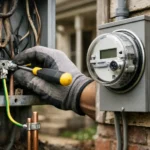
If you are asking, Why should you replace old glass type fuse panel, the short answer is safety. These panels were common in older homes, but they were built for a different era – before microwave ovens, EV chargers, air conditioning loads, and modern grounding and AFCI/GFCI protection. When a house still has a glass fuse panel, it usually means the electrical system is overdue for a serious review. Old timers and diy people often place a dime behind the fuses, as modern appliances cause too much amp draw and constantly blow the legal fuses. But this will eventually cause a fire and horrific over load.
A lot of homeowners only find out about the fuse panel when something starts going wrong. Lights dim. Fuses blow. A home inspector flags it during a sale. An insurance carrier asks questions. At that point, the issue is not just inconvenience. It is whether the electrical service is still safe and adequate for the building.
Why should you replace old glass type fuse panel systems?
The biggest problem is that old fuse panels are easy to misuse. A fuse is supposed to protect the wire by failing before the wire overheats. But over the years, people often screw in the wrong size fuse, or they use adapters and oversize protection to stop nuisance blowing. That defeats the safety design. The wire in the wall can overheat long before the fuse does its job.
There is also the simple fact of age. These panels are old. The fuse holders wear out, contacts loosen, heat builds up, and corrosion starts affecting performance. Even if the panel seems to work, the condition inside may be poor. We regularly see scorching, brittle insulation, damaged bussing, and unsafe modifications in older service equipment.
Another issue is capacity. Many glass fuse panels were installed when a 60-amp service was enough for a small house with limited appliances. Today, that same house may have a remodeled kitchen, laundry equipment, computers, multiple TVs, and plans for an EV charger. The old panel was never designed for that kind of demand.
The real risks behind old fuse panels
Not every fuse panel is an immediate emergency, but many are unsafe enough to justify prompt replacement. The risk depends on the panel condition, the service size, whether the circuits have been altered, and whether the house has proper grounding and bonding.
One common problem is overheating from loose fuse clips or degraded internal parts. That can lead to burned connections at the panel. Another is ungrounded branch circuits, which are common in the same homes that still have fuse panels. If the panel is old enough to use glass type fuses, there is a good chance the rest of the electrical system has other age-related issues that need attention too.
There is also the code and inspection side. In many real estate transactions, an old fuse panel becomes a red flag. Buyers, sellers, agents, and inspectors know these systems can delay escrow or trigger repair demands. Landlords run into the same problem when they need reliable, code-compliant service for tenants.
A breaker panel solves more than one problem
Replacing a glass fuse panel with a modern breaker panel is not just about swapping parts. It gives you a safer and more usable electrical system.
A new panel gives you resettable breakers, better fault protection options, clearer circuit organization, and room for added circuits. That matters if you are planning kitchen upgrades, HVAC work, a service upgrade from 100 amps to 200 amps, or a dedicated line for an EV charger. It also gives an electrician a clean starting point for correcting other problems, including grounding, bonding, damaged conductors, and substandard wiring changes.
For some properties, the panel replacement may need to be coordinated with the utility, especially if the service entrance, meter section, or mast is outdated. That is where experience matters. A proper panel change is not guesswork. It has to be sized correctly, installed to code, and inspected.
When replacement should move to the top of the list
If your fuses blow regularly, if the panel feels warm, if you see burn marks, if the home still has a 60-amp service, or if you are adding major loads, replacement should not wait. The same applies if you are buying or selling a property and the inspection report mentions fuse panels, grounding defects, or obsolete service equipment.
In older East Bay homes, fuse panels are often part of a bigger picture that includes old meter sockets, worn service conductors, knob-and-tube remnants, or ungrounded outlets. Replacing the panel gives you a chance to correct those issues before they turn into outages, failed inspections, or fire hazards.
Is every old fuse panel automatically dangerous?
No. A fuse panel can still be functioning, and some old systems were better maintained than others. But functioning is not the same as safe by modern standards, and it is not the same as practical for current electrical demand. That is the key distinction.
A licensed electrician should inspect the panel, the service size, the grounding system, and the branch circuit wiring before recommending the scope of work. Sometimes the right move is a full service and panel upgrade. In other cases, a panel replacement may be the main issue. Either way, the goal is long-term safety and reliability, not a temporary patch.
Geoff Williams has been handling safety-critical panel replacement work since 1987, including older fuse panels and dangerous legacy equipment. If your home or building still has a glass fuse panel, the smartest next step is to have it evaluated before it becomes an emergency.