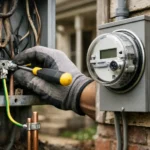
A lot of dangerous house wiring problems are hidden behind a cover plate, inside an attic junction box, or buried in a wall from an old remodel. If you are asking, What are crimp connectors and why are they dangerous in house wiring?, the short answer is this: some crimped connections can loosen, overheat, arc, and fail, especially when they were installed with the wrong connector, the wrong tool, or on the wrong type of wire.
A crimp connector is a metal sleeve or fitting that gets compressed onto a wire to make an electrical connection. In the right application, with the right materials and the right compression tool, crimping is common and can be reliable. Electricians use listed crimp connectors in certain commercial, utility, grounding, and equipment connections all the time.
The problem is that house wiring is not a place for guesswork. In older homes and handyman repairs, I often see crimp splices used as a shortcut instead of a properly listed splice method for the wiring system involved. That is where trouble starts.
What are crimp connectors and why are they dangerous in house wiring?
Crimp connectors become dangerous in house wiring when the connection is not mechanically solid and electrically sound for the life of the circuit. A bad crimp may look tight from the outside, but inside it can have high resistance. High resistance creates heat. Heat damages insulation, weakens the connection further, and can eventually lead to arcing or fire.
This is especially serious on branch circuits that feed receptacles, kitchen loads, bathroom circuits, laundry equipment, window AC units, or EV charging equipment. More current means more heat at a weak point. A connection that survives for years on a lamp circuit may fail much faster on a heavily used line.
Another issue is that not all crimp connectors are approved for all conductors. Copper and aluminum behave differently. Solid wire and stranded wire behave differently. A connector used outside its listing is a defect, even if it seems to work at first.
Where crimp connector problems show up
In residential work, the worst cases usually show up in repairs to aluminum branch-circuit wiring, old unpermitted remodels, and buried splices. Someone cuts a damaged wire, adds a crimp, wraps it with tape, and closes the wall. Later, the homeowner notices flickering lights, warm outlets, a dead circuit, or the smell of burned plastic.
I also see crimped repairs in service equipment and panel work where they do not belong. Panel changes, breaker replacements, and feeder repairs need the right connector type, the right torque, and the right enclosure conditions. This is not a place for generic hardware-store fixes.
If a home inspector flags questionable splices, melted wirenuts, aluminum wiring repairs, or signs of overheating, that deserves real follow-up. Cosmetic cleanup does not solve a bad electrical connection.
Why they fail
The failure usually comes down to one of four problems: poor compression, wrong connector, corrosion, or movement. If the installer used pliers instead of the required crimping tool, the connector may never have formed correctly around the conductor. If the connector was not listed for the wire material or size, it may loosen over time.
Corrosion is another big one, especially with aluminum conductors or damp locations. Once oxidation builds up, resistance rises. Vibration and thermal expansion make it worse. Every time the circuit heats up under load and cools down again, a marginal connection can degrade a little more.
This is why electricians pay close attention to splice methods, conductor compatibility, anti-oxidant requirements where applicable, box fill, and whether the repair is actually code-compliant. Electrical work is full of details that matter.
Warning signs homeowners should not ignore
A failing crimp connection may give you warnings before it becomes a dangerous event. Flickering lights are common. So are intermittent receptacles, breakers that trip for no obvious reason, buzzing, scorch marks, and outlets or switches that feel warm.
Sometimes there are no obvious symptoms until a device stops working or a breaker fails under fault conditions. That is one reason older homes in Oakland and Berkeley need careful inspection when there is a history of handyman electrical work, aluminum wiring, or deferred upgrades.
Safer alternatives and proper repairs
The correct repair depends on the wiring method, conductor material, circuit load, and location of the splice. In some cases a listed wirenut or push-in connector is fine. In others, a listed repair connector specifically approved for copper-to-aluminum splicing is required. For panel and service work, the repair may involve replacing damaged conductors, lugs, breakers, or the entire panel section.
There is no one-size-fits-all answer. What matters is using a listed connector for that exact application, making the splice inside an approved box or enclosure, and confirming the repair is safe under load. On safety-critical wiring corrections, this is where an experienced electrician earns his keep.
Williams Electric handles a lot of this type of work because older East Bay homes often have a mix of original wiring, later additions, and repairs done by multiple people over decades.
The bottom line on crimp connectors in homes
Crimp connectors are not automatically bad. The danger comes from improper use, wrong product selection, bad installation, and hidden aging in house wiring. If you have flickering lights, hot devices, aluminum branch circuits, or an inspection report mentioning questionable splices, do not assume it is minor. A small bad connection can become a major failure point, and it is far cheaper to correct it before the wall starts smelling hot.