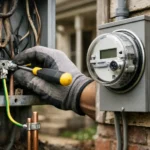
Few home repair problems create more stress than a half-finished electrical job. If you are asking, “What do you do if your electrician stops working and won’t return your calls and won’t finish the job you paid him for?” the first priority is not revenge or a refund demand. The first priority is safety, documentation, and getting the work under control before a bad installation turns into a bigger problem.
What to do if your electrician stops working and disappears
Start by documenting everything. Save the estimate, contract, invoices, canceled checks, card receipts, text messages, emails, permit paperwork, and photos of the work as it sits now. If breakers are unlabeled, wiring is exposed, devices are hanging out of boxes, or the panel cover is missing, photograph all of it. A clean paper trail matters if you need to recover money or prove the job was left incomplete.
Next, stop anyone from using questionable electrical work. If the electrician left open splices, partially installed breakers, loose receptacles, or unfinished panel work, do not assume it is safe because the lights still come on. Electrical problems often work that way right up until something overheats, arcs, or fails inspection. If needed, shut off the affected circuits or the main breaker until a licensed electrician can inspect it.
Then send one clear written demand. Keep it short and professional. State what work remains, how much you paid, and give a firm deadline to respond. Email and text are both useful because they create a time-stamped record. Do not argue back and forth. One solid message is better than ten emotional ones.
Check permits, licensing, and inspection status
A lot depends on whether the job was permitted. If the work involved a service upgrade, main panel replacement, subpanel, major rewiring, or other code-triggering work, find out whether a permit was pulled and whether any inspection was completed. If no permit exists where one should, that is a problem you need to know about immediately.
If a permit was issued, call the local building department and explain that the contractor left the job unfinished. Ask what stage the permit is in and what is required to close it. In many cases, the next electrician will want that information before touching the work. Sometimes the new contractor can continue. Sometimes the permit process needs to be corrected first.
You should also verify the electrician’s license and bond status with the state licensing board. If the contractor is licensed and bonded, you may have a path for a complaint or bond claim. If he is not properly licensed for the work he took on, that changes how you should proceed and may explain why he vanished.
When to bring in another electrician
If the original contractor will not respond, do not wait too long hoping he changes his mind. A second licensed electrician should inspect the job, identify safety issues, and tell you what can be salvaged. That inspection is especially important when the abandoned work involves panel changes, service mast work, grounding, GFCI or AFCI protection, EV charger circuits, or older homes with Federal Pacific, Zinsco, fuse panels, or mixed old-and-new wiring.
This is where homeowners get frustrated. They think the new electrician should just “finish it.” Sometimes that is possible. Sometimes it is not. If the first contractor did sloppy or unsafe work, the new electrician may need to remove part of it and start over. That can cost more than expected, but it is often the only way to leave you with code-compliant, reliable electrical work.
A serious electrician will usually want to inspect the panel, test circuits, check grounding and bonding, verify conductor sizing, and look for permit or utility issues before quoting completion. That is normal. It is not upselling. It is what competent troubleshooting looks like.
Can you get your money back?
Maybe, but separate the money issue from the safety issue. First stabilize the job. Then pursue recovery.
If you paid by credit card, ask your card issuer whether a dispute is still possible. If you paid by check, cash, or transfer, your options may include a licensing board complaint, bond claim, small claims court, or a demand letter. The strength of your case depends on your records, the contract terms, permit status, and how much of the agreed work was actually completed.
Be realistic about partial performance. If the electrician completed some legitimate portion of the work, you may not recover the full amount even if he handled the rest badly. On the other hand, if the unfinished work is unsafe or has to be removed, that strengthens your position.
How to avoid this problem next time
Most abandoned electrical jobs show warning signs early. The estimate is vague. The contractor wants a large deposit without a clear scope. There is no permit discussion. Calls start getting missed before the rough work is done. Inspection dates are unclear. If the work involves safety-critical items like a main panel upgrade or service change, these are red flags, not small communication issues.
Hire a licensed, bonded, and insured electrician who handles the type of work you actually need, especially if the job involves old East Bay housing stock, service equipment, or correction work from a home inspection report. Ask who pulls permits, what the payment schedule is, and what happens if hidden defects are found once walls or panels are opened.
For difficult cleanup work, experience matters. A veteran shop that has seen bad panel swaps, failed breaker installations, improper neutrals, missing grounds, and utility coordination problems can usually spot the issue fast and tell you what is repairable and what is not. That saves time, money, and a lot of guessing.
If your electrician disappears mid-job, act quickly, stay factual, and get another licensed electrician involved before the unfinished work becomes a fire hazard or an inspection nightmare.