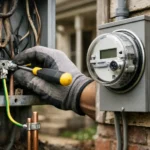
All it takes is one ignition point to go bad, that is, in electrician land, an ignition point is when wires attach to: an outlet, other wires, light fixtures, circuit breakers, lugs, light switches, junction boxes, and any loose over heating, loaded wire can catch the devices on fire. Fresh paint can hide old electrical problems. If you are asking, “What to do if your house has painted over outlets, old bad switches, and old dangerous light fixtures and panels?” the short answer is this: treat it as a safety inspection issue, not a cosmetic cleanup job. Painted outlets, worn switches, and outdated fixtures often show up together in older homes, especially when a seller or landlord did quick surface work instead of real electrical repair.
In a lot of East Bay homes, this combination tells a familiar story. The walls got painted. The devices stayed. The panel may still be original or dangerously outdated. That does not automatically mean the whole house needs a full rewire, but it does mean you should stop guessing and start prioritizing what is unsafe.
Start by separating cosmetic problems from electrical hazards
A painted-over outlet cover is annoying. A painted-over receptacle itself is different. If paint has entered the slots, coated the face of the device, or glued the cover plate to the wall, you may be looking at poor workmanship and possible contamination inside the device. Latex paint is not usually the main fire hazard by itself, but painted devices are often old, loose, cracked, or improperly grounded. The bigger concern is what the paint is hiding.
Old switches are similar. A discolored switch plate may be cosmetic. A switch that feels loose, crackles, gets warm, sparks, or only works intermittently is not cosmetic. That points to wear, poor terminations, backstabbed wiring, damaged conductors, or arcing. Those are real repair items.
Light fixtures can also look worse than they are, or look fine while being unsafe. An old fixture with a cracked canopy, brittle insulation, missing grounding, or overheated wiring at the box needs attention. If the fixture is hanging loose, mounted to an improper box, or connected to old cloth wiring, it moves into a higher-risk category.
Panels are where the risk can get serious fast. If the house has a Federal Pacific Stab-Lok panel, a Zinsco panel, a fuse panel, signs of overheating, rust, double-tapped breakers, or breakers that trip poorly or not at all, that is not a watch-and-wait issue. Those panels can fail to protect the wiring when a fault happens.
What to do first if your house has painted over outlets, old bad switches, and old dangerous light fixtures and panels
Do not start by replacing random cover plates and hoping for the best. Start with a whole-house electrical evaluation by a licensed electrician who works on older homes. You want someone who can inspect the devices, the branch wiring, the grounding, the service equipment, and the panel together. Problems like these are rarely isolated.
If you are buying the property, use the inspection period wisely. Home inspectors often flag painted outlets, reverse polarity, open grounds, missing GFCI protection, unsafe fixtures, and obsolete panels, but they are not opening everything up. A licensed electrician can tell you what is minor, what needs immediate correction, and what should be budgeted next.
If you already own the house, begin with anything that shows heat, arcing, loose connections, or a known dangerous panel brand. Those take priority over appearance.
Painted outlets and switches usually mean replacement, not cleaning
Once outlets and switches have been painted over, replacement is usually the right move. It is faster, cleaner, and safer than trying to scrape them back into service. Devices are inexpensive compared with the labor involved in trying to salvage old ones, and many older devices were already near the end of their useful life before someone got paint on them.
When replacing them, the electrician should check more than just the visible device. This is the time to verify box fill, grounding, wire condition, polarity, secure splices, and whether the wiring method matches the age of the home. In older houses, you may find two-wire circuits with no equipment ground, mixed wiring from different decades, or brittle insulation that breaks when disturbed.
There is also a code and safety upgrade opportunity here. Many older homes still lack GFCI protection where it is required, such as kitchens, bathrooms, garages, exterior outlets, basements, and laundry areas. AFCI protection may also be appropriate depending on the circuits and the scope of the work. A straightforward outlet replacement job can turn into a meaningful safety upgrade when done correctly.
Bad switches and old fixtures can point to hidden wiring damage
A switch that buzzes, feels hot, or works only in certain positions should not be ignored. The device itself may be worn out, but there may also be damage in the box or at the fixture it controls. A lot of old switch legs were wired with methods that are still common in older properties but need careful evaluation when repairs are made.
Old light fixtures deserve more than a quick visual glance. Some older fixtures were installed before modern grounding practices were common. Others were retrofitted poorly over the years. A heavy fixture mounted to the wrong box, for example, can be both an electrical and mechanical hazard. If the insulation in the ceiling box is brittle or heat-damaged, replacing the fixture alone does not solve the problem.
This is especially common in homes with decades of patchwork remodeling. One room may have updated recessed lighting, while the next room still has an old fixture on aging wiring. You do not need to panic, but you do need a repair plan based on actual conditions.
Dangerous panels change the priority list
If the panel is obsolete or known to be unreliable, that often becomes the first major repair. There is no point in upgrading devices throughout the house while leaving a panel in place that may not trip properly under fault conditions. Federal Pacific Stab-Lok and Zinsco panels are the most common examples, but any panel showing overheating, corrosion, damaged bus bars, improper breaker fit, or sloppy additions deserves immediate attention.
A panel problem also affects everything downstream. Nuisance tripping, flickering lights, low voltage on circuits, burned breaker stabs, and overloaded service conditions can all show up as scattered symptoms in outlets, switches, and fixtures. Homeowners sometimes replace devices one by one without realizing the service equipment is the larger issue.
If the home still has 100-amp service and you are adding modern loads such as EV charging, air conditioning, induction cooking, or expanded kitchen circuits, a 200-amp panel upgrade may make more sense than repeated small fixes. It depends on the load calculation, the condition of the service entrance equipment, and whether PG&E-side work is involved.
Do not assume all old wiring has to be replaced
This is where experience matters. Some older systems can remain in service safely with selective corrections. Others need partial or full replacement. Knob-and-tube, ungrounded branch circuits, deteriorated cloth wiring, aluminum branch wiring, and amateur additions all require different decisions.
The right approach is targeted. Replace unsafe devices. Correct open splices, improper junctions, grounding defects, and overloaded circuits. Upgrade the panel if it is obsolete or defective. Then decide whether the branch wiring condition justifies further rewiring. A good electrician will tell you where the line is between needed safety work and elective modernization.
If this came up in a real estate deal, document everything
Buyers, sellers, landlords, and agents should treat these issues as negotiable repair items backed by licensed findings. Painted outlets by themselves may not change a deal. Dangerous panels, overheated devices, missing GFCI protection, and defective fixtures often do.
Get a written scope of work and clear priorities. Usually the categories are immediate safety repairs, recommended corrections, and optional upgrades. That helps everyone make decisions without confusion. It also keeps a cosmetic issue from being lumped together with a true fire or shock hazard.
In older Oakland, Berkeley, Piedmont, and Lafayette homes, this kind of electrical cleanup is common after inspections. The homes are good houses, but many have layers of old work behind fresh paint.
What you should not do
Do not paint over devices again. Do not install new cover plates over loose or damaged outlets to make them look better. Do not swap breakers in a dangerous panel without understanding panel compatibility. Do not replace fixtures without checking the box, wiring, and grounding. And do not assume a handyman-level fix is enough when the symptoms point to aging electrical infrastructure.
If you are handy, turning off a breaker and changing a cover plate is one thing. Diagnosing heat damage, service problems, mixed wiring methods, or obsolete panel hazards is another. That is where licensed electrical work matters.
A practical repair order
In most houses, the safest order is simple: address the panel first if it is dangerous, then correct any overheated or failing switches and fixtures, then replace painted or worn outlets and switches, then handle grounding, GFCI, AFCI, and other code-related upgrades as needed. After that, you can decide whether additional rewiring or service expansion makes financial sense.
That sequence avoids wasting money on surface fixes while leaving the main hazard in place. It also gives you a clearer picture of the house. Once the worst devices and equipment are opened up and tested, the rest of the plan usually becomes obvious.
If the house is showing painted-over outlets, bad switches, and old fixtures all at once, believe what it is telling you. Someone deferred electrical maintenance. The right move is not to panic and not to ignore it. It is to get a real diagnosis, fix the unsafe items first, and bring the system back to a condition you can trust.