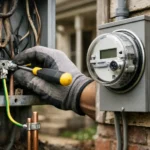
Al wire is soft and contracts and expands more readily than the harder copper, but costs half as much as copper does. It is 55 times more likely to catch fire than copper. If a home inspector flags aluminum branch wiring, the next question is usually immediate and practical: when should aluminum wiring be replaced? The honest answer is not always, not never, and not without looking closely at the age of the wiring, the devices on the circuit, the condition of the connections, and what problems are already showing up in the field.
When should aluminum wiring be replaced in a house?
Most of the concern is about solid aluminum branch-circuit wiring installed in many homes during the late 1960s and early 1970s. That wiring can perform poorly at terminations. Aluminum expands and contracts more than copper, oxidizes at the connection points, and can loosen over time if the wrong devices or connectors were used. Loose connections create heat. Heat creates damage. That is where the real hazard starts.
Replacement becomes much more likely when the wiring is part of a larger pattern of electrical problems. If you have warm switches, flickering lights, outlets that stop working intermittently, a burning smell, scorched receptacles, or breakers that trip for no clear reason, that is not a wait-and-see situation. Those are field signs that connections may already be failing.
On the other hand, not every house with aluminum wiring needs a full rewire the day it is discovered. Some homes have had proper corrective work done at key connection points. Some circuits are in decent condition and can be made safer with approved repairs. The right call depends on what is actually in the walls and at the terminations, not just what shows up on a disclosure form.
The real issue is the connection, not just the wire
Homeowners often hear “aluminum wiring is dangerous” and assume the wire itself is automatically bad. That is too simplistic. The bigger issue is how that wire was terminated and whether those terminations have held up over decades of use.
A lot of older homes with aluminum branch wiring also have aging panels, worn receptacles, handyman repairs, added lighting, kitchen upgrades, or garage circuits tied in later. That mixed history matters. Aluminum wiring that has been spliced incorrectly, landed on devices not rated for it, or crowded into overheated boxes is far more concerning than aluminum wiring that has been professionally evaluated and corrected.
This is why a real inspection by an experienced electrician matters more than a quick visual guess. You need to know whether the problem is isolated, widespread, repairable, or already beyond patchwork.
Signs aluminum wiring should be replaced, not just repaired
There are several situations where replacement starts to make more sense than connector repairs alone.
If the branch wiring has repeated failures at multiple locations, that points to a system-wide issue. If an electrician opens several boxes and finds scorched insulation, overheated devices, brittle conductors, or a long history of improper splicing, the labor to keep chasing bad connections can stop making financial sense.
Replacement is also the better path when walls are already open during a remodel. If you are updating a kitchen, adding recessed lighting, removing plaster, or doing major renovation work, that is often the most cost-effective time to remove older aluminum branch circuits and install new copper wiring. Paying to preserve old wiring during a major remodel often ends up costing more later.
Another common case is insurance or real estate pressure. Some insurers are cautious about homes with solid aluminum branch wiring. Some buyers get nervous, and some deals stall when inspection reports call it out. In those cases, replacement may be the cleanest long-term solution, especially if the home also has other outdated electrical components.
Capacity matters too. If the house needs new circuits for an EV charger, air conditioning, kitchen upgrades, laundry additions, or a panel upgrade, it can be smarter to rework the old branch circuits at the same time instead of trying to build a modern electrical load on top of aging wiring.
When repair may be acceptable
There are cases where complete replacement is not necessary right away. If the aluminum branch wiring is limited in scope, shows no heat damage, and is terminated with approved repair methods by a qualified electrician, corrective repair can reduce the hazard significantly.
That usually means inspecting device boxes, checking panel terminations, identifying improper outlets and switches, and using approved connector methods where needed. It does not mean twisting copper and aluminum together with whatever connector is on the truck. Aluminum work has to be done correctly, with the right materials and technique.
The trade-off is that repair is not the same thing as making the house new. It may be a sound safety upgrade, but it does not erase the age of the system. For some owners, especially landlords or buyers trying to address a specific inspection issue, that may be enough for now. For others, especially families planning to stay long term, replacement may still be the better investment.
What makes aluminum wiring more urgent?
Urgency goes up fast when aluminum wiring shows up with other legacy electrical problems. A house with aluminum branch circuits plus a Federal Pacific panel, a Zinsco panel, old fuse equipment, missing grounding, two-prong receptacles, or DIY additions is not just dealing with one issue. It is dealing with stacked risk.
That is common in older East Bay homes. The wiring itself may not be the only thing driving the decision. Sometimes the smarter move is to evaluate the entire electrical system together – panel, service, grounding, branch circuits, GFCI and AFCI protection, and any visibly overheated devices – and decide what order of work gives the best safety result.
If a house has already had nuisance issues for years, replacement should be considered sooner rather than later. Electrical problems rarely fix themselves. They usually get worse one loose connection at a time.
Can you live in a house with aluminum wiring?
Yes, many people do. But that is not the same as saying it should be ignored.
A house with aluminum branch wiring should be treated as a system that needs informed evaluation, not casual assumptions. If there are no symptoms and the wiring has been properly corrected and maintained, the situation may be manageable. If the house has not been evaluated in years, or there are active signs of trouble, you are taking a gamble by delaying.
This is especially true after buying an older home. A lot of buyers inherit electrical work done over several decades by multiple owners, handymen, and contractors. Labels in the panel may be wrong. Devices may have been swapped out improperly. Added loads may not match the original design. That is where hidden aluminum wiring problems tend to surface.
How an electrician decides between repair and replacement
A competent evaluation usually starts with the panel, the visible branch wiring, and a sampling of devices and junction boxes. The electrician is looking for signs of overheating, improper terminations, incompatible devices, damaged insulation, overloaded circuits, and prior repair attempts.
Then comes the practical question: how extensive is the problem, and what else is planned for the property?
If the home just needs targeted corrective work and the system is otherwise stable, repair may be reasonable. If the home is headed for a remodel, service upgrade, major appliance additions, or repeated troubleshooting visits, replacement becomes easier to justify.
This is one area where experience matters. Aluminum wiring issues are often underestimated by electricians who do mostly new construction and do not spend much time opening up older occupied homes. A veteran service electrician has usually seen the patterns before – overheated back-wired devices, mixed metals, failed splices, damaged receptacles, and the way one problem in one room usually means more are waiting elsewhere.
The mistake homeowners make most often
The biggest mistake is waiting for a dramatic failure before taking action. By the time you see a melted outlet or smell insulation burning, the connection has usually been running hot for a while.
The second mistake is treating the cheapest fix as the best fix. Sometimes a low-cost repair is exactly the right move. Sometimes it is money spent postponing a larger problem. That is why the answer to when should aluminum wiring be replaced depends on condition, scope, and future plans for the property.
If you own an older home in Oakland, Berkeley, Piedmont, or nearby and aluminum wiring has come up in an inspection, during a remodel, or after lights started acting up, get it evaluated before you guess. A clear diagnosis is cheaper than replacing burned devices one at a time, and a lot cheaper than dealing with fire damage later.
The best next step is simple: find out whether your aluminum wiring is stable, repairable, or telling you it is time to replace it.