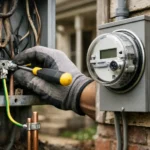
A breaker that trips once in a while after you plug in a space heater is one thing. A breaker that keeps tripping for no clear reason is a warning sign, and ignoring it is how small electrical problems turn into burned wiring, damaged panels, or a house that suddenly loses power in part of the building. If you’re asking why does breaker keep tripping, the real answer is that the breaker is doing its job – but the reason behind it can range from simple overload to a serious panel defect.
Why does breaker keep tripping in the first place?
A circuit breaker trips when it senses unsafe conditions on a circuit. Most of the time that means too much current, a short circuit, a ground fault, or a breaker that is failing mechanically. In newer homes, AFCI and GFCI breakers can also trip because they detect arcing or leakage current that standard breakers would miss.
That is why the same symptom can have very different causes. The breaker is not the problem every time. Sometimes the load is too high. Sometimes the wiring is damaged. Sometimes the appliance is bad. And in older East Bay homes, sometimes the panel itself is outdated, loose, overheated, or from a known problem brand.
The most common reason is circuit overload
This is the first thing to consider because it is common and easy to understand. Every branch circuit is designed to carry only so much current. If you run a microwave, toaster oven, and coffee maker on the same kitchen circuit, or a portable AC and vacuum on the same bedroom circuit, the breaker may trip because the total load is too high.
The pattern matters. If the breaker trips only when several things run at once, overload is likely. If it trips instantly the moment one item turns on, that points more toward a fault condition than a simple overload.
Older homes in Oakland, Berkeley, and Piedmont often have fewer circuits than modern living requires. A house wired decades ago was not designed for EV charging, multiple refrigerators, gaming systems, portable heaters, and home office equipment all stacked on existing circuits. In those cases, the real fix may be adding dedicated circuits or upgrading the panel, not just swapping the breaker.
A short circuit is more serious
A short circuit happens when a hot wire contacts neutral or another unintended conductor path. That causes a rapid surge of current, and the breaker trips fast to stop heat buildup and fire risk.
When this happens, homeowners often describe a breaker that will not stay on at all. You reset it, and it trips immediately or within seconds. Sometimes there is a burnt smell, a pop, discoloration at an outlet, or a dead appliance involved.
This is not a “keep resetting it and see what happens” situation. Repeated resetting can make damage worse. If the breaker trips instantly and especially if you smell burning, stop and have the circuit diagnosed properly.
Ground faults are common in kitchens, baths, garages, and outdoors
A ground fault is when current finds an unintended path to ground. Water exposure, damaged cords, bad disposal wiring, outdoor receptacles, garage wiring, and aging insulation are common causes.
If the tripping circuit serves a bathroom, kitchen counter, laundry, garage, or exterior outlet, ground fault protection may be involved. In some cases the fault is in the connected appliance, not in the house wiring. A failing dishwasher, refrigerator, sump pump, or outdoor tool can trip a breaker even though the wiring in the wall is fine.
The challenge is that ground fault problems can be intermittent. The breaker may hold for hours, then trip when humidity rises, when rain gets into an exterior box, or when a motor starts under load.
AFCI and GFCI breakers can trip for reasons that feel random
Newer code-required breakers are more sensitive than old thermal magnetic breakers. That is generally a good thing, but it also means they can catch wiring defects that have been hiding for years.
An AFCI breaker looks for arcing patterns, which can come from loose connections, damaged cords, backstabbed outlets, failing switches, or worn wiring in older homes. A GFCI breaker looks for current imbalance that suggests leakage to ground.
To a homeowner, this can feel random. The breaker trips when you use a vacuum in one room, a treadmill in another, or a lamp with an old cord. The breaker may not be bad. It may be telling you there is a loose or deteriorated connection somewhere on the circuit.
Sometimes the breaker itself is worn out or defective
Breakers do fail. They are mechanical devices, and heat, age, repeated tripping, poor bus connection, or panel damage can affect how they perform. A weak breaker may trip below its rated load. A loose breaker may overheat where it connects to the panel bus. In some cases, what looks like nuisance tripping is actually evidence of heat damage in the panel.
This is especially important in older electrical panels or known problem brands. Federal Pacific and Zinsco equipment has a long history of safety concerns. In those panels, the question is not only why the breaker keeps tripping, but whether the breaker can be trusted at all. Some dangerous breakers fail to trip when they should, while others make poor contact and overheat.
If you have an older panel, signs like warm breakers, flickering lights, crackling sounds, rust, corrosion, or scorch marks deserve immediate attention.
What you can safely check before calling
There are a few reasonable checks a property owner can make without opening panels or taking anything apart. First, think about what was running when the breaker tripped. If several high-draw appliances were on at once, unplug or turn off some loads and then reset the breaker once.
Next, unplug everything on that circuit if you can identify it. Reset the breaker with all loads removed. If it holds, plug items back in one at a time. That can help identify a bad appliance or overloaded setup.
Also look for obvious issues such as a damaged cord, a tripped GFCI receptacle upstream, moisture at outdoor outlets, or a recently installed device like a disposal, light fixture, EV charger, or receptacle that may have been wired incorrectly.
What you should not do is replace a breaker with a larger one, keep forcing resets, or remove panel covers unless you are qualified. Oversizing a breaker is how wiring gets overheated inside walls.
When breaker tripping points to a bigger electrical issue
There is a difference between one overloaded circuit and a property that has outgrown its electrical system. If breakers trip regularly, lights dim when equipment starts, the panel is crowded, or extension cords are doing the job of permanent wiring, the building may need more than a simple repair.
That is common in older homes and small commercial spaces where modern loads have been added over time. Electric cooking, portable HVAC equipment, office electronics, workshop tools, and EV charging all change the demand profile. A panel change, service upgrade, dedicated circuit installation, or wiring correction may be the right long-term fix.
This is where experience matters. On older East Bay properties, the answer is often found by inspecting the whole system, not just the one breaker that tripped. A veteran electrician will look at load balance, panel condition, breaker type, wire size, termination quality, grounding, and any signs of heat or arcing. That approach finds the root cause instead of guessing.
Why does breaker keep tripping after you reset it?
If it trips again right away, the breaker is seeing an active fault. That usually means a short circuit, ground fault, severe overload, or a bad breaker connection. If it trips only after a while, heat buildup or cumulative load may be involved.
This timing matters because it helps narrow the diagnosis. Immediate trip points to a fault. Delayed trip points more toward overload, motor startup stress, loose terminations heating up, or an appliance that fails when it warms up.
A proper diagnosis may involve checking amp draw, inspecting devices on the circuit, opening outlets and switches for loose or burned connections, and evaluating whether the panel itself is safe and serviceable.
When to stop troubleshooting and call an electrician
Call for service if the breaker will not reset, trips instantly, feels hot, smells burnt, or is tied to flickering lights, buzzing, or partial power loss. Call if the circuit serves critical equipment, if the panel is old or a known hazardous brand, or if a home inspection has already flagged panel or wiring concerns.
For landlords, agents, and buyers, repeated breaker trips should not be brushed off as a tenant nuisance or minor defect. It can signal hidden wiring damage, improper additions, unsafe panel equipment, or a system that needs upgrading for current use.
Williams Electric handles a lot of this type of work because tripping breakers are rarely just about the breaker. Sometimes it is a bad appliance. Sometimes it is a loose neutral. Sometimes it is an overloaded kitchen. And sometimes it is the first visible symptom of a panel that should have been replaced years ago.
A breaker that keeps tripping is not being annoying – it is interrupting power to keep wires and connections from getting hot enough to do real damage. Treat that interruption as useful information, and you will usually solve the problem faster and a lot more safely.