If your breakers trip when the dryer, microwave, and space heater run at the same time, your electrical system is already telling you something. A 200 amp panel upgrade is not just about getting a bigger panel on the wall. It is about whether your home can safely handle modern electrical demand without overheated wiring, nuisance trips, or a service that is already past its useful life.
For a lot of older East Bay homes, this comes up at exactly the wrong time – during a remodel, after a failed home inspection, or when an EV charger is suddenly part of the plan. The question is not always, “Can I upgrade to 200 amps?” Usually the better question is, “Do I need a full service upgrade, or is there a smarter fix?” That distinction matters because some homes need the whole service changed, while others need panel replacement, circuit work, or correction of dangerous equipment.
What a 200 amp panel upgrade actually includes
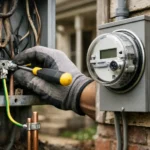
People often use the term loosely, but in the field it can mean several different things. A true 200 amp panel upgrade usually involves replacing the main service equipment so the home has a 200 amp rated panel and service capable of carrying that load. Depending on the property, that may also include a new meter socket, service mast, weather head, grounding system, service entrance conductors, or coordination with the utility.
If the home has underground service instead of overhead service, the job can be different. If the existing setup is tied to older PG&E equipment, the scope may change again. That is why two houses on the same block can get very different estimates for what sounds like the same work.
There is another point homeowners miss. A larger panel with more breaker spaces is useful, but more spaces do not automatically mean more service capacity. You can replace an old panel with a newer panel and still remain at 100 amps. That may be fine for some properties. It may also be completely inadequate if you are adding central air, induction cooking, a hot tub, or EV charging.
When a 200 amp panel upgrade makes sense
The strongest reason to upgrade is load. Older homes were not designed for today’s electrical use. They had fewer appliances, less air conditioning, no car charging, and far fewer dedicated circuits. Once you start adding electric laundry, kitchen upgrades, office equipment, or a Level 2 EV charger, the old service can become the bottleneck.
A 200 amp panel upgrade also makes sense when the existing equipment is unsafe or obsolete. Federal Pacific and Zinsco panels are the big examples because they have a long history of failure issues and should be taken seriously. Fuse panels, damaged bus bars, heat damage, corrosion, double-tapped breakers, and makeshift additions are also signs that replacing the equipment may be the right move.
Then there are the inspection-driven jobs. Real estate agents, buyers, and sellers often run into this during escrow. The issue may not be that the home absolutely needs 200 amps right away. The issue may be that the existing panel is an insurance problem, a lender problem, or a safety problem. In those cases, upgrading can solve more than one issue at once.
Signs your current service is too small or too old
Sometimes the warning signs are obvious. Breakers trip regularly. Lights dim when a heavy appliance starts. The panel feels warm. There is rust, buzzing, or evidence of arcing. Other times the system seems to work, but only because the house is limping along on an electrical setup that has not been asked to do much.
If you own an older home and are planning an addition, kitchen remodel, HVAC change, or EV charger, that is the time to look at service size before walls are opened and permits are pulled. It is cheaper and cleaner to plan for capacity up front than to finish a project and then find out the electrical service cannot legally or safely support it.
Another common scenario is lack of space. If every breaker position is full and the panel is already loaded with tandem breakers or improvised solutions, the system may be out of room and out of flexibility. That does not always require a service upgrade, but it often points in that direction.
What affects the cost of a 200 amp panel upgrade
This is where honest answers matter. There is no single price that applies to every home because the panel itself is only one part of the job. The service type, location of the panel, condition of the existing grounding, utility requirements, permit requirements, and access to the work area all affect cost.
An overhead service is often more straightforward than an underground service. A panel mounted in an accessible exterior location is simpler than one buried behind finish work or located where service conductors need to be rerouted. If the grounding system is outdated, that needs correction. If the meter section or service mast does not meet current code, that may need replacement too.
Local utility coordination also matters. Some jobs require a shutdown and reconnect on a tight schedule. Others involve service clearances, damaged risers, or older infrastructure that adds labor and delay. This is one reason experienced panel contractors matter. On paper, two electricians may both bid a panel change. In practice, one may be pricing a clean, code-compliant job and the other may be missing half the scope.
Why load calculation comes first
Not every home needs 200 amps. A proper load calculation looks at the actual demand of the home, including square footage, fixed appliances, HVAC, laundry, kitchen loads, and planned additions. That calculation keeps the job honest.
Some homeowners are better served by replacing a dangerous panel while keeping 100 amp service for now. Others clearly need 200 amps because the demand is already there. The difference should be based on the property, not on guesswork.
This is especially true in older homes in Oakland and Berkeley, where electrical systems often have layers of past work. A house may have partial rewiring, mixed grounding, old subpanels, or decades of add-ons. You want someone who can separate what must be corrected from what can remain.
Safety and code issues that should not be ignored
Panel work is not cosmetic work. If a breaker fails to trip, if a bus bar is damaged, or if service conductors are not installed correctly, the risk is real. That is why panel replacements and service upgrades should be permitted and inspected.
Grounding and bonding are a big part of the job. A new panel installed onto an old, poorly grounded system is not a complete fix. The same goes for damaged branch wiring, overloaded circuits, and illegal neutral-ground connections. A good panel upgrade addresses the service equipment correctly and calls out related defects when they are part of the safety picture.
This is also why older hazardous equipment deserves direct language. Federal Pacific/Stab-Lok and Zinsco panels are not “still working fine” just because the lights come on. Many of these systems stay in service long after they should have been replaced.
Choosing the right electrician for a 200 amp panel upgrade
This is not the place to shop by the lowest number alone. You want a licensed, bonded, and insured electrician who regularly performs panel changes and service upgrades, understands utility coordination, and can work through older-home conditions without turning the job into a string of surprises.
Ask whether the contractor handles both overhead and underground service conditions. Ask what is included in the estimate. Ask whether grounding upgrades, permit work, utility coordination, and correction of code defects are part of the scope or separate. Straight answers up front save trouble later.
For homeowners, landlords, and real estate professionals, experience with inspection repairs is a plus. So is experience with dangerous legacy equipment. Geoff Williams has been a licensed electrician since 1987 and was featured by NBC as an expert on Federal Pacific and service upgrade work, which is the kind of background that matters when the job involves more than swapping one panel for another.
The real value is not just more amps
A 200 amp service gives you room to add an EV charger, support a remodel, and reduce strain on an overloaded system. But the bigger benefit is confidence. You know the service is sized for the property, the equipment is current, and the installation has been done to code.
That matters when you are buying a house, preparing one for sale, or trying to stop electrical problems from turning into expensive damage. If your panel is outdated, overcrowded, or tied to equipment with a known safety history, it is worth having it evaluated before the next project forces the issue.