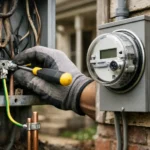
A back fed outlet is one of those wiring problems that can look normal on the surface but create a real shock and fire hazard behind the wall. If you have asked, “What is a back fed outlet and why is it dangerous?” the short answer is this: it is an outlet that is being energized from an improper source or wiring path, often in a way that defeats normal protection, confuses troubleshooting, and can leave parts of a circuit live when they should not be.
In older homes, remodeled garages, flipped properties, and do-it-yourself additions, this problem shows up more often than people think. We see it when someone taps into another circuit the wrong way, feeds power backward through a receptacle, or creates an illegal connection that was never meant to carry load or provide overcurrent protection the way the electrical system was designed.
What is a back fed outlet?
In plain terms, a back fed outlet is a receptacle that is supplying power backward into a circuit or being energized from the load side of another device in an improper way. Sometimes people use the term loosely, but the danger is usually the same: power is showing up where a person, inspector, or even an electrician would not expect it.
A common example is an outlet that remains live because it is being fed through another branch circuit, a generator connection, a switched leg wired wrong, or a bootleg modification done during a repair. Another example is when someone tries to power part of a house through a receptacle using a cord with male ends. That is extremely dangerous and can energize wiring, panels, or equipment backward.
The outlet itself is not the root problem. The real problem is incorrect wiring design, improper splices, or an unauthorized power source.
Why a back fed outlet is dangerous
The biggest danger is shock. A person may turn off a breaker, test one part of the circuit, and assume the outlet is dead. But because of the backfeed, the device or conductor may still be energized. That is how people get hurt.
The second danger is fire. Receptacles, wire connections, and breakers are designed for power to move through the system in a specific way. When power is fed backward or through an unintended path, connections can overheat, breakers may not protect the circuit properly, and damaged wiring can sit inside the wall getting hotter over time.
There is also a serious utility and service hazard. If someone backfeeds a panel from a generator without the correct transfer equipment, power can travel onto conductors that should be dead. That can injure utility workers and destroy equipment when normal power is restored.
Signs you may have a back fed outlet
Sometimes there are no visible signs until an inspection or repair. Other times the clues are pretty clear. An outlet may stay live when its breaker is off. A tester may show strange voltage readings. A plug-in device may work only when another breaker is on. Lights may glow dimly, flicker, or behave differently depending on what else is plugged in.
You might also notice a tripping breaker that does not seem to match the room losing power, a warm receptacle, a burned smell, or a failed GFCI that will not reset correctly. In older East Bay homes with multiple remodels over the years, hidden wiring changes are a common source of this kind of problem.
How this problem happens
Most back fed outlet issues come from bad alterations, not normal wear and tear. A handyman or homeowner may have borrowed power from a nearby outlet without understanding circuit layout. Two circuits may have been tied together. A neutral may have been shared incorrectly. A receptacle may have been used as a feed-through point for something it should not supply.
Generator misuse is another major cause. People sometimes try to energize house wiring through a dryer outlet or garage receptacle during an outage. That is not a workaround. It is a dangerous illegal backfeed condition.
In older properties, especially those with past panel changes, added kitchens, garage conversions, or outdoor wiring, you can also find legacy code violations that were hidden for years.
What to do if you suspect one
Do not keep resetting breakers and guessing. Do not open devices if you are not trained to test for live voltage safely. And do not try to isolate the problem by plugging cords between outlets.
The right approach is electrical troubleshooting with the circuit mapped, the panel checked, the receptacles opened and inspected, and voltage tested under controlled conditions. In some cases the repair is simple, such as correcting a miswired receptacle or removing an illegal jumper. In other cases, the issue leads back to a larger problem in the panel, a multi-wire branch circuit, a subpanel, or old unsafe wiring.
A licensed electrician should verify breaker sizing, conductor condition, grounding, polarity, GFCI and AFCI protection where required, and whether any hidden backfeed is affecting other circuits. That matters in homes being sold, rental units, and commercial spaces where liability is a real concern.
When this becomes an urgent repair
If an outlet is hot with the breaker off, if you smell burning, if breakers trip unpredictably, or if a generator has ever been connected to house wiring without a transfer switch or interlock, treat it as urgent. Those are not cosmetic issues. They are safety issues.
For homeowners, landlords, and buyers, this is exactly the kind of defect that should be corrected before it causes injury or turns into a larger panel or wiring failure. An experienced shop like Williams Electric can usually tell pretty quickly whether you are dealing with one bad receptacle or a deeper wiring correction problem. The important part is not to ignore it just because the outlet still seems to work.