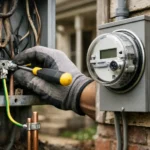
A home inspection report can turn a straightforward sale, refinance, or remodel into a rush of electrical questions. The best code fixes before inspection are not cosmetic upgrades or random items from a checklist. They are the corrections that address shock risk, fire risk, unsafe service equipment, and obvious code deficiencies an inspector is likely to document.
For older homes in Oakland, Berkeley, Piedmont, and Lafayette, the electrical system often tells the story of decades of additions: a kitchen circuit added in the 1990s, an ungrounded outlet swapped for a three-prong receptacle, an aging subpanel, or a garage conversion supplied with improvised wiring. A qualified electrician should identify what is unsafe, what is likely to be called out, and what requires a permit rather than a quick patch.
Start With the Electrical Panel and Service Equipment
The panel is the first place to look because it is the center of the electrical system. A clean-looking panel is not necessarily a safe one. Inspectors commonly report corrosion, missing knockouts, double-tapped breakers, overheating, improper breaker types, open panel spaces, damaged conductors, and lack of working directory labels.
Some panel brands deserve immediate attention. Federal Pacific Electric Stab-Lok panels, Zinsco panels, old fuse boxes, and panels with visible heat damage are not minor inspection fixes. These systems can have serious reliability and safety concerns, including breakers that may fail to trip properly under fault conditions. Replacing a dangerous panel can be a larger project, but it is often the correct repair when a buyer, insurer, or inspector raises the issue.
A service upgrade is different from a panel replacement. If the existing 100-amp service is overloaded by electric appliances, EV charging, air conditioning, a heat pump, or a remodel, a 200-amp PG&E service upgrade may make sense. But do not assume every older panel needs a 200-amp upgrade before inspection. If the service is sound and the load calculation supports the existing capacity, a properly permitted panel replacement or targeted repair may be enough.
Common panel corrections inspectors notice
Double-tapped breakers are a frequent finding. Most standard breakers are listed for one conductor only, and placing two wires under one terminal can create a loose connection and overheating. The right fix may be a correctly listed breaker, a pigtail connection, or added panel capacity. It depends on the equipment and the circuit layout.
Other worthwhile repairs include replacing mismatched breakers with breakers listed for that panel, installing filler plates in unused openings, securing loose cables, correcting improper neutrals, and providing a clear circuit directory. Labels should identify actual loads, not vague descriptions such as “lights” or “misc.”
Correct Grounding and Bonding Problems Before Inspection
Grounding and bonding are often misunderstood because they are not always visible at a glance. Grounding provides a path associated with the electrical system to earth. Bonding connects metal parts so they stay at the same electrical potential and allows fault current to return on an effective path. Both matter when a fault occurs.
Typical inspection findings include missing or undersized grounding electrode conductors, improper connections to water piping, missing bonding at the water service, and incorrectly isolated or bonded neutrals in subpanels. These are not do-it-yourself details. A repair that looks reasonable but is connected to the wrong location can still be unsafe and fail inspection.
Older homes may have metal water pipes that were once used as part of the grounding electrode system, then later received plastic pipe repairs. That change can interrupt continuity. An electrician should evaluate the actual electrode system, not assume that a clamp on a pipe means the home is properly grounded.
Upgrade GFCI and AFCI Protection Where It Is Required
GFCI protection is one of the most common and most fixable inspection items. Ground-fault circuit-interrupter protection is designed to reduce shock hazards, especially where electricity and moisture are close together. Inspectors often test receptacles in bathrooms, kitchens, garages, crawl spaces, unfinished basements, laundry areas, exterior locations, and near wet-bar sinks.
A GFCI receptacle that will not reset, has no power, or is installed with line and load reversed should be investigated rather than simply replaced. The device may be signaling a downstream wiring fault, moisture problem, or damaged receptacle.
AFCI protection is also frequently raised, particularly after remodel work or when circuits have been extended. Arc-fault circuit-interrupter protection is intended to detect certain arcing conditions that can lead to fires. Current code requirements depend on the circuit, area served, scope of work, and local enforcement. An older home is not automatically required to be brought entirely up to current AFCI rules just because it is being sold. However, when a permit-triggered alteration has occurred, or when an inspector identifies a clear deficiency, AFCI upgrades may be appropriate.
Do not treat GFCI and AFCI breakers as interchangeable. They address different hazards. Some circuits require dual-function protection, and compatibility with the panel matters.
Repair Unsafe Receptacles, Switches, and Exposed Wiring
Small visible defects can create large buyer concern because they are easy for an inspector to photograph. Cracked receptacles, loose switches, missing cover plates, open junction boxes, exposed splices, and extension cords used as permanent wiring should be corrected before inspection.
The key is to repair the cause, not just the surface. A receptacle that is loose in the wall may need a proper box extender or secure mounting, not a cover plate tightened against damaged drywall. A warm outlet, discolored device, or receptacle that repeatedly loses power needs diagnostic work. It may point to a loose splice upstream or an overloaded circuit.
Ungrounded three-prong outlets deserve special attention in older East Bay homes. Replacing a two-slot receptacle with a three-slot receptacle does not create an equipment ground. Depending on the wiring and conditions, the correct options may include installing a GFCI receptacle with required labeling, providing GFCI protection upstream, rewiring the circuit, or adding a properly installed equipment grounding conductor. Testing determines which option is legitimate.
Address Open Splices, Junction Boxes, and Attic Wiring
Electrical splices must be enclosed in an accessible junction box with a cover. Splices buried behind drywall, loose wire nuts in an attic, taped connections, and abandoned wiring hanging from framing are common findings in homes that have been remodeled more than once.
Accessibility matters. A junction box cannot be covered by drywall, insulation in a way that makes it effectively unreachable, or permanently built into a finished wall without access. The repair may be simple if the wiring has enough length and is in good condition. If conductors are damaged, too short, or improperly routed, the job can expand.
Attics, crawl spaces, garages, and basements are also where electricians find unsupported cable, damaged sheathing, conductors exposed to physical damage, and wiring too close to access paths. These are practical corrections that improve both safety and the inspection report.
Make Sure Smoke and Carbon Monoxide Alarms Are Correct
Smoke alarms and carbon monoxide alarms are often part of a real estate inspection and may be required for a sale. California requirements can be specific about placement, power source, interconnection, and replacement dates. An expired detector can look functional but still be beyond its listed service life.
Hardwired alarms that chirp, fail to communicate with other alarms, or have been disconnected should not be ignored. In a remodel, requirements may be triggered for hardwired, interconnected alarms with battery backup. The correct approach depends on the age of the home, the work performed, and the local authority having jurisdiction.
Do Not Hide Electrical Problems Before an Inspection
Painting a panel cover, replacing a burned outlet without checking the wiring, or putting a blank plate over an open box may make a defect less visible for a day. It does not make the system safer, and it can create more trouble when the problem is found later.
The same applies to unpermitted electrical work. Inspectors may not open every wall, but they can recognize warning signs: new circuits with no visible permit history, undersized wiring, improperly installed EV outlets, or a new subpanel with obvious code errors. A buyer who sees one questionable repair may question the whole electrical system.
For safety-critical repairs, documentation helps. Keep invoices, permit records when applicable, panel schedules, and photos of concealed work taken during a permitted project. This gives agents, buyers, and inspectors a clearer record of what was corrected.
Prioritize Repairs by Risk and Inspection Impact
If time is limited, start with conditions that can cause injury, fire, or loss of power: hazardous panels, overheating, damaged service equipment, exposed live parts, missing GFCI protection in wet areas, improper grounding and bonding, and defective smoke alarms. Next, correct visible workmanship issues such as open boxes, broken devices, unsupported wiring, and panel defects.
Then consider capacity and future use. An EV charger, induction range, heat pump, or accessory dwelling unit may justify service and panel work, but those upgrades should be designed properly rather than rushed to satisfy a single inspection comment.
Williams Electric has handled electrical inspection corrections and difficult panel work across the East Bay for decades. The practical goal is not to chase every possible code update in an older home. It is to identify the real hazards, make defensible repairs, obtain permits where required, and leave the next owner with an electrical system they can trust.
A good inspection repair does more than remove an item from a report. It gives the homeowner, buyer, or landlord a clear answer to a simple question: when the breaker trips, the outlet gets wet, or the home is under full load, will the electrical system respond safely?