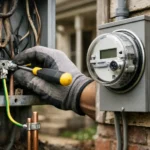
Electric load makes panels break down and they don’t last forever, especially the dangerous brands. A breaker trips once after you plug in a space heater – that may be a simple circuit issue. A breaker trips again, the panel feels warm, or you smell something hot near the electrical service – now you are in breaker panel repair territory, and that is not the kind of problem to put off until next month.
For homeowners, landlords, buyers, and small commercial property owners, the hard part is not knowing whether the panel can be repaired safely or whether replacement is the smarter move. A lot of people hope for a quick breaker swap because it sounds cheaper. Sometimes that is the right call. Many times, especially in older East Bay properties, the panel itself is the problem.
When breaker panel repair makes sense
There are legitimate cases where breaker panel repair is the correct service. A single failed breaker can sometimes be replaced. A loose connection may be tightened and repaired. Corrosion at a terminal might be cleaned up if the damage is minor and the panel is still structurally sound. A mislabeled circuit directory can be corrected. A neutral or ground issue may be traced and fixed without replacing the entire panel.
This is where experience matters. You are not just looking for somebody to make the lights come back on. You need an electrician who can tell the difference between an isolated component failure and a panel that is past its safe service life.
A repair may be reasonable when the panel is a good brand, parts are available, the bus bars are not damaged, there is no overheating pattern, and the overall installation still has life left in it. If the panel has enough capacity for the building, the enclosure is in good shape, and there are no code or safety red flags, a targeted repair can save money and restore reliable service.
Signs the panel is telling you more than one breaker is bad
People usually call for breaker panel repair because of a symptom, not a diagnosis. The symptoms are what matter first.
Frequent tripping is the obvious one, but it is not the only one. Flickering lights, breakers that will not reset, buzzing from the panel, rust, scorch marks, melted insulation, or a burning smell all point to a bigger safety issue. So does a panel that feels unusually hot. If a breaker is loose on the bus, if the bus itself is pitted or burned, or if water has gotten into the cabinet, replacing one breaker will not solve the underlying problem.
Another common issue is lack of space and overload. Older homes were not built around EV charging, air conditioning, induction ranges, multiple refrigerators, home offices, and modern electronics. If the panel is packed with tandem breakers, double-tapped in ways that do not belong there, or maxed out on ampacity, repeated repair calls often end with the same answer: the service needs to be upgraded.
Breaker panel repair on older panels
This is where people can waste a lot of money trying to patch a system that should not be patched.
Some older panels have a long history of safety concerns or poor performance. Federal Pacific Stab-Lok panels are the best-known example. Zinsco panels are another. Fuse panels, split-bus panels, and certain obsolete equipment may still technically have power running through them, but that does not make them good candidates for repair.
With these systems, the question is not just whether a breaker can be changed. The question is whether the panel can be trusted after the repair. If breakers are known to fail to trip properly, if parts are scarce or unreliable, or if the bus design itself is defective, replacement is usually the safer and more cost-effective decision.
This is especially important during real estate transactions. Buyers do not want to inherit a known hazard. Sellers do not want escrow delayed over an electrical panel. Landlords do not want liability attached to outdated equipment that has already been flagged by inspectors or insurers.
What a qualified electrician looks for
Good breaker panel repair starts with inspection, not guesswork. The electrician should check the breakers, bus bars, neutral terminations, grounding, bonding, conductor sizing, signs of overheating, moisture intrusion, labeling, service capacity, and the overall condition of the installation.
That inspection often reveals whether the panel problem is actually a circuit problem. For example, nuisance tripping can come from a damaged receptacle, a short in branch wiring, an overloaded kitchen circuit, or a bad appliance. In those cases, the panel may be doing its job correctly by tripping. Replacing breakers without testing the circuit is how bad repairs happen.
On the other hand, if the breaker fails mechanically, if it does not seat properly, if the connection to the bus is compromised, or if the panel has internal heat damage, the issue is at the panel and should be treated that way.
Repair vs. replacement: the real trade-off
A lot of people ask the same question: can you just repair the panel and keep the cost down?
Sometimes yes. But cheap work at the panel is often expensive work six months later. If the repair only buys a short window before another breaker fails, another overheating event shows up, or the panel fails inspection during a sale, the money spent on repair does not really save anything.
Replacement makes more sense when the panel is obsolete, unsafe, undersized, damaged, or filled with code violations. It also makes sense when you are already planning other electrical work, like an EV charger, HVAC upgrade, added circuits, or a service increase from 100 amps to 200 amps. In that case, doing breaker panel repair on a weak panel can be money thrown at old equipment.
The right decision depends on age, brand, condition, load demand, and future plans for the property. That is why honest field judgment matters more than a one-size-fits-all answer.
Why code compliance matters in breaker panel repair
Electrical panel work is not cosmetic. It affects fire safety, shock protection, and whether the electrical system can handle faults correctly.
A proper repair may involve correcting grounding and bonding issues, replacing damaged lugs, addressing improper conductor terminations, adding required bushings or connectors, and making sure breaker types match the panel listing. That last part matters. Not every breaker fits every panel safely, even if somebody has forced it in before.
In older homes, panel work also exposes other problems. You may find aluminum branch wiring, missing grounds, deteriorated service conductors, or unpermitted additions tied into the panel. Those conditions do not always require a complete rewire, but they do affect how the panel repair should be handled.
For East Bay properties, especially older housing stock in Oakland, Berkeley, Piedmont, and nearby areas, this comes up all the time. The panel issue is often only one part of a larger correction job.
What to do if you suspect a panel problem
If you smell burning, see smoke, hear crackling, or notice visible arcing, shut off power if it is safe to do so and call a licensed electrician right away. Do not keep resetting a tripping breaker to see if it clears up. Do not remove the dead front. Do not let a handyman guess at live panel work.
If the issue is less dramatic but persistent, like repeat tripping, dimming lights, or breakers that feel loose, schedule an inspection before it becomes urgent. A good diagnosis early can be the difference between a straightforward repair and a full emergency service call.
This is one area where long field experience counts. An electrician who has seen thousands of panels can usually spot the pattern fast – what is repairable, what is unsafe, and what should be replaced before it fails at the worst time.
Williams Electric has built a reputation around exactly this kind of work, especially difficult panel problems, service upgrades, and hazardous older equipment that other contractors do not want to touch.
The bottom line on breaker panel repair
Breaker panel repair is not automatically the wrong choice, and replacement is not automatically required. But when a panel shows heat damage, corrosion, obsolete design issues, or capacity problems, repair can turn into a temporary patch on a system that is already telling you it is done.
If your panel is newer, properly sized, and otherwise sound, a focused repair may be the right move. If it is old, hazardous, or failing in more than one way, replacing it is usually the better investment in safety, reliability, and resale value.
The smart move is to treat panel trouble seriously the first time it shows up. Electrical problems rarely get cheaper by waiting, and panels have a way of telling the truth once someone qualified takes the cover off.