If you are asking, “What is involved in changing a sub panel versus a PG&E main panel: power will be off regardless,” the short answer is this: both jobs shut your power off, but a PG&E main panel change is a much bigger project with utility coordination, service equipment rules, and more inspection requirements. A sub panel change is usually simpler because it is downstream from the main service, but it still has to be done correctly and safely.
That distinction matters a lot on older East Bay properties. Many homeowners, buyers, and landlords hear the word panel and assume every panel replacement is the same. It is not.
What changes with a sub panel versus a PG&E main panel
A sub panel is fed from the main panel. It does not contain the utility service disconnect in the same way the main service equipment does. In most cases, changing a sub panel means shutting off the main breaker, confirming everything is dead, moving the branch circuits into the new panel, correcting labeling, grounding and bonding issues, and replacing damaged breakers or overheated terminations if needed.
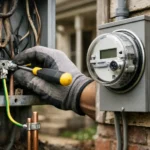
A PG&E main panel is different because it is the service entrance equipment. That means the conductors coming from the utility land there, the meter is involved, and the installation has to meet current utility and electrical code standards. If the service is being upgraded from 100 amps to 200 amps, there may also be a new mast, weather head, riser, meter socket, grounding electrode system, and service conductors. On underground services, trenching or conduit corrections may come into play.
Why power will be off regardless
People sometimes think a sub panel swap can be done with less disruption. The reality is the power still has to be shut off because the electrician must work on energized equipment upstream or isolate the circuits completely before moving them. There is no safe or legitimate way to replace a live panel just to save a few hours of downtime.
With a sub panel, the outage is controlled from the main panel. With a PG&E main panel, the outage often involves the utility disconnecting service or the service being safely shut down as part of the permitted work. Either way, expect an outage during the replacement.
What is involved in changing a sub panel versus a PG&E main panel?
For a sub panel replacement, the work is mostly inside the customer side of the system. The electrician evaluates the feeder size, breaker compatibility, conductor condition, panel location, box fill, grounding separation, and whether neutrals and grounds are isolated as required in a sub panel. That last part is a common correction in older or amateur installations.
For a PG&E main panel replacement, the scope is broader. The electrician has to verify service capacity, meter requirements, clearances, grounding and bonding, electrode connections, panel rating, service conductor condition, and whether the existing setup complies with current code and PG&E standards. There is usually permit and inspection coordination, and depending on the job, utility scheduling becomes part of the timeline.
This is why main panel changes cost more. It is not just the panel can itself. It is the service equipment, code corrections, utility coordination, and liability.
Permits, inspections, and utility coordination
A sub panel replacement may still require a permit, especially if circuits are being extended, feeder issues are corrected, or the installation has safety defects. A proper electrician does not guess on that.
A PG&E main panel replacement almost always involves permits and inspection, and on many jobs the utility must be involved before the service can be re-energized. If the meter section, service drop connection, or underground feed is part of the job, the planning has to be right the first time. Delays usually come from failed inspections, missing utility approvals, or finding hidden defects after the old equipment is opened up.
That is one reason experienced service electricians matter. On older homes in Oakland, Berkeley, Piedmont, and nearby areas, it is common to find Federal Pacific, Zinsco, fused service equipment, damaged bussing, undersized grounding, or brittle conductors that turn a simple plan into a more technical repair.
The real difference in risk
A bad sub panel can cause nuisance tripping, overheating, and unsafe circuit terminations. A bad main panel can affect the entire property and the service itself. If the main service equipment is failing, burned, obsolete, or unsafe, it is not a cosmetic issue. It can become a fire risk, a reliability problem, or a failed sale during a home inspection.
That is especially true with known problem equipment like Federal Pacific Stab-Lok and Zinsco. Replacing those panels is often about correcting a hazard, not just making room for more breakers.
Downtime and job planning
A sub panel change is often faster than a main panel change, but faster does not mean casual. Circuits still have to be identified, transferred, torqued correctly, tested, and labeled. If the feeder is undersized or the panel location is not compliant, the job can grow.
A PG&E main panel change usually takes more planning even if the physical labor happens in a day. The schedule may depend on permit approval, inspection timing, and utility release. If you are trying to coordinate a closing, tenant turnover, remodel, or EV charger installation, that timing should be discussed up front.
The practical takeaway is simple. If you are replacing a sub panel, expect a controlled outage and a more limited scope. If you are replacing a PG&E main panel, expect a service-level project with more code, more coordination, and more variables. In both cases, the power will be off, and that is exactly how a safe panel replacement should be done.