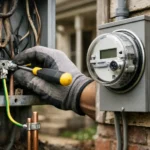
A 1920s Berkeley bungalow can have beautiful original woodwork and a perfectly usable electrical system. Another home from the same era may have brittle cloth insulation, ungrounded outlets, overloaded circuits, and a panel that should have been replaced decades ago. So, do older homes need rewiring? Sometimes yes, but age alone is not the answer. The condition of the wiring, the electrical panel, the grounding system, and the way the home is being used matter far more than the year it was built.
Older East Bay homes were not designed for induction ranges, EV chargers, heat pumps, multiple home offices, large televisions, and kitchen counter appliances running at the same time. A proper inspection separates a system that needs targeted corrections from one that needs a major rewiring plan.
Do Older Homes Need Rewiring or Just Repairs?
A full rewire is a significant project. It can involve opening walls, accessing crawl spaces and attics, replacing branch circuits, installing new receptacles and switches, correcting grounding, and coordinating permits and inspections. It should not be recommended simply because a house is old.
Many older homes can be made safer with focused electrical upgrades. For example, a home may have generally sound copper wiring but an undersized 100-amp service, a worn panel, too few kitchen circuits, missing GFCI protection, or ungrounded outlets in selected rooms. In that case, panel replacement, added circuits, grounding corrections, and receptacle upgrades may solve the real problems without tearing into every wall.
Full rewiring becomes more likely when the existing wiring is unsafe, inaccessible for reliable repair, or unable to support the home’s present and planned electrical load. A house that has been remodeled several times can be especially challenging. The visible panel may look modern while concealed wiring includes old splices, abandoned circuits, and extensions added without permits.
Wiring Types That Deserve Close Attention
Not all old wiring is equally risky. An experienced electrician identifies the wiring method before deciding what should stay, what can be repaired, and what needs replacement.
Knob-and-tube wiring
Knob-and-tube wiring is common in some homes built before the 1940s. It was acceptable for its time, but it was designed for an electrical system with far fewer loads. It has no equipment grounding conductor, and its insulation can become brittle or damaged with age.
Problems often arise when later work is mixed into the original system. Insulation packed around knob-and-tube conductors, modern three-prong outlets installed without a real ground, overloaded circuits, and improper connections to newer wiring are all concerns. Some insurance carriers also restrict or decline coverage where active knob-and-tube wiring remains. This does not mean every inch must automatically be removed, but active knob-and-tube should be evaluated carefully before a purchase, remodel, or panel upgrade.
Aluminum branch-circuit wiring
Some homes built or remodeled during the late 1960s and early 1970s have aluminum branch-circuit wiring. Aluminum itself is used safely in many electrical applications, including larger service conductors. The concern is older small-gauge aluminum wiring connected to devices or splices not rated for it.
Loose or incompatible terminations can overheat. Signs may include warm switches or outlets, discoloration, flickering lights, or a faint burning odor. The repair may involve approved connectors and devices, or it may call for replacement of affected circuits. This is not a job for casual outlet swapping.
Old cloth-insulated or damaged copper wiring
Copper wiring is generally durable, but insulation does not last forever. Cloth-covered conductors can fray, crack, or lose flexibility, particularly near light fixtures, junction boxes, attics, and crawl spaces. Rodent damage, moisture, old roof leaks, and repeated remodeling can further compromise it.
The key question is whether insulation and splices remain sound where the wiring is concealed. A quick look at the panel is not enough to answer that question.
Warning Signs Your Home May Need Major Electrical Work
Electrical trouble does not always announce itself with sparks. More often, the system gives repeated small warnings. Frequent breaker trips, flickering or dimming lights, buzzing outlets, warm cover plates, shocks or tingles from appliances, and burning smells all warrant prompt investigation.
A fuse panel is another reason to schedule an evaluation. Fuses are not automatically dangerous, but many fuse-panel homes lack the capacity, circuit layout, grounding, and safety protections expected in a modern residence. Repeatedly replacing blown fuses or installing oversized fuses is especially hazardous.
The electrical panel also matters as much as the branch wiring. Federal Pacific Stab-Lok panels and Zinsco panels are well-known legacy systems that deserve replacement because breakers may fail to perform properly under fault conditions. A new-looking breaker installed in an obsolete panel does not solve the underlying issue.
Other practical signs include extension cords used as permanent wiring, power strips serving kitchens or bedrooms, two-prong outlets throughout the house, and a lack of dedicated circuits for laundry, bathroom, kitchen, or garage loads. These conditions do not prove that a whole-house rewire is required, but they show that the electrical system may be behind the way the house is being used.
The Panel, Service Size, and Rewiring Are Different Jobs
Homeowners often use the word rewiring to describe any electrical upgrade. In practice, three separate parts of the system may need attention: the utility service, the main panel, and the branch circuits that run through the house.
A 100-amp to 200-amp service upgrade increases the capacity available to the property. It may be needed for an EV charger, electric appliances, an accessory dwelling unit, air conditioning, or a large remodel. It does not replace old wiring in the walls.
A panel change replaces outdated or damaged distribution equipment and can improve breaker capacity, labeling, and safety. It also does not automatically replace branch wiring. Conversely, new circuits can sometimes be installed while retaining a service or panel that is still in good condition and properly sized.
That distinction protects homeowners from two costly mistakes: paying for a full rewire when targeted work would address the risk, or installing a new 200-amp panel while assuming it has made deteriorated concealed wiring safe.
What a Real Electrical Assessment Should Cover
A meaningful assessment begins with the panel, but it should not end there. The electrician should look at the service size and condition, panel manufacturer, breaker operation, grounding and bonding, visible wiring methods, junction boxes, receptacles, bathrooms, kitchens, garage, attic, crawl space, and any signs of overheating or unpermitted alterations.
Load calculations are also useful when the home is adding major equipment. An EV charger, electric range, heat pump water heater, or HVAC equipment can change what the service and panel must support. The goal is not to fill a panel with more breakers. The goal is to provide correctly sized circuits and overcurrent protection for the actual loads.
In Oakland, Berkeley, Piedmont, and other older East Bay neighborhoods, access is often a major factor. A house with a usable crawl space and attic can make circuit replacement far less disruptive than a house with plaster walls, limited access, and multiple additions. Good planning can reduce wall opening, but no electrician should promise a full rewire with no impact before seeing the property.
When to Act Before a Sale, Remodel, or EV Installation
The best time to identify wiring problems is before a deadline. Buyers should take an inspection report seriously when it flags a Federal Pacific or Zinsco panel, knob-and-tube wiring, missing grounding, open junction boxes, double-tapped breakers, or evidence of overheated equipment. Those items need electrical evaluation, not a casual estimate based on photographs.
Landlords should act early as well. A recurring breaker problem in one unit can become a tenant safety issue, property damage claim, or emergency call after hours. For remodels, electrical planning should occur before walls are closed. Adding circuits, outlet locations, lighting, smoke alarms, GFCI protection, and AFCI protection is far easier during construction than after finishes are complete.
Williams Electric has worked on older East Bay electrical systems for decades, including difficult panel replacements, service upgrades, grounding corrections, and wiring repairs. The right scope comes from inspecting the actual equipment and wiring conditions, then explaining what is urgent, what is recommended, and what can reasonably wait.
An older home does not need to be stripped to the studs to be safe. But it does need an electrical system that is honest about its condition, properly protected for its loads, and ready for the way people live in it now.