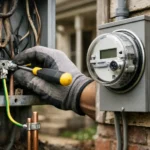
This can be deadly dangerous. A popping sound in a wall or ceiling is not something to ignore. If you are asking, “What happens if you hear a popping noise inside your rooms or ceilings and you think it may be due to an electrical problem?” the short answer is this: it can be minor, but it can also mean overheating wiring, a failing splice, a damaged breaker, or arcing inside hidden electrical components. That puts your property and safety at risk.
Some house noises are harmless. Wood framing expands and contracts. Ductwork can click. But electrical popping has a different character. It may sound sharp, fast, or irregular. Sometimes it comes with a faint burning smell, flickering lights, warm wall plates, or breakers tripping for no clear reason. When those signs show up together, you need to treat it as a real electrical warning.
What a popping noise can mean
In the field, popping noises often trace back to loose connections. A loose wire at an outlet, switch, junction box, light fixture, or panel connection can start arcing. Arcing is when electricity jumps through air from one point to another instead of flowing cleanly through a secure connection. That creates heat, and heat inside a wall or ceiling cavity is where trouble starts.
Another possibility is a failing breaker or overloaded circuit. Older electrical panels, especially outdated or known-problem brands, can fail to trip properly. Instead of shutting down safely, they may allow repeated overheating. In older East Bay homes, this can show up with original wiring, amateur additions, worn devices, or aging service equipment.
Sometimes the sound comes from a recessed light, attic junction box, ceiling fan box, or damaged cable where a nail or screw hit the wire. If rodents have chewed insulation, or if old knob-and-tube or brittle branch wiring has been disturbed, the noise may be the first warning before visible failure.
What happens if you hear a popping noise inside your rooms or ceilings?
The main risk is not the sound itself. The risk is what is causing it behind finished surfaces where you cannot see it. If the source is electrical arcing, overheating can char insulation, damage conductors, melt wirenuts, and ignite surrounding material. In some cases, the circuit may keep working for a while, which gives homeowners a false sense that the issue is minor.
That is why a popping sound is more serious than a simple nuisance. Electrical failures do not always happen all at once. They often start as intermittent noise, occasional flicker, or random breaker trips. Then the connection worsens, resistance builds, and temperatures rise.
The trade-off here is that not every pop means emergency-level danger, but you should never assume it is harmless without proper troubleshooting. The cost of being wrong is too high.
What you should do right away
If the popping noise seems tied to a light, outlet, switch, or appliance, turn that device off immediately. If you can identify the circuit, shut off the breaker. If the main panel itself is making popping sounds, buzzing, or showing signs of heat or burning odor, turn off the main if it is safe to do so and stay clear of the panel.
Do not open up walls or ceiling boxes yourself unless you are qualified to work live and de-energized systems safely. Do not keep resetting a breaker to “see if it holds.” And do not cover the problem with a bigger breaker, because that can make overheating worse.
If you see smoke, smell insulation burning, or notice discoloration around a device or panel, call emergency services first if fire is a concern, then call a licensed electrician.
How an electrician finds the source
A proper diagnosis starts with pattern recognition. Is the sound tied to one room or one circuit? Does it happen when the HVAC starts, when lights are switched on, or when a microwave, EV charger, or space heater runs? That matters.
An experienced electrician will inspect the panel, breakers, branch wiring, accessible junctions, switches, outlets, fixtures, and any recent modifications. The job is to find heat damage, loose terminations, overloaded conductors, improper splices, failed breakers, or defective devices. In older homes, this may also lead to finding ungrounded wiring, double-tapped breakers, hidden junctions, or previous repair work that never should have passed.
Williams Electric handles this kind of troubleshooting regularly, especially in older homes where electrical noise is often the first sign of a larger correction that needs to be made.
When the problem points to a larger upgrade
Sometimes the repair is simple. A damaged switch leg, failed light fixture connection, or loose receptacle splice can be corrected quickly. Other times, the popping noise is a symptom of an outdated panel, undersized service, deteriorated wiring, or a circuit that has been carrying too much load for too long.
That is common in houses where modern loads were added to old electrical systems. EV charging, kitchen upgrades, added laundry equipment, and space heaters can all expose weak points. If your panel is full, your breakers trip often, or your house still has old service equipment, the safest fix may be a panel upgrade, breaker replacement, rewiring correction, or AFCI protection where required.
A popping sound is your warning not to wait. If the noise is electrical, the system is already telling you something is failing. The smartest move is to shut down the affected circuit when possible and get it checked before a hidden defect turns into burned wiring or a fire inside the wall.