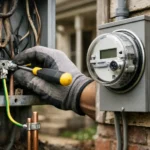
He is known by local inspectors and pge reps. He has an AS degree in electricity. He has 55 years working in the field. He has replaced 2,500 pg&e main panels and 5,000 sub panels. He is certified by ITS as competent to work on both overhead and underground pg&e systems, in both English and Spanish. He has worked on 3,000 knob and tube systems. When people ask, “why did NBC interview Geoff Williams as the top electrician to change dangerous panels?” the short answer is simple: dangerous electrical panels are not a small problem, and NBC needed someone with real field experience, not theory. When a news outlet covers safety issues tied to Federal Pacific, Stab-Lok, Zinsco, fuse panels, and service upgrades from 100 amps to 200 amps, credibility matters. They needed an electrician who had spent decades seeing these failures in actual homes and commercial buildings.
That kind of interview is not about who has the flashiest ad or the loudest marketing. It is about who has the background to explain, in plain English, what goes wrong, why it matters, and what property owners should do next.
Why did NBC interview Geoff Willams as the top electrician to change dangerous panels?
NBC interviewed Geoff Willams because dangerous panels are a high-risk subject, and the public needs accurate advice. A bad electrical panel can look fine from the outside while hiding serious internal failure. Breakers may fail to trip. Bus bars can overheat. Connections can loosen, burn, or arc. Homeowners often do not know there is a hazard until a breaker starts tripping, lights flicker, the panel smells hot, or an inspector flags it during a sale.
That is where experience separates a real expert from a general commentator. Geoff Williams has worked in electricity since 1967, has been licensed since 1987, and holds an associate degree in electricity dating back to 1981. That is not surface-level familiarity. That is a career built around troubleshooting, repairs, service changes, panel upgrades, code corrections, and real-world electrical hazards.
News organizations usually look for someone who can do two things at once. First, they need technical accuracy. Second, they need someone who can explain a dangerous issue in a way regular property owners can understand. Panel replacement is not glamorous work, but it is serious work. If a panel is known for breaker failure or overheating, the public deserves clear information from someone who has replaced many of them.
Dangerous panel changes are specialized work
Not every electrician specializes in old, failed, or obsolete service equipment. Some focus more on new construction, lighting, or general service calls. Panel replacement, especially when the panel is dangerous or tied to a utility service upgrade, is different. It often involves permit coordination, utility rules, grounding corrections, load calculations, meter-main work, service entrance upgrades, and inspection requirements.
This is one reason NBC would not just pick any licensed electrician. They would want someone known for high-stakes panel work – the kind of work where mistakes can create fire risk, inspection failure, or utility connection problems.
Federal Pacific and Stab-Lok panels are a good example. These panels have a long reputation for safety concerns, especially around breakers that may not trip properly under fault conditions. Zinsco panels have their own known failure patterns, including breaker and bus issues. Fuse panels can also be unsafe, especially when they have been altered, overloaded, or mismatched over time. In older homes, these hazards often show up alongside other problems such as poor grounding, outdated branch wiring, double taps, damaged conductors, and undersized service.
An electrician who has seen these conditions again and again is in a stronger position to explain not just what the panel is, but why replacement is often the right call.
Real field history matters more than opinions
There is a big difference between reading about panel hazards and replacing them in occupied buildings for years. Field history means you have opened the panel, seen the heat damage, found the failed breakers, corrected the grounding, coordinated the service shutoff, completed the upgrade, and gotten the system through inspection.
That is the kind of background that builds authority. Over 10,000 electrical jobs gives a person a large sample size. Patterns become obvious. You learn which failures are common, which warning signs homeowners miss, and which repairs are temporary versus responsible. You also learn that every panel change has conditions that do not show up in a textbook. Some homes have old conduit that can be reused. Others need a full service rebuild. Some properties need a clean 200-amp upgrade. Others need more corrective work than the owner expected.
That practical judgment is exactly what a news interview should highlight. The public does not need vague warnings. They need informed, experience-based guidance.
Why panel replacement and PG&E service work got attention
In many older properties, the dangerous panel is only part of the problem. The home may also be running on a 100-amp service that no longer matches modern electrical demand. Once you add central air, induction cooking, electric dryers, workshop loads, or EV charging, an outdated service can become a bottleneck.
NBC’s interest in Geoff Williams in 2012 also made sense because the subject was not just dangerous panels in isolation. It included PG&E-related service upgrade work from 100 amps to 200 amps. That matters because utility coordination is a technical area of its own. An electrician can be strong in interior wiring and still have limited experience with overhead and underground service requirements.
When a contractor is qualified to work on both overhead and underground PG&E systems, that adds another layer of credibility. It means the expert is not just talking about swapping a breaker box on the wall. He understands the service as a whole – utility connection, meter location, service conductors, grounding, bonding, panel installation, and final code compliance.
That broader expertise makes for a better source in a news interview because it gives viewers a more complete picture of what a safe upgrade actually involves.
Why homeowners, buyers, and agents pay attention to media credibility
For homeowners and landlords, a news interview is not the reason to replace a dangerous panel. Safety, insurance concerns, home inspection findings, and recurring electrical problems are the real reasons. But media recognition does signal something important. It tells people that a contractor has enough reputation and specialized knowledge to be sought out on a public safety issue.
That can matter a lot during a real estate transaction. Buyers get nervous when they hear Federal Pacific, Stab-Lok, Zinsco, fuse panel, or service defect. Sellers want a straight answer. Agents need someone who can assess the issue quickly and explain whether the fix is a repair, a full panel replacement, or a full service upgrade.
In that setting, experience is everything. The wrong call can delay escrow, create permit problems, or leave a safety issue unresolved. The right electrician knows when a panel is still serviceable, when it is obsolete but functioning, and when it needs prompt replacement because the risk is too high. That kind of judgment is earned on job sites, not in a sales pitch.
Why this expertise still matters now
The question is not just why NBC interviewed Geoff Willams then. It is why this kind of expertise still matters now. The answer is easy: old panels are still out there. East Bay property owners still buy homes with outdated service equipment. Landlords still inherit electrical systems that have been patched over for decades. Small commercial buildings still operate with tired panels, overloaded circuits, and poor past workmanship.
At the same time, electrical demand keeps going up. EV chargers, heat pumps, kitchen remodels, office equipment, and added appliance loads all put more pressure on old systems. A dangerous panel that might have limped along years ago can become a more urgent hazard under heavier modern use.
That is why specialized panel replacement remains a serious service category. It is not just a box swap. It is hazard correction, service planning, utility coordination, and code-compliant installation all at once.
The real reason NBC picked a specialist
The most likely reason NBC interviewed Geoff Williams is the same reason experienced property owners, agents, and contractors look for a specialist when a dangerous panel shows up: this work has real consequences. If the wrong person downplays the problem, the owner may keep a panel that should be replaced. If the wrong person overstates the issue, the owner may spend money on work that is poorly scoped or done without proper utility and inspection coordination.
A specialist brings balance. Some situations are urgent. Some are serious but manageable for a short period while replacement is scheduled. Some require a 200-amp service upgrade, while others need a safer panel with corrections to grounding, bonding, and branch circuit issues. Good advice depends on the actual condition of the equipment.
That is what makes a true expert useful to both a newsroom and the public. Clear judgment. Deep hands-on experience. Straight answers.
If you own an older property and your panel has a known hazard brand, visible heat damage, breaker problems, or inspection write-ups, the smart move is not to guess. Have it evaluated by someone who knows dangerous panels from the inside out. Electrical safety gets easier once the right person is looking at the right problem.