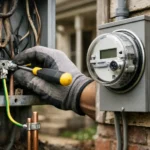
A breaker that trips once may have done exactly what it was designed to do. A breaker that trips repeatedly is telling you something is wrong on that circuit. The question of how to fix tripping breaker issues starts with identifying the cause, not forcing the handle back on and hoping it stays there.
Circuit breakers trip to prevent overheated wiring, damaged equipment, electrical shock, and fire. In older Oakland, Berkeley, Piedmont, and Lafayette homes, the answer may be as simple as too many appliances on one circuit. It may also point to worn wiring, a failing appliance, water intrusion, a loose connection, or an outdated electrical panel that needs professional attention.
First, Reset the Breaker the Right Way
Find the electrical panel and look for the breaker handle that is sitting in the middle position or fully in the OFF position. A tripped breaker does not always look obviously off. Push the handle firmly all the way to OFF first, then move it back to ON.
If it stays on, turn on the items on that circuit one at a time. If it trips again when a particular appliance, tool, or device is plugged in or switched on, stop using that item. The appliance or its cord may have a short circuit or ground fault.
Do not keep resetting a breaker that trips immediately. Repeated resets can turn a manageable warning into overheated wiring or damage at the panel. A breaker is a safety device, not a switch to override.
What Causes a Breaker to Keep Tripping?
The most common causes are overloads, short circuits, ground faults, arc faults, and a defective breaker. The timing of the trip usually gives you useful information.
An overload happens when a circuit is asked to carry more current than it is rated for. A 15-amp circuit serving a bedroom or living room can trip when it is running a space heater, vacuum, portable air conditioner, hair dryer, or several high-draw devices at once. Kitchens, garages, and older homes with limited circuits are frequent trouble spots.
A short circuit occurs when a hot wire contacts a neutral wire or another unintended conductive path. This can happen inside an appliance, in a damaged cord, at a receptacle, or in hidden wiring. The breaker often trips instantly when the affected item is turned on.
A ground fault occurs when electricity finds an unintended path to ground. Moisture around outdoor outlets, bathroom receptacles, garbage disposals, dishwashers, and crawlspace wiring can cause ground-fault problems. Modern GFCI protection is designed to shut power off quickly in these situations because the shock risk is real.
An arc fault can result from a loose connection, damaged wire, failing receptacle, or worn cord that allows electricity to jump across a gap. AFCI breakers and receptacles are intended to detect these dangerous arcing conditions. If an AFCI breaker trips, do not assume it is overly sensitive. It may be detecting a wiring condition that needs diagnosis.
Finally, the breaker itself may be worn out or defective. That possibility should be checked by an electrician after the circuit and connected equipment have been tested. Replacing a breaker without finding the cause is guesswork.
How to Fix a Tripping Breaker Caused by an Overload
If the breaker stays on until you use several appliances, an overload is likely. Start by reducing the load on that circuit. Move portable heaters, microwaves, air fryers, coffee makers, hair dryers, and other heating appliances to a different circuit when possible.
Avoid using power strips as a solution for an overloaded circuit. A power strip adds outlets, but it does not add electrical capacity. It can actually make the problem worse by encouraging more equipment on the same branch circuit.
For a long-term fix, the circuit may need to be divided or a new dedicated circuit installed. High-demand equipment should not compete with general-use outlets. A refrigerator, microwave, dishwasher, disposal, laundry equipment, sump pump, EV charger, or workshop tool may need its own properly sized circuit depending on the equipment and the existing installation.
Do not install a larger breaker to stop nuisance tripping. A larger breaker on undersized wire can allow the wire to overheat before the breaker trips. The breaker size, wire gauge, outlet rating, and load must match.
Check Appliances and Cords Before Blaming the Panel
When one device consistently trips the breaker, unplug it and leave it disconnected. Inspect the power cord for cuts, crushed sections, loose plugs, burn marks, or a hot plastic smell. Check extension cords as well, especially cords used outdoors, in garages, or around tools.
Then reset the breaker with everything unplugged. If it holds, plug devices back in one at a time. The device that causes the trip is the likely problem. It may need repair or replacement, but an electrician should inspect the circuit if there is any sign of heat damage at the outlet, plug, or panel.
Do not continue testing equipment if you see smoke, sparks, melted insulation, discoloration, buzzing, or a burning odor. Turn the breaker off and arrange for electrical service. Those are not normal signs of an overload.
When a GFCI or AFCI Device Is Involved
Not every power loss is caused by the breaker in the panel. A GFCI receptacle can trip and shut off outlets farther downstream. Look for outlets with TEST and RESET buttons in bathrooms, kitchens, garages, laundry areas, basements, exterior locations, and near wet areas. Reset the GFCI only after unplugging connected devices and checking for moisture.
AFCI breakers are common in newer electrical work and can trip because of damaged cords, loose outlet connections, aging wiring, or certain equipment. If an AFCI trips repeatedly, do not replace it with a standard breaker to make the problem disappear. That removes a layer of protection and may violate electrical code.
A qualified electrician can test whether the device is functioning correctly and locate the actual source of the fault. This matters particularly in older East Bay homes, where circuits may have been extended several times over decades.
Signs You Need an Electrician Now
Some breaker problems are not DIY troubleshooting problems. Turn the affected breaker off and call a licensed electrician if the panel is hot, buzzing, corroded, wet, or has a burning smell. The same applies if a breaker will not reset, trips with nothing plugged in, trips after rain, or causes lights to flicker before it trips.
You should also schedule an inspection if the panel is a Federal Pacific/Stab-Lok, Zinsco, fuse panel, or another aging system with known safety concerns. These panels can have defects beyond an ordinary worn breaker. A breaker handle may appear on while the internal mechanism has failed to provide reliable protection.
Aluminum wiring, knob-and-tube wiring, ungrounded outlets, and panels with double-tapped breakers also call for a trained diagnosis. The proper repair may involve correcting a connection, replacing a damaged receptacle, adding GFCI or AFCI protection, installing a dedicated circuit, or upgrading the panel and service capacity.
What a Professional Breaker Diagnosis Should Include
A proper service call is more than swapping a breaker. The electrician should identify what the circuit serves, inspect the panel condition, check breaker and conductor sizing, test the circuit for shorts or ground faults, and look for heat damage or loose terminations.
For recurring overloads, the electrical load should be evaluated against the home or business’s current needs. A house built for a few lights and small appliances may now support computers, portable climate equipment, remodeled kitchens, laundry upgrades, and EV charging. Sometimes a new circuit solves the issue. Sometimes the main panel or PG&E service needs an upgrade.
Williams Electric has handled breaker, panel, wiring, and service-upgrade problems across the East Bay for decades, including difficult legacy panels and older-home electrical systems. The useful next step is not another reset. It is getting the circuit tested before a small warning becomes damaged wiring or a panel failure.