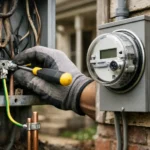
If you are asking what is a Stab-Lok panel, there is usually a reason. Maybe a home inspector flagged it. Maybe you opened the panel door and saw Federal Pacific. Maybe you are buying an older home and want to know whether this is a real safety problem or just another item on a long inspection report. In this case, the concern is usually justified.
A Stab-Lok panel is a type of electrical service panel and breaker system made mostly by Federal Pacific Electric, often called FPE. These panels were installed in many homes for years, especially from the 1950s through the 1980s. The problem is not that they are simply old. The problem is that Stab-Lok breakers have a long history of failing to trip when they should. That means a dangerous overload or short circuit may keep feeding power instead of shutting off.
That is why these panels come up so often in real estate transactions, insurance questions, and electrical safety inspections. A panel is supposed to be the safety center of the electrical system. If the breaker does not trip under fault conditions, wires can overheat, equipment can be damaged, and the risk of fire goes up.
What is a Stab-Lok panel, exactly?
In plain terms, a Stab-Lok panel is an older breaker panel that uses a specific style of circuit breaker that snaps or “stabs” onto the bus bar. The name Stab-Lok refers to the design of the breaker connection and retention system. On paper, it was just another panel design. In the field, the bigger issue became breaker reliability.
Most people use “Stab-Lok panel” and “Federal Pacific panel” almost interchangeably, and that is generally fair. Federal Pacific Electric was the best-known manufacturer of these panels, and the brand is the one most homeowners, inspectors, and electricians recognize. Some panels are labeled Federal Pacific, some say FPE, and some breakers carry the Stab-Lok name directly.
The age of the panel matters less than the design. Plenty of old electrical equipment can still perform safely if it is in good condition and properly maintained. Stab-Lok panels are different because the concern is tied to how the breakers may behave during real fault conditions.
Why Stab-Lok panels are considered unsafe
The core issue is simple. A breaker is supposed to trip when a circuit draws more current than it can safely handle, or when there is a short circuit. If it does not trip, the wire can keep heating up. That creates a fire hazard inside walls, in the panel, or at connected equipment.
With Stab-Lok equipment, electricians and inspectors have seen several recurring problems. Breakers may fail to trip under overload or short-circuit conditions. Some breakers may appear to switch off but still leave parts of the circuit energized. In some cases, the breaker connection to the bus bar can also become loose or damaged, leading to overheating or arcing at the panel itself.
This is where homeowners sometimes get mixed messages. A Stab-Lok panel may seem to work fine for years. Lights come on. Outlets work. Nothing obvious looks wrong. But breaker safety is not judged by whether power is available on a normal day. It is judged by how the panel responds when something goes wrong.
That is why many electricians recommend replacement instead of waiting for visible failure. You do not want the first proof of a bad breaker to be smoke, burning insulation, or a melted bus.
How to identify a Stab-Lok panel
The easiest clue is the label on the panel door or inside the cover. Look for Federal Pacific, FPE, or Stab-Lok branding. The breakers themselves often have a distinctive appearance, and many electricians can spot them quickly once the panel is opened.
Some homes have had partial changes over the years, so it is not always as clear as homeowners expect. You may see replacement breakers mixed in, handwritten labels, or signs that someone has modified the panel. That does not make the system safer. In some cases, it makes the panel more questionable because you cannot assume every part is original or properly fitted.
If you are not certain, have a licensed electrician inspect it. This is not a guessing game, especially in older homes where multiple generations of electrical work may have been done.
Common signs of trouble
Not every dangerous panel announces itself. Still, there are warning signs that should push this higher on your list.
If breakers trip inconsistently, feel loose, smell burned, show heat damage, or if the panel has buzzing, discoloration, or signs of arcing, the situation may already be getting worse. The same goes for circuits that seem overloaded by normal household use, especially in homes that now have microwaves, HVAC equipment, EV charging, or kitchen loads that the original service was never designed to support.
A home inspection report that calls out Federal Pacific or Stab-Lok should also be taken seriously. Inspectors see enough of these panels to know the pattern. Even if there is no immediate failure, many buyers, sellers, and landlords end up replacing them because of safety concerns, insurance issues, or financing delays.
Should every Stab-Lok panel be replaced?
From a practical safety standpoint, many electricians would say yes. That does not mean every panel is on the verge of catching fire tomorrow. It means the risk profile is poor enough that replacement is usually the right long-term decision.
There are a few reasons people hesitate. Cost is one. Another is that the panel may have worked for decades with no obvious event. Some owners ask whether they can just replace a few breakers and keep the panel. In most cases, that is not the best answer. If the concern is the overall panel and breaker design, swapping one or two parts does not solve the underlying issue.
There is also the question of scope. Sometimes a panel replacement is straightforward. Other times, especially in older properties, the job can uncover related problems like damaged meter equipment, lack of grounding and bonding, double-tapped breakers, aluminum branch wiring issues, or service capacity that is too small for modern loads. It depends on the condition of the whole system.
That is why an on-site estimate matters. A real electrician looks at the service, the meter, the grounding, the panel location, the load, and whether PG&E coordination is needed. A good panel change is not just swapping a box. It is correcting the service so the house is safer and more reliable.
What happens during replacement?
A proper replacement usually involves removing the old Federal Pacific panel, installing a new code-compliant panel and breakers, verifying grounding and bonding, labeling circuits correctly, and checking for damaged conductors or overheated connections. If the home still has an undersized service, this may also be the time to upgrade from 100 amps to 200 amps.
For many owners, that upgrade matters as much as the safety issue. Older homes now carry much more electrical demand than they did when Stab-Lok panels were installed. Air conditioning, induction cooking, home offices, EV chargers, and added appliances all put more demand on the service. Replacing the panel gives you a safer starting point and often better capacity for the way the property is actually used.
In older East Bay homes, this can be especially relevant. A panel change may also clean up years of patchwork electrical work and resolve issues that keep showing up in inspections.
Is it still safe to live in a house with one?
That depends on what you mean by safe. People do live in homes with Stab-Lok panels every day. But from an electrical safety standpoint, most electricians would not call it a panel you want to keep if you have the option to replace it.
If the panel is not showing visible damage, the risk may feel abstract. That is often why owners delay. But electrical protection is one of those things you only notice when it fails. Waiting for proof can be expensive and dangerous.
If you are buying or selling a house with one, it helps to treat it as a real system defect, not just an old-house quirk. Buyers should budget for replacement. Sellers should understand that many inspectors, electricians, and insurance carriers will raise the issue. Landlords should think beyond minimum function and consider liability, tenant safety, and long-term reliability.
Geoff Williams has handled this exact issue for decades, including Federal Pacific and other outdated panel replacements, and the right answer is usually the same: if you have a Stab-Lok panel, plan for replacement before it becomes an emergency.
A panel should give you confidence, not doubt. If yours has a name that keeps coming up in fire-safety conversations and inspection reports, that is reason enough to get it checked and make a plan.