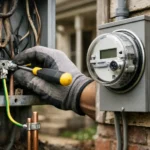
Nobody likes hearing, “There’s an engineering fee,” especially when the job is just a main panel change and you are not adding load. That is why homeowners ask, Why does PG&E charge engineering fees when you change your main panel when there is no added load, no EV, no solar added, no Tesla battery packs, no ADU added?
The short answer is that PG&E is not only looking at load. They are looking at their service equipment, service rules, meter location, clearances, conductor sizing, grounding, and whether the existing utility connection can legally and safely stay as-is after the panel work. Even when the amp rating stays the same, a panel replacement can trigger utility review.
Why a no-load panel change can still trigger PG&E engineering fees
From the homeowner side, it feels simple. The old panel is unsafe, outdated, or failing, and the new panel is the same size with no extra circuits driving more demand. From PG&E’s side, the moment the meter-main, service conductors, mast, weatherhead, underground termination, or service point may be affected, it becomes a utility coordination job, not just an electrician job.
That engineering review covers questions such as whether the existing service drop or lateral is still acceptable, whether the meter location meets current rules, whether line-side clearances are compliant, and whether there are field conditions that require redesign or special handling. Older homes in the East Bay often have exactly these issues. The panel may have been legal 40 or 50 years ago, but not under current standards.
What PG&E engineering is actually reviewing
Engineering fees are usually tied to review time, planning, and utility-side decisions. They are not simply a charge for more power. If the panel change involves any question about utility-owned equipment or the point of connection, PG&E may assign an engineer or planner.
A few common triggers are overhead service mast issues, underground service complications, meter relocation, inadequate working clearances, damaged service risers, outdated meter sockets, or properties with unusual access. Duplexes, split services, and older houses with layers of unpermitted work also tend to get more scrutiny.
In plain English, PG&E wants to know: if they reconnect this service after the panel change, are they reconnecting to something that meets their requirements and does not create liability?
No added load does not mean no utility work
This is the part many people miss. Load is only one piece of the puzzle. If you are not adding an EV charger, solar, battery storage, or an ADU, that avoids one set of utility questions. It does not eliminate the others.
For example, a 100-amp panel swap for another 100-amp panel can still require utility review if the old installation has a bad mast, wrong meter height, deteriorated service entrance cable, or an obsolete meter arrangement. A 200-amp replacement can be even more likely to trigger review, but same-for-same jobs are not automatically exempt.
That is especially true on older properties with Federal Pacific, Zinsco, fuse panels, or service equipment that was installed under older rules. Once the panel is opened up for replacement, hidden defects often show up. Utility companies do not want a new panel tied to a questionable service setup.
Why the fee feels inconsistent from one job to another
Homeowners compare notes and get frustrated because one neighbor paid nothing and another got hit with an engineering charge. That happens because PG&E does not review every property under identical field conditions.
One home may have a straightforward overhead service with proper clearance, modern meter placement, and no need to touch utility conductors. Another may have a tight side yard, an old attachment point, an undersized riser, or an underground service that needs planning before anyone disconnects and reconnects. Same type of project on paper, different reality in the field.
There is also a timing issue. Utility procedures change. Local backlogs change. Different service centers may flag different issues depending on the paperwork, photos, and site conditions.
Can the fee be avoided?
Sometimes yes, sometimes no. If the panel replacement is truly like-for-like, the meter location stays compliant, and no utility-side redesign is needed, engineering involvement may be minimal or not required. But if the existing service has code or utility-rule problems, trying to avoid the review usually just delays the project.
The best move is to have an electrician who does PG&E panel work regularly look at the entire service, not just the breaker box. That means checking the mast, weatherhead, grounding, meter socket, clearances, and the path of the existing service conductors before permits are pulled. A contractor who understands both overhead and underground PG&E systems can usually spot the trouble areas early and tell you whether the job is likely to stay simple or turn into a utility coordination project.
What owners should expect before starting a panel change
Expect two separate worlds on these jobs: city inspection and utility approval. Passing one does not automatically satisfy the other. The city cares about code compliance inside the scope of the permit. PG&E cares about its service standards and what it is willing to reconnect.
That is why experienced panel contractors spend time up front on photos, load documentation, service details, and permit coordination. It saves rework, missed shutoffs, and failed reconnects. In older Oakland and Berkeley homes, that front-end review matters more than people think.
If your panel is unsafe, burned, obsolete, or part of a real estate correction list, do not assume that “no added load” means a quick paperwork-only swap. It might be simple, but it might also expose service issues that PG&E wants engineered before they put power back on. Better to know that before the old panel comes off the wall.