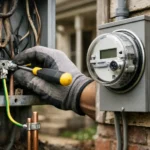
If you are planning a panel upgrade, service change, or meter-main replacement, there is one detail that can slow the whole job down before the first tool comes out: PG&E is requiring all electricians who work on panels to be certified by ITS, and to carry a photo id card to show upon request, of all clients, inspectors, and pg&e reps. For property owners, agents, and contractors, that means the electrician you hire for panel work is not just being judged on price or availability. They also need the right utility authorization.
This matters most on jobs where PG&E service equipment is involved. A lot of people assume any licensed electrician can handle every part of a panel change. That is not always true. A licensed contractor may be fully qualified to do interior electrical work, branch circuits, breakers, lighting, EV charging, and troubleshooting, but panel work tied to utility service often has another layer of requirements. When PG&E is involved, ITS certification can be the difference between a clean, scheduled job and a project that gets delayed at the curb.
What PG&E’s ITS certification requirement really means
ITS stands for the utility’s contractor qualification system for certain types of service-related work. In plain language, if the job touches equipment or procedures that PG&E controls or regulates, the electrician may need to be registered and approved through ITS. That can include overhead service work, underground service work, meter-panel coordination, and certain panel replacement jobs where utility disconnect and reconnect scheduling is part of the project.
The photo ID requirement is not a minor detail. If a client, inspector, or PG&E representative asks to see it, the electrician is expected to produce it. That requirement is about accountability in the field. PG&E wants to know that the person performing utility-related panel work is the same person or contractor who is actually authorized to do it.
For homeowners, this is one of those rules you may never hear about until a project is already on the calendar. Then suddenly somebody says the utility cannot proceed, the inspection cannot move forward, or the disconnect has to be rescheduled. That usually means lost time, extra coordination, and frustration for everyone involved.
Why this matters on panel changes and service upgrades
Panel work is not all the same. Replacing a bad breaker inside an existing panel is different from replacing the entire panel. Replacing the entire panel is different from a 100-amp to 200-amp service upgrade. And a service upgrade with overhead lines is different from one with underground feed.
The more the work touches the incoming service and the meter side of the installation, the more important utility compliance becomes. On older homes in places like Oakland and Berkeley, this shows up all the time. You may have a Federal Pacific panel, a Zinsco panel, an old fuse box, damaged bus bars, overheating at the main, or a panel that simply no longer meets modern demand. If that panel change also involves service conductors, meter equipment, grounding, or coordination with PG&E, the contractor has to be ready for utility requirements from the start.
That is why property owners should ask a direct question before approving the estimate: are you ITS certified for PG&E panel work, and can you show your ID if requested? It is a better question than asking only how fast the job can start.
Who should pay attention to the PG&E panel work rule
This requirement affects more than just homeowners planning a major electrical upgrade. It also matters to landlords correcting inspection issues, buyers negotiating repairs after a home inspection, real estate agents trying to keep a closing on track, and contractors managing remodel schedules.
Commercial property owners should pay attention too. Small commercial buildings often need panel replacements, service modifications, tenant improvement power changes, or three-phase adjustments that involve utility coordination. If the job is time-sensitive, the last thing you want is to find out your electrician is licensed but not properly qualified for the PG&E side of the work.
This is especially important when a property has older infrastructure. Aging meter stacks, obsolete disconnects, corroded service gear, and non-compliant grounding systems often turn a “simple panel swap” into a utility-coordinated service job.
How to verify an electrician is ready for PG&E panel work
The safest approach is to verify qualifications before the permit process begins. Ask whether the contractor is licensed, bonded, and insured, but do not stop there. Ask whether they are registered with ITS for PG&E-related panel work. Ask whether they handle both overhead and underground services if your project could involve either. Ask whether they carry the required photo ID in the field.
You should also ask practical job questions. Have they done main panel changes on older East Bay homes? Do they regularly coordinate with city inspectors and PG&E? Do they understand service upgrades, grounding corrections, and meter-main requirements? Can they identify when a panel replacement is straightforward and when the service itself has to be brought up to current code?
An experienced electrician will answer those questions clearly. A contractor who gets vague or defensive is telling you something.
Common problems when the electrician is not ITS certified
The first problem is delay. The second is confusion. The third is cost.
A project can stall when disconnect and reconnect scheduling does not line up with the utility’s requirements. It can stall when an inspector expects utility coordination that was never arranged. It can stall when the contractor assumed a standard permit was enough and learns too late that PG&E authorization is part of the job.
Sometimes the work itself is done correctly, but the paperwork and field access are not. That still creates a problem. Utility service work is one of those areas where being technically capable is not the same as being cleared to perform the task under current PG&E rules.
There is also risk to the customer. If a contractor is not qualified for the service-related scope, the owner may end up paying for extra visits, rework, rescheduling, or temporary power complications. On occupied homes and active businesses, that can become expensive fast.
This is not just about paperwork
Some customers hear “certification” and assume it is a clerical issue. It is not. Panel work tied to utility service carries real safety consequences. An error at the service entrance can affect the entire building. Improper disconnect procedures, poor terminations, bad grounding, or mistakes in service equipment installation can lead to equipment damage, inspection failure, or a dangerous condition.
That is one reason experienced panel specialists take this seriously. The best contractors do not treat PG&E requirements as a nuisance. They treat them as part of doing the job right.
On older properties, especially those with Federal Pacific, Zinsco, fuse panels, or questionable prior modifications, service work often reveals hidden problems. Burned lugs, undersized grounding electrode conductors, double-tapped terminals, damaged meter sockets, and non-code service bonding are common. These are not handyman-level issues. They require real diagnostic ability, code knowledge, and experience with utility-facing work.
PG&E is requiring all electricians who work on panels to be certified by ITS – what clients should do now
If your panel work is still in the planning stage, bring up the ITS requirement at the estimate appointment. Make it part of the conversation before permits are pulled and before utility dates are discussed. It is easier to choose the right contractor at the beginning than to fix a bad choice in the middle of the project.
If your job is already scheduled, confirm that the electrician handling the work is the same one authorized for the PG&E-related scope. Since the rule includes carrying a photo ID card to show upon request, there should be no hesitation about confirming that point.
And if your property has an older or unsafe panel, do not let the certification issue become an excuse to wait. Dangerous panels do not improve with time. They usually get worse under higher loads from modern appliances, HVAC equipment, EV charging, and added circuits.
For East Bay property owners dealing with service upgrades, failed panels, inspection corrections, or utility-coordinated electrical work, the smart move is simple: hire the electrician who is qualified for the real scope of the job, not just the part you can see from inside the garage. Williams Electric has been handling this kind of work for decades, and when the job involves PG&E panel coordination, that experience shows up where it counts – in safety, scheduling, and getting the work signed off without surprises.