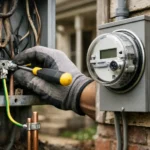
Code violations, and dangerous panels, are upgrades that can save you and yours. A lot of older homes still run on electrical systems built for window fans, one TV, and maybe a toaster. Then people move in with induction ranges, space heaters, EV chargers, home offices, and air conditioning. That is why the best electrical upgrades older homes need are usually not cosmetic at all. They are safety and capacity upgrades that fix hidden problems before they turn into outages, failed inspections, or fire hazards.
In the East Bay, this comes up constantly in older houses with fuse boxes, Federal Pacific panels, Zinsco panels, ungrounded wiring, and worn receptacles that have simply stayed in place too long. Not every old home needs a full rewire, and not every buyer needs to tear everything out on day one. But some upgrades move to the top fast because they solve real risk.
Best electrical upgrades older homes usually need first
The first upgrade to look at is the service and panel. If a home still has a 60-amp or 100-amp service, or an obsolete panel brand, that is often the bottleneck for everything else. You cannot add modern loads safely if the panel itself is already overloaded, damaged, or known to fail.
A panel upgrade to 200 amps is one of the most valuable improvements in an older home when the existing service is undersized. It gives room for kitchen circuits, laundry, HVAC, heat pumps, and EV charging. It also makes future work cleaner, because electricians are not trying to squeeze new circuits into a panel that was outdated 30 years ago.
This is especially true with Federal Pacific Stab-Lok and Zinsco equipment. These panels have a long reputation for breaker failure and overheating problems. If one of those panels is still installed, replacement is usually not an upgrade in the optional sense. It is a safety correction.
Panel replacement is often the real starting point
Homeowners often call about adding outlets or installing a car charger, then find out the main problem is the panel. That is common in older homes. The branch wiring might still be usable in parts of the house, but the service equipment is no longer reliable enough to support modern demand.
When a panel is replaced, the electrician can also correct related issues like poor labeling, double-tapped breakers, corrosion, damaged bus bars, and improper grounding and bonding. Those are the problems that tend to show up in inspections and during troubleshooting after partial outages.
If the home has overhead or underground utility service issues, the service upgrade may involve utility coordination too. That part matters. A clean panel installation is only part of the job. The service has to be done right from the utility connection through the meter and into the main equipment.
Grounding and bonding upgrades matter more than most owners realize
A surprising number of older homes have weak grounding, incomplete grounding, or no effective equipment grounding on many branch circuits. People notice this when they plug in surge strips with warning lights, get small shocks from appliances, or fail inspection after a sale.
Proper grounding and bonding help fault current clear fast enough to trip a breaker. Without that, metal parts that should be safe can stay energized. This is not the flashy part of electrical work, but it is one of the most important.
Sometimes the fix is relatively direct, like updating grounding electrode connections, bonding around water piping correctly, or correcting issues at the service equipment. Sometimes it gets more complicated because the branch circuits are two-wire and ungrounded. At that point, the best approach depends on the condition of the wiring, wall access, budget, and what the homeowner is trying to power.
GFCI and AFCI protection are high-value safety upgrades
If an older home has never had meaningful electrical updating, there is a good chance it is missing GFCI protection in kitchens, bathrooms, garages, outdoors, basements, and other required locations. That is one of the easiest high-impact safety upgrades available.
GFCI devices protect people from shock. They do not fix bad wiring, but they add an important layer of protection where water or damp conditions raise the risk. In many older homes, adding GFCI protection is part of bringing existing circuits up to a safer standard without tearing the house apart.
AFCI protection is different. It is designed to reduce fire risk from dangerous arcing conditions in branch circuits. In older houses with aging insulation, loose terminations, backstabbed devices, or hidden damage, AFCI protection can be a smart upgrade. It is not always as simple as swapping breakers, because nuisance tripping can reveal real wiring defects that need correction. That is a feature, not a flaw, but homeowners should know it can uncover work that was already a problem.
Replacing unsafe or worn wiring devices pays off
You do not need dramatic electrical damage to have a real hazard. Loose outlets, cracked switches, warm receptacles, aluminum branch wiring terminations, open junction boxes, and reverse-polarity receptacles are all common in older homes. These are not glamorous repairs, but they matter.
Replacing old receptacles and switches can improve safety, reliability, and day-to-day use. Adding tamper-resistant receptacles where appropriate is a practical upgrade, especially in homes with children or rentals with tenant turnover. If outlets are two-prong only, the right fix depends on whether a grounding path exists and whether rewiring is planned.
This is one of those areas where shortcuts cause trouble. A three-prong receptacle installed on an ungrounded circuit without proper protection or labeling is not a true upgrade. It may look modern while still leaving the underlying issue untouched.
Dedicated circuits are one of the best electrical upgrades older homes can make
Older homes often have too many loads stacked on too few circuits. The kitchen might share with the dining room. The microwave may ride on a general lighting circuit. A garage freezer, laundry equipment, and outdoor receptacles may all land on wiring that was never intended for that load.
That is why dedicated circuits are such a practical improvement. A dedicated laundry circuit, microwave circuit, bathroom receptacle circuit, sump pump circuit, or garage circuit can solve recurring nuisance tripping and reduce overheating risk. It also makes the system easier to diagnose later.
For many homeowners, the biggest dedicated circuit upgrade is EV charging. A properly installed 240-volt circuit for an EV charger or Tesla 14-50 outlet is safer and faster than trying to live off extension cords or overloaded receptacles. But this only works well if the panel and service have the capacity for it.
Lighting and outlet additions improve function, not just looks
Some electrical upgrades are about safety first. Others are about making an older house work like a modern one. That includes adding receptacles where people actually need them, improving exterior lighting, upgrading garage and basement lighting, and replacing outdated fixtures.
A lot of older homes simply do not have enough outlets. That leads to extension cords, power strips, and overloaded adapter blocks. Adding properly placed receptacles is often a better safety improvement than people expect. The same goes for exterior lighting at entries, walkways, and driveways.
If you are opening walls for remodeling, that is usually the right time to add circuits, lighting, and switching improvements. Doing it later as patchwork costs more and limits options.
When partial rewiring makes more sense than full rewiring
People hear “older home” and assume full rewire. Sometimes that is correct, especially with unsafe knob-and-tube wiring, badly altered circuits, or severe deterioration. But often the smarter move is targeted rewiring.
A house may need the kitchen, bath, garage, and service equipment upgraded first, while other areas remain functional and safe with corrections. That approach can control cost while still dealing with the highest-risk problems. On the other hand, if the wiring has widespread splices, insulation breakdown, no grounding, and a history of overheating, partial work may just postpone the inevitable.
This is where experience matters. The right answer depends on access, condition, future remodeling plans, and whether the home is owner-occupied, rented, or being prepared for sale. A veteran electrician can usually tell the difference between wiring that is old but serviceable and wiring that needs to go.
What to prioritize if budget is limited
If money is tight, start with the hazards that can burn, shock, or fail inspection. Dangerous panels, fuse boxes with over-fusing, damaged service equipment, missing GFCI protection in key areas, and obvious wiring defects belong at the top. After that, focus on grounding corrections and dedicated circuits for heavy-use equipment.
Cosmetic upgrades can wait. Safety-critical work should not. In many older homes, one well-planned phase of electrical work does more good than several scattered handyman fixes over the years.
Williams Electric has seen this pattern on thousands of older properties: the best results come from fixing the backbone of the system first, then adding the convenience upgrades once the foundation is solid.
If your home still has original service equipment, mystery wiring, or an inspection report full of electrical notes, the right upgrade is the one that makes the house safer and more dependable for the way you actually live in it now. That answer is not always flashy, but it is the one that holds up.