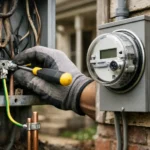
A bad electrical repair can cost you twice – once when the first person does it wrong, and again when the second person has to find and fix what was hidden. If an electrician or diy handyman has made a mistake on your job, and won’t return your calls, the real question is not just how to get it repaired. It is how to avoid getting burned again, and whether you have any practical way to recover your losses.
That situation is common in older homes, rental properties, and fast-moving real estate deals. Someone installs the wrong breaker, leaves open splices in a wall, miswires a GFCI, overloads a panel, or does a panel change that never should have passed inspection. Then the calls stop getting returned. At that point, you need two things: a clean diagnosis from a qualified electrician, and a realistic plan for documentation, correction, and possible recovery.
If an electrician or DIY handyman made a mistake, start with evidence
Do not begin by tearing everything apart yourself. Before any repair work starts, document what you have. Take clear photos of the panel, outlets, switches, exposed wiring, damaged equipment, and any visible code violations. Save your texts, emails, invoices, estimates, canceled checks, and screenshots of missed appointments or unreturned messages.
If the problem created property damage, document that too. Burn marks, damaged appliances, drywall cuts, nonworking circuits, or signs of overheating all matter. If the work involved a service panel, meter section, grounding, or PG&E service equipment, get wide photos and close-ups. Those jobs can involve permit issues, utility coordination issues, and serious safety hazards.
The reason this matters is simple. If you eventually ask for reimbursement through a contractor bond claim, small claims court, a credit card dispute, or an insurance route, your case gets stronger when the facts are clear. Memory is weak. Photos and paperwork are not.
How do you know the next guy you hire is any better?
This is where many property owners make the same mistake twice. They call the next available person and hope for the best. That is not a plan.
A better electrician should be able to do more than say, “Yeah, that looks wrong.” He should tell you exactly what is wrong, why it is wrong, whether it violates code, whether it is unsafe, and what the repair options are. He should also be willing to put that in writing.
Ask direct questions. Is the electrician licensed in California? Is the license active and in the right classification? Is the company bonded and insured? Will a permit be pulled if the job requires one? Has the electrician handled this exact kind of correction before – panel replacement, service upgrade, grounding repair, breaker replacement, aluminum wiring correction, failed inspection work, EV charger circuit repair, or knob-and-tube issues?
Experience matters a lot in correction work. New construction and repair diagnostics are not the same trade, even though both are electrical work. Fixing someone else’s mistake takes troubleshooting skill, code knowledge, and enough field experience to recognize when one visible problem points to three hidden ones.
That is especially true with older East Bay homes. A bad handyman repair in a 1920s or 1940s house may be sitting on top of ungrounded circuits, brittle insulation, undersized service equipment, bootleg neutrals, or an obsolete panel. In that setting, the cheapest estimate is often the most expensive outcome.
What to look for in the next electrician
The first sign of a solid hire is specificity. A real electrician does not give vague comfort. He gives a scope of work. He explains whether he is quoting a limited repair, a full diagnostic, or a correction based on visible conditions only.
The second sign is inspection discipline. If the original work should have been permitted but was not, your next electrician should say so plainly. Not every small repair needs a permit, but panel changes, service upgrades, major branch circuit additions, and many substantial corrections often do. Anyone trying to talk you out of permits on serious service work is not doing you a favor.
The third sign is proof. Look for a long operating history, real reviews across multiple platforms, referral relationships with inspectors, agents, builders, or repeat property owners, and visible experience in safety-critical work. A contractor who regularly handles Federal Pacific, Zinsco, fuse panel replacement, grounding upgrades, and failed inspection corrections is usually working at a different level than someone who mostly swaps light fixtures.
A good electrician should also tell you what he cannot know yet. That is not weakness. That is honesty. Some damage is visible only after opening boxes, tracing circuits, or load testing equipment. Straight answers beat cheap promises.
When the original job was done by a handyman
This part is blunt because it needs to be. In California, many electrical jobs are not handyman work. Once you get into panel work, service equipment, new circuits, major rewiring, or anything safety-critical, you should be dealing with a licensed electrical contractor.
A handyman may have caused the problem simply by working beyond what he was legally or technically qualified to do. That matters for two reasons. First, it may affect your ability to recover money. Second, it may affect insurance coverage or resale disclosures if unsafe unpermitted work is found later.
If you suspect unlicensed work, your next electrician should identify what was done, what is unsafe, and what needs correction to meet current code and utility requirements. That written record may become important if a buyer, landlord, insurance carrier, or building inspector gets involved later.
How to recover your losses if any
You may have several options, but recovery depends on who did the work, how you paid, and how well you documented the problem.
Start by requesting a written evaluation from the electrician who is correcting the job. This should separate opinion from fact. The best format is simple: what was found, why it is defective or unsafe, what corrective work is required, and what the repair cost will be. If the original work caused collateral damage, that should be noted too.
Then look at the recovery path that fits your situation. If the original contractor was licensed, you may be able to pursue a bond claim or file a complaint with the state licensing board. If you paid by credit card, you may have dispute rights depending on timing. If the loss falls within small claims limits, that may be the cleanest route. If property damage occurred, your own insurance carrier may have a role, although that varies and deductibles matter.
Do not assume recovery is automatic. If the original contractor is unlicensed, broke, disappeared, or has no paper trail, collection may be difficult even if you are clearly in the right. That is why documentation matters so much. It is also why hiring correctly the second time matters even more. The first goal is making the property safe and code-correct. Money recovery comes after that.
Ask for a correction report, not just a repair bill
Many homeowners make another avoidable mistake here. They hire the next electrician, get the problem fixed, and keep only the invoice. Later, when they need to explain the issue to a buyer, insurer, or court, they realize the invoice does not say enough.
Ask for a written correction report or at least detailed invoice notes. It should state what was wrong and what was done to correct it. If permits were obtained, keep copies. If the work passes inspection, keep that record too. Those documents can protect you long after the immediate problem is gone.
This is particularly important for panel replacements, service upgrades from 100 amps to 200 amps, grounding and bonding corrections, and failed inspection work. These are not cosmetic repairs. They affect safety, value, and future transactions.
Red flags that tell you to keep looking
If the next contractor refuses to verify license and insurance, keep looking. If he gives a price without looking carefully, keep looking. If he says permits are never needed, keep looking. If he cannot explain the difference between a symptom and a root cause, keep looking.
And if he minimizes obvious hazards like overheating breakers, double-tapped terminals, scorched bus bars, missing grounding electrodes, reversed polarity, or unsafe service equipment, definitely keep looking. Electrical mistakes do not get safer with time.
The safest way forward
The right next hire is usually not the one with the lowest number. It is the one who can diagnose accurately, document clearly, correct the work to code, and stand behind the repair. On serious electrical work, that means a licensed, bonded, insured electrical contractor with real troubleshooting experience and a track record in correction work.
For East Bay property owners, that often means choosing someone who knows older housing stock, utility coordination, panel upgrades, and inspection-driven repairs. A veteran electrician like Geoff Williams, with decades in the field, PG&E system contractor registration, and deep experience correcting dangerous panel and wiring conditions, brings the kind of judgment that matters when the first job already went sideways.
When someone has already made a mess of your electrical system, trust is not built with slogans. It is built with a license number, a written scope, a permit when required, clear findings, and repair work that holds up after the truck leaves.