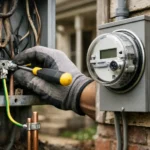
A breaker that keeps tripping is not just annoying. It is often the first sign that you may be dealing with overload, a failing breaker, heat damage, or a larger panel problem. That is why circuit breaker replacement cost can vary a lot from one job to the next. Some replacements are simple. Others uncover burned bus bars, obsolete panels, or code issues that change the scope fast.
What affects circuit breaker replacement cost
The biggest mistake homeowners make is assuming every breaker swap is the same. It is not. Replacing a standard breaker in a healthy, modern panel is one kind of job. Replacing a breaker in an older panel with corrosion, loose connections, or discontinued parts is something else entirely.
In most cases, circuit breaker replacement cost is driven by five things: the type of breaker, the panel brand, access and condition, whether there is heat damage, and whether permits or code corrections are needed. Labor is only part of the number. The real issue is what the electrician finds once the dead front comes off and the panel is inspected under load and at the bus connection.
A standard single-pole breaker usually costs less to replace than a double-pole breaker serving a dryer, water heater, air conditioner, or subpanel. GFCI, AFCI, and dual-function breakers cost more than basic thermal-magnetic breakers because the parts cost more and compatibility matters. If the panel requires a specific OEM breaker, that affects price too.
Typical price ranges homeowners see
For a straightforward breaker replacement in a serviceable panel, many homeowners see a total price in the rough range of about $150 to $400. If the breaker is a specialty type such as GFCI, AFCI, or a larger two-pole unit, the total can move into the $250 to $600 range or more depending on brand and availability.
Those are only broad field ranges, not a flat quote. If there is panel damage, arcing, melting, aluminum wiring terminations that need correction, or a problem with the bus stab where the breaker connects, the cost can rise because the breaker itself is no longer the only issue. At that point, replacing just the breaker may be the wrong repair.
If you are dealing with an obsolete panel line such as Federal Pacific or Zinsco, pricing gets even less predictable. The reason is simple: on those systems, the safe answer is often panel replacement, not just breaker replacement. A cheaper breaker swap on a dangerous or compromised panel can be money spent in the wrong place.
When a low breaker replacement price is misleading
Homeowners naturally want a number over the phone. That is understandable. But a very low quote can leave out the hardest part of the job, which is diagnosing why the breaker failed in the first place.
Breakers do wear out, but they also trip for reasons. A worn breaker may be nuisance-tripping. A properly working breaker may be telling you the circuit is overloaded, the wire has a fault, the receptacles downstream are damaged, or a major appliance is pulling too much current. If someone changes the breaker without identifying the reason, the same problem often comes back.
This is especially common after home inspections or quick handyman repairs. Someone sees a tripping breaker and treats it like a disposable part. Sometimes that works. Sometimes the real problem is a loose bus connection, overheating neutral, damaged panel interior, or a circuit that was extended too many times over the years.
The breaker type makes a real difference
Not all breakers are priced alike, and not all are interchangeable. That matters more than many property owners realize.
A basic 15-amp or 20-amp single-pole breaker is usually the least expensive replacement. A 240-volt double-pole breaker costs more because it protects a larger load and uses more material. AFCI breakers, often found on bedroom and living area circuits in newer code-compliant work, cost more because they detect arc faults. GFCI breakers protect against shock hazards and also come at a higher price. Dual-function breakers combine both protections and are higher still.
Brand matters too. Eaton, Square D, Siemens, GE, and Cutler-Hammer are not all cross-compatible, and using the wrong breaker can create a safety issue or inspection problem. An experienced electrician checks the panel labeling, breaker series, physical fit, listing, and condition of the bus before installing anything.
Panel condition can change the whole job
Here is the part that raises or lowers circuit breaker replacement cost more than people expect: the condition of the panel itself.
If the panel interior is clean, dry, correctly wired, and has a solid bus connection, breaker replacement is often straightforward. If the panel shows signs of rust, water intrusion, overheating, double-tapped neutrals, mismatched breakers, or melted insulation, the repair gets more serious.
A breaker that has burned onto the bus is not just a breaker problem. The bus may be pitted or damaged enough that a new breaker will not make reliable contact. In that case, the electrician may recommend replacing the panel or at least the affected interior components if the system allows it. Some older panels do not have practical or safe replacement interiors available, which pushes the job toward full panel replacement.
That is why inspection matters. A proper diagnosis protects you from paying twice.
Older and dangerous panels are different
In the East Bay, many homes still have old electrical equipment. That includes Federal Pacific Stab-Lok, Zinsco, fuse panels, and other outdated service equipment. If your breaker problem is inside one of those systems, the conversation should not start with the cheapest breaker replacement. It should start with safety.
Federal Pacific and Zinsco panels have a long history of failure concerns, poor breaker performance, and bus problems. In those cases, replacing one breaker may not solve the underlying hazard. It may only delay the real repair.
This is where experience matters. A licensed electrician who sees these panels regularly can tell the difference between a sensible short-term repair and a panel that needs to be changed before it causes a bigger problem. That is a very different level of service than simply installing a part and leaving.
Labor, permits, and troubleshooting
A lot of the cost is not the breaker. It is the troubleshooting.
A good electrician does not just shut off power, pull a breaker, and pop in a new one. The work may include testing load, checking conductor size, torqueing terminations correctly, inspecting the bus, verifying panel compatibility, looking for heat damage, and confirming that the circuit is safe to re-energize. If the breaker serves a kitchen, bath, garage, outdoor circuit, or bedroom, current code protection requirements may also matter.
For a simple like-for-like breaker replacement, permits are not always required, depending on local rules and scope. But if the repair grows into panel work, service equipment correction, or substantial code upgrades, permit and inspection requirements can apply. That adds cost, but it also protects the property owner. For many buyers, landlords, and real estate agents, documented code-compliant work is worth more than the lowest invoice.
Should you replace one breaker or upgrade the panel?
This is where the real trade-off comes in. If one breaker has failed in an otherwise solid panel, replacing that breaker is usually the right move. If the panel is crowded, obsolete, hot, damaged, or full of mixed breaker brands, spending money one breaker at a time may not be smart.
A panel upgrade costs more upfront, but it can make more sense if you are adding EV charging, air conditioning, new kitchen circuits, or a 200-amp service upgrade. It also makes sense if the existing panel has a known safety history or repeated failure points. Homeowners often spend money on several small repairs before realizing the panel itself is the problem.
That is why a straight answer matters. Sometimes the right recommendation is a single breaker. Sometimes it is a panel replacement. The honest answer depends on condition, load, brand, and future plans for the property.
How to know when to call now
If a breaker trips once after you overload a circuit, that may be normal. If it keeps tripping, feels hot, smells burned, will not reset, shows discoloration, or the panel makes crackling sounds, do not ignore it. The same goes for flickering lights on that circuit, dead outlets, or visible scorch marks.
Those are not wait-and-see issues. They are signs that the breaker may be doing its job, or failing to do it, and either way the circuit needs to be checked by a licensed electrician.
For homeowners, landlords, and buyers, the smartest way to think about circuit breaker replacement cost is not as the price of a part. It is the price of getting the right diagnosis before a small electrical problem turns into panel damage, failed inspection, or a fire risk. A good repair is not the cheapest number on the phone. It is the one that actually fixes the problem and leaves the system safer than it was before.