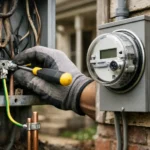
Sometimes I have made the mistake of not testing before touching the lines. They can be double fed, back fed hot neutral, (white wires can also kill you), and turned back on hot by others on the job site! One bad assumption around electricity can put a person on the ground, in the burn unit, or worse. When people ask, “What are the dangers of being an electrician, regarding: height, roofs, tools, voltage, shocks, mistakes, short circuits, wet conditions, ie, rain, flooded floors, under the sink in contact with water pipes, energized stucco, energized gas line?” the short answer is this: the danger is not just electricity. It is electricity combined with gravity, metal, water, age, bad repairs, and a moment of overconfidence.
This is why experienced electricians treat even simple service calls with respect. A loose breaker, a dead outlet, or a problem under a kitchen sink can turn serious fast when hidden faults, wet conditions, or energized metal parts are involved.
Height and roofs make electrical work more dangerous
A lot of electrical work happens off the ground. Service drops, mast repairs, weather heads, exterior lighting, solar tie-ins, and overhead feeds often mean working on ladders or roofs. At that point, the hazard is no longer just shock. It is shock plus a fall.
A small jolt at floor level might throw your hand back. The same jolt on a ladder can knock you off the side of a building. Even if the voltage is not high enough to kill, the fall can be. That is one reason roof and service work calls for careful setup, solid ladder placement, dry footing, and a clear understanding of where the energized parts are before any tool comes out.
Roofs add another layer of risk because footing changes constantly. Old shingles, moss, wet tile, loose gravel, and steep pitch all make balance less reliable. Then add service conductors overhead, metal flashing nearby, and a drill or conduit in your hand. The problem is not just contact with a live wire. The problem is losing control in a place where there is no room for a mistake.
Tools can injure you even before electricity does
Electricians work with drills, hole saws, knockout sets, reciprocating saws, fish tapes, benders, cutters, and test equipment. Every one of those tools can hurt you by itself. Add live equipment or cramped working conditions, and the stakes go up.
A metal tape measure across live bus bars can create an arc in a fraction of a second. A screwdriver can slip. A drill bit can hit hidden wiring. A fish tape pushed into the wrong space can contact energized parts and send current back to the person holding it. Even hand tools become serious hazards if insulation is damaged, the tool is wet, or the worker is grounded through a pipe, framing, stucco mesh, or concrete.
Power tools also create distraction. A person focused on cutting, drilling, or pulling cable may not notice that their forearm is against a grounded duct, or that the panel interior they thought was dead is still energized on the line side. This is where training matters. Good electricians do not just know how to use tools. They know what the tool might contact, what is live, and what path current could take through the body.
Voltage, shocks, and arc faults are not all the same
People often talk about “getting shocked” as if every shock is equal. It is not. The danger depends on voltage, available fault current, the path through the body, the duration of contact, skin condition, and whether the person falls or jerks into something else.
Lower voltage can still kill under the right conditions. Household voltage is enough to stop the heart, especially when skin is wet or broken and the current crosses from hand to hand or hand to foot. Higher voltage adds another level of danger because it can jump gaps, create arc flash, and cause severe internal and external burns.
Short circuits are especially dangerous because they can release a huge amount of energy instantly. That energy can melt metal, blast hot particles outward, damage eyesight, ignite clothing, and destroy equipment. The public often thinks the worst-case event is touching a wire. In reality, some of the worst injuries happen when a fault occurs in front of a worker who is near energized gear.
Mistakes are part of the hazard
One of the biggest dangers in electrical work is human error. The trade punishes small mistakes hard. Turning off the wrong breaker, trusting a bad label, assuming an old disconnect works, or not verifying that equipment is de-energized can put a person right into live parts.
Older homes and commercial buildings are where mistakes become more likely. Circuits are often extended, mislabeled, double-tapped, bootleg grounded, or tied into work done decades apart. A white wire may be hot. A metal box may be energized. A neutral may carry current when someone thinks only the hot conductor matters.
This is common in older East Bay properties where service equipment has been changed more than once and wiring methods vary from one era to another. A person who has done thousands of troubleshooting jobs knows that what “should” be true and what is actually true are often not the same.
Wet conditions change everything
Water lowers resistance and increases the chance that current will travel through the body or across surfaces that normally seem harmless. Rain, flooded floors, damp crawl spaces, wet soil, condensation, and plumbing leaks all change the risk level.
Working in rain is dangerous not just because a hand might slip. Wet gloves, wet tools, wet ladders, and wet clothing all make accidental contact more serious. Exterior service equipment in rain has to be treated carefully, and sometimes the safest choice is to delay work until conditions are controlled.
Flooded floors are worse. If electrical equipment, extension cords, receptacles, appliance circuits, or damaged conductors are in contact with standing water, the whole area can become energized. A person may not need to touch a wire directly. Stepping into the wrong place may be enough.
Under-sink work has its own risks. It is a cramped area with water lines, drain pipes, metal fittings, garbage disposals, dishwashers, and often damaged receptacles or loose splices. If someone is in contact with water pipes while handling energized wiring, they may become the path to ground. That is one reason kitchen and bathroom electrical work requires extra care, proper GFCI protection, and verified shutdown before any repair begins.
Energized stucco and energized gas line problems are real
These are not theoretical hazards. Metal lath behind stucco can become energized if a conductor is damaged or if bad grounding and bonding allows stray voltage onto building components. The same goes for metal gas piping. If an electrical fault energizes a gas line, touching it can produce a shock, and the situation is even more serious because gas systems are involved.
An energized stucco wall can surprise both workers and homeowners because nobody expects the wall finish itself to be live. The same is true for a gas line near a water heater, furnace, or kitchen appliance. These conditions usually point to deeper electrical defects such as damaged conductors, improper bonding, neutral problems, or illegal wiring connections.
This is exactly why random handyman work on safety-critical electrical systems is risky. If someone does not understand grounding, bonding, fault current paths, and service equipment, they may fix the symptom and leave the real hazard in place.
Why short circuits and line-side work deserve special respect
Short circuits are violent. They do not always give a warning, and they do not require prolonged contact. One slip of a tool in a panel, meter socket, service disconnect, or junction box can create instant heat and explosive force.
Line-side conductors are even more dangerous because they may remain energized even when the main breaker is off. Many homeowners do not realize this, and some inexperienced workers forget it in the field. Inside service equipment, certain parts may still be live and unfused. That means the available fault current can be enormous.
This is where experienced panel and service electricians separate themselves from general repair work. Main panel changes, 100-amp to 200-amp service upgrades, overhead and underground service work, and correction of dangerous legacy equipment require a different level of caution and planning. Williams Electric has built much of its reputation on exactly this type of high-risk, safety-critical work.
The real protection is not bravery
The safest electricians are usually not the boldest. They are the most methodical. They test before touching. They assume labels can be wrong. They understand that wet conditions change the rules. They know a roof job is also a fall job, and a sink cabinet can be a grounding trap.
Electrical work is dangerous because the hazards overlap. A person may be on a ladder, in light rain, using a metal tool, troubleshooting mislabeled circuits on an older property with poor grounding. That is how serious injuries happen – not from one obvious mistake, but from several risk factors stacking up at once.
For homeowners, landlords, and property buyers, the practical lesson is simple: if there is any sign of energized metal, water near wiring, burned equipment, tripping breakers, old panels, or unexplained shocks, stop and have it checked properly. Electricity does not care whether the job looks small.