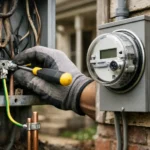
Older homes in Piedmont often have great bones, plaster walls, original trim, and electrical systems that were never designed for modern loads. Sometimes they are designated historical buildings. If you need a Piedmont electrician for old wiring, the real question is not just whether the lights still turn on. It is whether the wiring, panel, grounding, and protection devices are safe enough for today’s appliances, electronics, and inspection standards. It’s how to navigate the city’s demands and inspectors. Geoff Williams has been through three cycles of chief electrical inspectors in Piedmont ca. He remembers Chester’s’ first day on the job.
That distinction matters. A house can seem mostly fine for years, then start showing warning signs all at once – tripping breakers, dimming lights, warm outlets, failed inspections, or a panel that is no longer considered reliable. In older East Bay homes, those issues often trace back to a combination of aging wiring methods, undersized service, patchwork repairs, and outdated panels.
What old wiring usually means in a Piedmont home
Old wiring is not one single condition. It can mean knob-and-tube wiring in parts of the house, cloth-insulated branch circuits, ungrounded receptacles, old two-wire cable, fuse panels, early breaker panels, or later systems that were altered badly over time. Many homes have a mix of generations of electrical work. That mix is where problems start.
A kitchen may have been remodeled in the 1990s, while bedrooms still run on older circuits from decades earlier. A garage may have a newer subpanel, but the main service feeding the property may still be undersized. Someone may have added three-prong outlets without actually adding grounding. On paper, everything looks updated. In the walls, it is another story.
That is why a serious evaluation matters more than a quick visual opinion. Old electrical systems need to be traced, tested, and compared against current use, not just judged by age alone.
When to call a Piedmont electrician for old wiring
Some problems are obvious. Others only show up during a home sale, remodel, insurance review, or EV charger estimate. If breakers trip when a microwave and toaster run together, if lights dip when a vacuum turns on, or if an inspector flags missing GFCI or AFCI protection, the house is telling you the system has limits.
You should also pay attention to signs that point to heat or arcing. Those include buzzing at the panel, discoloration around breakers or receptacles, a burning smell, or switches that feel hot. Any of those conditions deserve prompt inspection.
Then there are the homes that have no obvious symptom but still carry real risk. Federal Pacific Stab-Lok panels, Zinsco panels, fuse boxes, and older service equipment can fail in ways the homeowner never sees until there is a major problem. That is one reason buyers, sellers, and real estate agents often want an electrician involved before a transaction gets held up by safety issues.
The biggest safety issues in older electrical systems
The most common issue is not always the wiring itself. Often it is the combination of old wiring with modern demand. Homes that were built for a few lights, a radio, and small kitchen loads are now expected to support HVAC equipment, induction cooking, EV charging, office equipment, entertainment systems, and high-wattage appliances.
That strain shows up in a few places. The service may still be 60 or 100 amps when the property really needs a 200-amp panel upgrade. Branch circuits may be overloaded. Grounding may be incomplete or missing. Safety devices like GFCI and AFCI protection may not be installed where current standards call for them.
There is also the workmanship problem. Many older homes have been worked on by multiple people over decades. It is common to find open splices, double-tapped breakers, reversed polarity, buried junction boxes, bootleg grounds, or extension methods that never should have been permanent. A lot of old wiring jobs are really old wiring plus bad newer repairs.
Repair or rewire? It depends on what is actually there
Not every older house needs a full rewire. That is where experience matters. Some homes need targeted corrections, not wholesale demolition. Others are past the point where piecemeal work makes financial or safety sense.
If the original wiring is limited to a few lighting circuits in accessible areas and the insulation is still intact, a focused repair plan may be enough. If the panel is sound, the grounding can be corrected, and the heavy-load circuits are modernized properly, you may not need to open every wall.
But if the house has widespread knob-and-tube, deteriorated insulation, ungrounded branch circuits throughout, overloaded kitchen and bathroom circuits, and an obsolete panel, then partial fixes can become expensive detours. In that case, a broader rewire plan often gives better long-term value.
The right answer usually comes from three factors: safety risk, access, and future plans. If you are remodeling anyway, that is the best time to address hidden electrical work. If you are staying in the home long term, investing in a proper upgrade usually beats repeated patch repairs.
Panels, grounding, and code corrections matter as much as the wiring
Homeowners often focus on the wires inside the walls, but the service equipment is just as important. An older house may still have a panel that cannot safely support present-day use, even if some branch circuits have already been upgraded. Panel replacement is not cosmetic. It is central to overload protection and fire safety.
Grounding is another area that gets missed. A home may have newer outlets and a newer panel but still lack proper grounding electrode connections, bonding, or equipment grounding on branch circuits where it is needed. That affects surge protection, fault clearing, and shock risk.
Then there is code correction work. GFCI protection in kitchens, bathrooms, garages, laundry areas, and outdoors is a basic safety expectation now. AFCI protection may be needed in many living spaces depending on the scope of work. Smoke and carbon monoxide requirements can also come into play during permitted upgrades. This is why old wiring projects are rarely just about replacing cable.
Why older homes need a specialist, not just any electrician
A newer tract home and an older Piedmont property are different jobs. In an older house, the electrician has to know how to diagnose hidden problems, work around finished surfaces, identify dangerous legacy equipment, and separate what is serviceable from what is not.
That kind of work takes field judgment. It is one thing to install wiring in open framing. It is another to troubleshoot a mixed system with old cable, a questionable subpanel, and years of alterations done without a clear plan. The best results come from someone who does not guess and does not oversell.
Geoff Williams has been doing this work since 1967 and has handled more than 10,000 electrical jobs, including difficult service upgrades, old panel replacement, wiring correction, and inspection-driven repairs. That background matters when the house has a little bit of everything wrong at once.
What a proper old wiring inspection should cover
A real inspection should start at the service, not the light switches. The electrician should evaluate the main panel, meter service, grounding and bonding, visible branch wiring, subpanels, receptacle grounding, and signs of overheating or improper connections. If the property has known problem equipment, that should be identified clearly.
From there, the goal is to match the electrical system to how the house is actually used. If the owner wants EV charging, air conditioning, new kitchen equipment, or added circuits for office use, that affects the recommendation. If the house is headed for sale, the focus may be on safety corrections, permit-ready repairs, and the issues most likely to concern buyers, appraisers, or insurers.
A good electrician should also explain trade-offs. Sometimes the smart move is a staged upgrade: panel first, then critical branch circuits, then optional improvements later. Sometimes opening walls in one area can avoid more expensive fishing and patching elsewhere. There is no one-size-fits-all answer.
The cost question homeowners always ask
Old wiring work costs more when conditions are hidden, access is tight, and previous work is messy. That is normal. Plaster walls, limited crawlspace access, and mixed-era systems take more labor. So do permit and PG&E coordination issues when a service upgrade is involved.
But the cheaper option is not always the lower bill. A small repair that leaves an unsafe panel in place, or adds more load to a marginal service, can create another service call in six months. On the other hand, a homeowner should not be pushed into a full rewire if targeted corrections will solve the actual problem safely.
The right estimate should be specific about what is being corrected and why. If the proposal is vague, that is a problem. Old wiring jobs need a clear scope.
Old wiring work is really about making the house usable again
Most homeowners are not chasing perfect electrical systems. They want the house to work safely without wondering if an outlet is grounded, if the panel is dangerous, or if the next inspection will turn up another expensive surprise. That is the practical goal.
If your home has old wiring, start with a serious inspection by someone who knows older East Bay housing stock and knows the difference between a repair, a correction, and a full replacement job. The best electrical work on an older home is not flashy. It is quiet, code-correct, and dependable for years after the walls are closed back up.