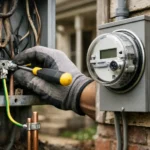
A burning electrical smell or a sizzling sound is not a wait-and-see problem. If you are asking, What to do if I smell an electrical burning smell, or hear sizzling and crackling in a panel, a circuit breaker, or inside an electrical box or the wall, the first answer is simple: treat it like an active electrical hazard until proven otherwise.
When wiring, breakers, bus bars, or terminations overheat, they can keep deteriorating even if the power has not fully failed yet. That is how small warning signs turn into burned panels, melted conductors, damaged walls, and in some cases an electrical fire. The right move is to act fast, but act carefully.
What to do first if you smell an electrical burning smell
If the smell is strong, getting worse, or you hear active sizzling or crackling, shut off power if you can do it safely. If the noise or smell is coming from the main service panel and you can reach it without standing near heat, smoke, or visible arcing, turn off the individual breaker if you know which circuit is involved. If you do not know which one it is, or if the main panel itself appears hot, damaged, or noisy, do not start experimenting.
If there is visible smoke, sparking, or any sign the panel or wall is actively burning, call 911 first. Leave the building if needed. Electrical fires inside walls and panels can spread fast and can keep feeding on energized conductors.
If there is no active fire but the smell is obvious, unplug devices on the affected circuit if they are easy to reach. Do not keep resetting a tripped breaker. A breaker that trips, then smells hot, then crackles when reset is telling you there is a real fault. Repeated resetting can make the damage worse.
After power is off, leave the panel cover, electrical box, or wall alone. Do not remove dead fronts, breaker covers, receptacles, switch plates, or light fixtures to investigate unless you are qualified to work on energized and de-energized electrical equipment. A lot of serious burns happen when people try to “just take a look.”
Why sizzling, crackling, and electrical burning smells happen
These symptoms usually point to heat, arcing, or a failing connection. That can happen for several reasons.
A loose wire connection is one of the most common causes. Loose terminations create resistance. Resistance creates heat. Heat damages insulation and breaker components, which creates more resistance and more heat. That cycle can go on for a while before anything fully fails.
A failing breaker is another common cause. Breakers do wear out, especially in older panels, overloaded circuits, or panels with a history of corrosion, water intrusion, or poor bus contact. Some older breaker systems are known for not tripping reliably, which is one reason certain legacy panels are considered high risk.
Damaged wiring inside a wall can also make sizzling or crackling sounds. That may come from a loose splice, a nail or screw hitting a cable, deteriorated insulation, rodent damage, overloaded conductors, or old wiring methods that should have been corrected years ago.
Then there are panel-specific problems. Burned bus bars, melted breaker stabs, aluminum conductor issues, double-tapped breakers, oversized breakers, neutral failures, and service equipment defects can all create smell and sound before they create a full outage.
What not to do
The wrong response causes a lot of avoidable damage.
Do not ignore the smell because the lights still work. Electrical equipment can continue operating while overheating.
Do not assume it is “just dust” unless the smell clearly came from first seasonal use of a heater or appliance and goes away immediately. A panel, breaker, switch, receptacle, or wall cavity that smells burned should be treated differently.
Do not keep using a hot outlet, switch, or breaker to “see if it happens again.” It already happened once. That is enough.
Do not spray anything into a panel or electrical box. And do not use water on electrical equipment.
Do not rely on a home warranty diagnosis, handyman guess, or a quick breaker swap without finding the actual cause. Burned electrical parts are symptoms. The underlying fault still has to be identified and corrected.
When the problem is in the panel or breaker
If the smell or sound is coming from the service panel, the stakes are higher. Panels concentrate a lot of energy in one place. A loose main lug, damaged breaker connection, failing main breaker, overheated neutral, or burned bus section can escalate quickly.
This is especially true in older equipment, including Federal Pacific, Zinsco, fuse panels, and panels that have already been modified multiple times over the years. In those systems, the issue is not always a simple breaker replacement. Sometimes the damage is in the bus, the meter-main equipment, the service conductors, or the entire panel assembly.
A proper diagnosis may involve checking for thermal damage, voltage irregularities, loose or failing terminations, corrosion, overload conditions, improper breaker types, and signs the panel is no longer safe to repair economically. In many cases, the safest fix is panel repair or panel replacement, not patchwork.
When the sound is in the wall or electrical box
A crackling sound inside a wall or electrical box can mean an active arc. That is serious because the heat source may be hidden behind drywall, insulation, wood framing, or finish materials.
Sometimes the cause is a bad splice in a junction box. Sometimes it is a damaged receptacle or switch. Sometimes it is old cloth wiring, brittle insulation, or knob-and-tube modifications that were never done correctly. In older East Bay properties, it is not unusual to find layers of repairs from different decades. That is how unsafe splices, overfused circuits, and ungrounded wiring get buried behind a finished wall.
If you can identify the affected circuit and shut it off safely, do that and leave it off. Then have the circuit traced and opened where needed. This is not the kind of problem to cover up with a blank plate, a new device, or a fresh coat of paint.
Signs this may be an emergency right now
Some situations need immediate emergency response, not a scheduled visit tomorrow.
Call 911 and get out if you see smoke, flames, glowing metal, or hear loud arcing. Treat it as an active fire risk.
Call an electrician urgently if the panel is hot to the touch, breakers are buzzing, lights are dimming or surging, outlets are scorched, a wall is warm, or a burning smell returns whenever a circuit is turned back on. Those are signs the fault may still be active.
If the building has old or known-problem electrical equipment, the urgency goes up. A failing breaker in a modern panel is bad enough. A failing breaker in obsolete or dangerous equipment can be worse because the protective function itself may be compromised.
What a qualified electrician should check
A real diagnosis should go beyond replacing whatever looks burned. The electrician should determine where the fault started, what else was damaged by heat, and whether the equipment is still safe and code-compliant.
That often includes inspecting the panel interior, breaker-to-bus connections, conductor terminations, neutral and ground bars, affected outlets or switches, junction boxes, and load conditions on the circuit. Depending on the symptoms, it may also include voltage testing, load testing, thermal inspection, and opening parts of the wall or ceiling to inspect damaged wiring.
If the service equipment is outdated, damaged, or unsafe, the recommendation may be a panel upgrade or service replacement rather than a spot repair. That is not upselling when the equipment is no longer dependable. It is the right fix.
Old homes and recurring electrical smells
In older homes, recurring electrical odors often point to a bigger system issue. You may have a circuit that has been overloaded for years because kitchens, bathrooms, offices, and EV charging loads changed, but the wiring and panel did not. You may have aluminum branch wiring terminations that were handled incorrectly. You may have ungrounded circuits with bootleg fixes, or old fuse and breaker combinations that were never appropriate.
This is one reason experienced troubleshooting matters. A smell that appears when the microwave runs, the lights dim, or the space heater kicks on may not be about that one appliance. It may be telling you the panel, feeder, or branch circuit has been running beyond what it can safely handle.
Geoff Williams has been a licensed electrician since 1987, and this is exactly the kind of field problem where experience matters more than guesswork.
The safest next step
If you smell burning insulation, hot plastic, or scorched electrical components, or you hear sizzling and crackling from a panel, breaker, electrical box, or wall, shut off power if it is safe, stop using the circuit, and get the problem inspected right away. The goal is not just to get the lights back on. The goal is to find the failed connection, damaged breaker, bad splice, overloaded circuit, or unsafe panel condition before it turns into a larger loss.
A lot of electrical problems give one warning before they become expensive. A burning smell is usually that warning.