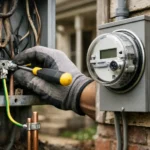
A meter upgrade is rarely just about the meter. In older East Bay homes, the meter socket, service conductors, main panel, grounding, and PG&E connection may all be part of the same problem. This guide to PG&E meter upgrades explains what is involved, who does what, and why a proper site inspection comes before anyone schedules a shutoff.
A homeowner may first notice the issue during a 200-amp panel upgrade, an EV charger installation, a home sale inspection, or after finding corrosion around the meter. Sometimes the existing meter equipment is simply too old for a new service. Other times, the electrical panel is unsafe or undersized, but the meter and service equipment have to be upgraded first to make the panel work legal and safe.
What a PG&E Meter Upgrade Actually Means
The phrase “meter upgrade” gets used loosely. PG&E owns and maintains the utility meter itself. The customer is generally responsible for the meter socket, the service equipment on the property, the panel, and other components that bring power safely from the utility connection into the building.
A meter upgrade may mean replacing a damaged or obsolete meter socket. It may also mean installing a new meter-main combination panel, increasing service capacity from 100 amps to 200 amps, replacing service entrance conductors, or correcting the height and location of overhead equipment. With underground service, the work can involve conduit, trenching, underground conductors, and coordination with PG&E for the utility-side connection.
The scope depends on the existing installation. A clean, modern meter socket may remain in place during a panel change. A corroded socket, undersized service, unsafe panel, or old fuse equipment usually points toward a larger service upgrade.
When a Meter Upgrade Is Needed
Age alone does not automatically require replacement. But certain conditions deserve immediate attention from a qualified electrician.
A meter socket with rust, heat damage, loose jaws, missing covers, or water intrusion is not a cosmetic problem. Poor meter connections can overheat, arc, and damage the service equipment. If lights flicker throughout the building, the main breaker feels hot, there is a burning smell, or the meter area has visible scorching, treat it as a safety issue.
Capacity is another common reason. Many Oakland, Berkeley, Piedmont, and Lafayette homes still have 60-amp or 100-amp service. That may have been adequate decades ago, before electric dryers, induction ranges, heat pumps, air conditioning, workshop equipment, and electric vehicle charging became common. A Tesla 14-50 receptacle or hardwired EV charger does not automatically require a 200-amp service, but it does require a proper load calculation. The answer depends on the home’s actual loads, existing panel capacity, and planned electrical use.
Real estate inspections also uncover meter and service issues. Inspectors often flag Federal Pacific/Stab-Lok panels, Zinsco panels, fuse panels, damaged service masts, missing grounding, double-tapped breakers, or inadequate working clearance. Replacing a dangerous panel can trigger related work at the meter and service entrance because the new equipment must meet current code and PG&E requirements.
Smart Meter Replacement Versus Service Equipment Work
Do not confuse a PG&E smart meter exchange with an electrical service upgrade. PG&E may replace its meter as part of routine utility operations. That does not mean the meter socket, panel, or wiring in your home has been upgraded.
Likewise, installing a new meter socket does not automatically mean you have more electrical capacity. Capacity comes from the complete service design: utility connection, service conductors, meter equipment, main disconnect, panel rating, and load calculation. A 200-amp rated panel connected to an undersized service is not a proper 200-amp upgrade.
The Correct Order for a PG&E Service Upgrade
The best first step is an on-site electrical evaluation, not an online guess based on panel photos. The electrician needs to inspect the panel, meter location, service route, grounding system, available working space, and visible utility connection. For older homes, the inspection should also look for aluminum wiring issues, knob-and-tube wiring, old fuse equipment, and previous unpermitted alterations.
A proper upgrade normally follows this sequence:
- Evaluate the existing electrical system. The electrician performs a load calculation and determines whether the job is a panel replacement, a meter upgrade, or a full service upgrade.
- Plan the equipment and service route. This includes the meter location, panel location, overhead mast or underground conduit, main disconnect, grounding electrodes, and required clearances.
- Obtain permits and complete PG&E coordination. The local building department and PG&E each have requirements. The electrical contractor prepares the job so the utility can disconnect and reconnect power when needed.
- Complete the customer-owned electrical work. This may include a new meter-main, 200-amp panel, service conductors, grounding and bonding upgrades, branch-circuit corrections, and weatherproofing.
- Pass inspection and arrange reconnection. The authority having jurisdiction must approve permitted work before PG&E completes its portion of the connection process.
This order matters. Installing equipment first and trying to solve utility requirements later can delay the job, especially where the overhead service drop needs changes or the existing underground route is inadequate.
Overhead and Underground PG&E Service Work
Overhead service upgrades are common in older neighborhoods. The utility service drop runs from a pole to the home’s weatherhead or service attachment point. If a new 200-amp service requires a larger mast or different attachment height, the house-side equipment must be built correctly before PG&E can reconnect.
Underground service work has different complications. The meter location, conduit size, pull path, trench depth, and utility access all matter. A broken or undersized conduit can turn what looked like a panel replacement into a larger excavation project. Landscaping, driveways, retaining walls, and finished concrete can affect cost and schedule.
Neither type is automatically better. Underground equipment is protected from some weather exposure but can be more difficult to repair when conduit or conductors fail. Overhead equipment is more accessible, but clearances, mast support, and weatherhead location must be exact. An electrician qualified to work with both PG&E overhead and underground systems can identify the likely scope before the day of the outage.
Permits, Inspections, and Power Shutoffs
A legitimate service upgrade is not a same-day breaker swap. It usually requires a permit, a city or county inspection, and PG&E scheduling. The timing varies with the jurisdiction, the complexity of the service, access to the property, and PG&E workload.
Expect a planned outage while the old service equipment is removed and the new equipment is installed. In a straightforward job, the house may be without power for much of the workday. More complicated jobs can take longer, particularly if corrections are needed after opening the wall, if the utility connection has problems, or if the inspection cannot be completed as expected.
Before the outage, protect refrigerated food, medical equipment, internet equipment, garage access, alarm systems, and electric gates. Landlords should notify tenants well in advance. Small businesses should plan around point-of-sale systems, refrigeration, servers, and operating hours. A little preparation prevents a service upgrade from becoming a bigger disruption than it needs to be.
Do Not Treat Grounding as an Add-On
When the service equipment is replaced, grounding and bonding are part of the safety work. The electrical system needs an effective grounding electrode system and correct neutral-to-ground bonding at the service disconnect. Water-pipe grounding alone is often not enough, especially in homes with plastic pipe repairs or uncertain underground metal continuity.
This is one reason experienced service-upgrade work matters. A new panel can look clean on the wall while hidden grounding, conductor sizing, termination, or clearance mistakes remain. The goal is not just a passed inspection. The goal is a service that operates safely under real load for years.
Choosing the Right Scope for Your Property
Not every property needs a full 200-amp upgrade. A smaller home with gas heat, gas cooking, and modest electrical load may only need a safe replacement panel and meter socket correction. On the other hand, a homeowner planning an EV charger, electric heat pump, induction range, solar, battery storage, or accessory dwelling unit should think ahead. Doing the service work once is usually better than repeatedly modifying undersized equipment.
For multifamily and small commercial properties, the evaluation gets more detailed. Meter banks, tenant panels, house meters, three-phase equipment, service disconnect rules, and utility metering layouts can all affect the design. These jobs should be planned before construction starts, not after a tenant improvement is already underway.
Williams Electric has handled PG&E service and panel upgrade work for decades, including difficult older-home systems and both overhead and underground service arrangements. The practical value of that experience is recognizing when a simple-looking panel job has a meter, utility, or code issue waiting behind it.
If your meter equipment is damaged, your panel is obsolete, or your electrical needs have outgrown a 100-amp service, get the system evaluated as a whole. A clear scope before permits and scheduling is the best way to avoid surprises when the power is off and the wall is open.