“Geoff Williams is a licensed electrician since 1976, featured as the top expert on Federal Pacific/Stab-Lok panel dangers in an NBC news interview. Also registered with ITS as a qualified PG&E system contractor.” T If you need Federal pacific panel replacement in Oakland ca, 100 amp upgrade to 200 amps, the issue is usually bigger than an old breaker box. Most of these jobs start with a real safety concern – a Stab-Lok panel that may not trip properly, a home inspection report that flags the service, or a house that simply does not have enough capacity for modern loads like HVAC, induction cooking, or EV charging.
Federal Pacific panels have a long-standing reputation for breaker failure. That is the main reason they get replaced, not repaired. In older East Bay homes, these panels are often paired with aging service equipment, weak grounding, and circuits that were never designed for today’s usage. If the house still has 100 amp service, replacing the panel without looking at the full service upgrade may only solve part of the problem.
Why Federal Pacific panel replacement matters
A Federal Pacific or FPE Stab-Lok panel is not just outdated. It is widely known in the electrical trade as one of the most problematic residential panels ever installed. The concern is that breakers can fail to trip under overload or short circuit conditions. When that happens, wires and equipment can overheat while the breaker stays on.
That does not mean every panel is actively burning up today. It does mean the risk is serious enough that many electricians, home inspectors, insurers, buyers, and sellers treat replacement as the right move. In real estate transactions, these panels often become a negotiation point because they affect safety, insurability, and financing.
When a 100 amp upgrade to 200 amps makes sense
A straight panel swap is sometimes possible, but many homes with Federal Pacific equipment are better candidates for a full 100 amp to 200 amp service upgrade. That depends on the existing load and the condition of the service entrance equipment.
If the property has added appliances, remodeled kitchens, electric dryers, air conditioning, heat pumps, hot tubs, workshop loads, or EV charging plans, 100 amps can get tight fast. Even if the old service technically still works, it may leave little room for expansion and can create nuisance tripping once the panel is replaced and everything is functioning as it should.
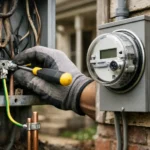
A 200 amp upgrade usually includes more than the interior panel. It may involve the meter main, service mast or riser, weatherhead, grounding electrode system, bonding, service entrance conductors, and coordination with PG&E. For underground service, the scope can be different, but the same principle applies – the entire service has to be evaluated, not just the breakers.
Federal Pacific panel replacement in Oakland CA: what the job includes
In Oakland, many of these jobs happen in older homes where the electrical system has been modified over decades. A proper replacement starts with inspection of the existing panel, meter location, grounding, service conductors, and branch circuit condition. If there are double-tapped breakers, overheated bus bars, damaged insulation, or ungrounded circuits, those issues need to be identified early.
Then the replacement is planned around code requirements, utility coordination, and the actual power needs of the building. On a 100 amp to 200 amp upgrade, there is usually permit work, PG&E coordination, shutoff scheduling, and inspection. If the service is overhead versus underground, the utility-side requirements change. That is where experience matters, especially on East Bay properties with tight access, older construction, or prior unpermitted changes.
The best result is not just a new panel on the wall. It is a service that is correctly sized, properly grounded, clearly labeled, and ready for present and future loads.
Common problems found during a 100 amp to 200 amp upgrade
Once the old Federal Pacific panel is removed, hidden defects often show up. The most common are overheated conductors, damaged breaker stabs, corroded meter equipment, missing bonding, and circuit wiring that does not meet current safety standards. In older homes, it is also common to find mixed wiring methods from different eras.
That does not mean every house needs a full rewire. It does mean the job should be done by an electrician who is used to inspection-driven repair work and knows how to separate required corrections from optional improvements. Some repairs are essential for code and safety. Others are worth doing while the panel is open because it saves labor later.
Choosing the right electrician for safety-critical panel work
This is not a handyman project and not a place to shop by lowest price alone. Federal Pacific panel replacement and PG&E service upgrades need licensing, permit knowledge, utility coordination, and real field experience with legacy equipment. A contractor should be licensed, bonded, insured, and comfortable handling both overhead and underground service conditions.
Geoff Williams has been a licensed electrician since 1976 and was featured by NBC as a leading expert on Federal Pacific and Stab-Lok panel dangers. That kind of specialty background matters when the panel is hazardous, the service needs to be upsized, and the property owner wants the job done once and done right.
For homeowners, buyers, landlords, and real estate agents, the practical goal is simple: remove a known problem panel, correct service defects, and leave the building with safe, reliable power. If the house is still on 100 amps and the electrical demand has grown, moving to 200 amps is usually the smarter long-term fix.