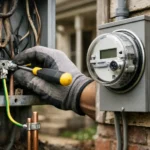
If your 100-amp service is overloaded, your panel is damaged, or you are adding an EV charger, the first question is usually the same: what are the PG&E panel upgrade requirements, and who handles what? That matters because a service upgrade is not just swapping a breaker box. It can involve the meter socket, service mast, grounding, conductor sizing, permits, city inspection, and PG&E coordination.
This is where many property owners get tripped up. They assume the panel inside the house is the whole job. On a real service change, the utility side and the customer side have to match current rules. If one part is wrong, the inspection stalls, PG&E does not reconnect, and power stays off longer than anyone wants.
What PG&E panel upgrade requirements usually include
In plain terms, PG&E panel upgrade requirements come into play when the work affects the electric service, not just a branch circuit. Replacing a tired subpanel is one thing. Replacing a main service panel, moving the meter, going from 100 amps to 200 amps, changing from overhead to underground, or correcting unsafe service equipment is another.
Most service upgrades involve several layers of approval and construction. The city or local authority handles the permit and inspection. PG&E handles the utility connection and service-side requirements. The electrician handles the design, installation, correction of code issues, and coordination so the job passes cleanly.
That is why two jobs that sound similar on the phone can be very different in the field. A straightforward 200-amp upgrade on an overhead service may be routine. The same upgrade on an older home with damaged stucco, an obsolete meter location, undersized grounding, or a crowded service drop clearance problem can become a bigger project.
The parts of the job that usually trigger utility requirements
When homeowners say “panel upgrade,” they often mean the breaker box. PG&E looks at the service as a system. That system can include the weatherhead, mast, service entrance conductors, meter socket, main disconnect, grounding electrode system, and the panel itself.
If the existing meter socket is old, damaged, or not rated for the new service, it often has to be replaced. If the mast is not secured correctly, too low, or rusted, that has to be corrected. If grounding is outdated, the electrician may need to install proper grounding electrodes and bonding. On older East Bay homes, it is common to find service equipment that worked for decades but no longer meets current inspection standards.
There is also a difference between overhead and underground service. Overhead jobs may involve mast height and clearances. Underground jobs may involve conduit, trenching, pull sections, and utility coordination that can take longer. Neither is automatically better or easier. It depends on the property and what is already there. If your installer does not have its certification to work on Pg&e systems, your panel can be removed at your cost and you would be without power. Since march of this year, it’s required to have that in order to work on pge lines/panels.
Permits and inspections are not optional on service upgrades
A legal service upgrade needs a permit. That is not paperwork for the sake of paperwork. The permit triggers the inspection process, and the inspection is what allows PG&E to reconnect after the work is complete.
For most customers, the sequence goes like this: the electrician evaluates the existing service, calculates the load if needed, applies for the permit, coordinates with PG&E, installs the new equipment, calls for inspection, and then PG&E reconnects once the job is cleared. Timing can vary. Some jobs move quickly. Others get delayed by access problems, weather, damaged service attachment points, or utility scheduling.
This is one reason experienced panel contractors matter. A service upgrade is not a good place for guesswork. If the panel is installed but the meter section is wrong, or the grounding is incomplete, or the service riser does not meet clearance rules, the whole job gets held up.
100-amp to 200-amp upgrades are common, but not automatic
A lot of calls are about upgrading from 100 amps to 200 amps. That makes sense in older homes. Air conditioning, induction cooking, EV charging, remodels, and added circuits push old services past their practical limits.
But not every property can jump to 200 amps with no changes beyond the panel. The service conductors may need to be upsized. The meter main combination may need a different configuration. The service point may need correction. In some cases, the utility infrastructure can support the upgrade with standard coordination. In others, more review is needed.
The right size depends on the load, the existing setup, and the planned use of the building. Some homes truly need 200 amps. Some are fine with a properly rebuilt 100-amp service if loads are modest. Some multifamily or mixed-use properties need a more careful design because of meter arrangements and tenant distribution.
Older panels and unsafe equipment change the conversation
When a home has a Federal Pacific, Zinsco, fuse panel, or visibly damaged service equipment, the job is no longer just about convenience. It is about safety and insurability.
These older systems often show up during real estate inspections, insurance reviews, or after nuisance tripping and overheating. Once unsafe equipment is identified, replacement is usually the smart move. At that point, the work still has to satisfy current service upgrade requirements. You do not get to replace a dangerous old panel with a new panel while leaving the rest of a noncompliant service untouched if the inspection scope requires those corrections.
This is where field experience matters more than sales talk. On older properties, service upgrades frequently uncover brittle conductors, unbonded metal piping, missing grounding, makeshift splices, or water damage around the meter. A clean estimate should account for that possibility, not pretend every wall is perfect and every wire is reusable.
Meter locations, access, and utility coordination
One detail that surprises owners is meter placement. If the meter is buried behind a gate, blocked by a remodel, too close to new construction, or mounted in a way that no longer meets access standards, relocation may be required. That can change cost and scope fast.
PG&E also needs safe access to its equipment. If the service point is difficult to reach or the property has unusual conditions, extra coordination may be needed before the disconnect and reconnect are scheduled. This is especially true on duplexes, older commercial buildings, and houses that have had piecemeal additions over the years.
Good planning keeps the outage shorter. A sloppy plan can leave a building dark while everyone argues over details that should have been settled before demo day.
What property owners should ask before approving the work
Before you sign off on a panel upgrade, ask a few direct questions. Is this a simple panel replacement, or a full service upgrade? Will the meter socket be replaced? Is the grounding being brought up to current code? Is the service overhead or underground, and does that change scheduling? Who is pulling the permit and coordinating with PG&E? What conditions could increase cost once the old equipment is opened up?
Those questions do not make you difficult. They make the scope clear.
You should also ask how long the power will be off and whether any temporary loss of refrigeration, internet, alarms, or business equipment needs to be planned around. For a homeowner, that may be inconvenience. For a small commercial tenant, it can affect a full day of operation.
Why local experience helps on East Bay service changes
In older parts of Oakland, Berkeley, Piedmont, and nearby communities, service upgrades are rarely textbook clean. Houses have been added onto, garages converted, panels relocated badly, and grounding ignored for decades. A contractor who works these neighborhoods regularly knows what tends to fail inspection and what usually needs correction before the utility arrives.
That is one reason Williams Electric has stayed busy with panel changes and PG&E service work for so many years. The value is not just installing a new panel. It is knowing how to get the whole service ready for inspection, utility coordination, and long-term reliability.
The real takeaway on PG&E panel upgrade requirements
The simplest way to think about PG&E panel upgrade requirements is this: if the job affects the electric service, expect more than a box swap. Expect permit work, inspection, utility coordination, and possible corrections to the meter, mast, grounding, and service conductors.
That does not mean every upgrade becomes a major project. It means the right contractor should look at the full service before quoting the job like it is a quick breaker replacement. When the work is planned correctly, the upgrade is safer, the inspection goes smoother, and you are not paying twice to fix what should have been handled the first time.
If your panel is outdated, overloaded, or flagged by an inspector, get the service evaluated as a system and not just as a cabinet on the wall. That is how you avoid surprises and end up with power you can trust.