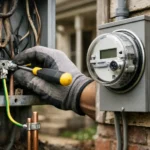
A lot of people are asking, Will AI ever replace in the field electricians? The short answer is no. AI will change electrical work, speed up parts of it, and help with troubleshooting, estimating, and code research. But replacing a licensed field electrician is a different question. Real electrical work happens in crawl spaces, old service panels, garages, commercial buildings, and damaged systems where conditions are never as clean as the drawing.
That matters even more in older properties. A house may be labeled as a simple panel upgrade, but once the cover comes off, you may find burned bus bars, double-tapped breakers, aluminum branch wiring, bad grounding, or a dangerous Federal Pacific or Zinsco panel. AI can flag patterns. It cannot safely stand in front of live equipment, verify field conditions, and make the right call when something is wrong.
Will AI ever replace in the field electricians in real jobs?
Not in the way people imagine. AI is good at processing information. It can review plans, compare load calculations, suggest likely causes of a problem, and help organize maintenance records. For office work, it will keep getting better.
Field electrical work is different. Electricians do not just follow instructions. They inspect, test, adapt, and take responsibility. On a service call, the real issue is often not the issue the customer reported. A homeowner says half the house lost power. The cause may be a failed main breaker, a bad utility connection, a burned neutral, water intrusion, or a damaged circuit hidden behind finished walls. That kind of diagnosis depends on experience, testing, and judgment under real conditions.
There is also the physical side. Pulling cable, bending conduit, replacing a meter-main, correcting grounding and bonding, installing a 200-amp panel, or tracing a fault in an older building is hands-on work. Robotics may improve, but most homes and small commercial buildings are not built like factories. They are cramped, uneven, modified over decades, and full of surprises.
Where AI will help electricians
AI will absolutely become part of the trade. It can already help with scheduling, material takeoffs, photo documentation, and code reference checks. It may help electricians narrow down likely failures faster, especially on repetitive systems or in large commercial maintenance settings.
For customers, that can be a good thing. Faster estimates, better recordkeeping, and more accurate load planning can save time. EV charger installations, lighting retrofits, tenant improvements, and service upgrade planning may all benefit from better software support.
But support is not replacement. A tool that helps a licensed electrician work faster is still just a tool.
Why licensing, liability, and safety still matter
Electrical work is not only about getting the lights on. It is about doing the work to code, protecting the building, and reducing fire and shock risk. That is why licensing, permits, inspections, and field experience matter.
If a panel replacement is done wrong, the problem may not show up the same day. It may show up later as overheating, nuisance tripping, damaged appliances, failed inspections, or a dangerous fault. AI does not carry a contractor license. It does not hold insurance. It does not meet an inspector at the job, coordinate with the utility, or stand behind the workmanship.
This is especially true on service equipment and older electrical systems. In East Bay homes, you can run into fuse panels, obsolete breakers, undersized services, open grounds, reversed polarity, and years of handyman modifications. Those are not textbook jobs. They are judgment jobs.
What AI cannot do well in the field
AI still struggles with messy reality. It cannot smell insulation burning in a panel. It cannot hear an arcing connection. It cannot feel heat on a failing breaker or notice that a wall was patched after hidden wiring damage. Those details matter.
It also cannot build trust the way a veteran electrician can. When a buyer, landlord, or homeowner gets a bad inspection report, they need more than a software answer. They need someone who can walk the property, explain what is unsafe, separate urgent repairs from optional upgrades, and do the work correctly.
That is one reason experienced electricians will keep their value. A seasoned field electrician sees patterns that are hard to teach and even harder to automate. After thousands of jobs, you start recognizing the difference between a minor repair and a system that needs immediate correction.
The real future: AI with electricians, not instead of them
The better question is not whether AI will replace electricians. It is which electricians will use AI well and which ones will not. The trade will likely split between people who use better tools and people who fall behind.
The electricians who keep learning will have an advantage. They will use software to improve troubleshooting, documentation, estimating, and communication, while still doing the physical and safety-critical work themselves. That combination is much more realistic than full replacement.
For property owners, the takeaway is simple. If the job involves a panel, service upgrade, breaker failure, grounding issue, wiring correction, or inspection repair, you still need a qualified field electrician. AI may help in the background, but when real power problems show up, experience on the jobsite is what keeps the building safe.