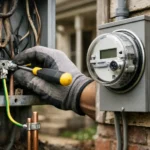
When the power goes out, most homeowners want the same thing: keep the refrigerator cold, a few lights on, the furnace running, and maybe the Wi-Fi alive. The question usually comes out like this: How do you wire a portable generator to a manual power transfer switch, and how big (how many kw should the portable generator have?) The short answer is that the switch and inlet have to be installed as a separate, code-compliant system, and the generator has to be sized for the actual circuits you plan to run – not the whole house unless you are buying a much larger unit.
This is one of those jobs where the details matter. A transfer switch is not just a convenience item. It is what prevents dangerous backfeeding into the utility and keeps generator power isolated to selected circuits. If you own an older home, or you already have a marginal panel, old breakers, a Federal Pacific panel, Zinsco equipment, or mixed wiring from remodels over the years, that matters too. A generator setup is only as safe as the panel and wiring it connects to.
How a portable generator connects to a manual transfer switch
A proper portable generator setup has four main parts: the generator itself, an outdoor power inlet box, the wiring between the inlet and the transfer switch, and the manual transfer switch connected to selected house circuits. The transfer switch is then tied into the main service panel.
The basic idea is simple. The portable generator sits outside, away from doors and windows. A generator cord plugs into the inlet box. That inlet feeds the manual transfer switch. The transfer switch lets you choose, circuit by circuit, whether that branch circuit is fed by utility power or generator power.
That is very different from plugging a generator into a dryer outlet or trying to feed a panel backward through a breaker. Backfeeding is unsafe, illegal, and one of the fastest ways to create shock and fire hazards. It can also energize utility lines and put lineworkers at risk.
How do you wire a portable generator to a manual power transfer switch?
In practical terms, the wiring path goes from the exterior inlet box to the transfer switch, and from the transfer switch to the individual branch circuits or panel connections it is designed to serve. The exact wiring method depends on the switch style. Some manual transfer switches are designed as circuit-selector panels for a handful of essential loads. Others are generator subpanels. Some systems use an approved interlock at the main panel instead of a separate manual transfer switch, but that is a different setup and has different hardware and code rules.
With a true manual transfer switch, the selected house circuits are moved from the main panel into the transfer switch arrangement, or pigtailed into it, depending on the product. The utility source and generator source are mechanically interlocked inside the switch so both cannot feed the same load at the same time. That mechanical isolation is the whole point.
For a typical portable generator installation, the electrician has to match the inlet amperage, transfer switch rating, wire size, breaker size, and generator receptacle configuration. A 30-amp, 120/240-volt generator setup is common for mid-size portable units. Larger portable generators may use a 50-amp inlet and heavier cable. You cannot guess at this part. The neutral and grounding arrangement also has to match the generator design and the transfer equipment listing.
This is where homeowners get tripped up. Portable generators are not all wired the same internally. Some are bonded neutral generators. Some are floating neutral. The transfer equipment and connection method have to be compatible with that design. If not, you can end up with nuisance tripping, improper grounding paths, or equipment that does not meet code.
The right way to think about generator size
Most people ask how many kilowatts they need as if there is one standard answer. There is not. The right generator size depends on what you want to run at the same time, what those loads draw during startup, and whether you are backing up selected circuits or trying to support most of the house.
If your goal is essentials only, many homes do well with a 5 kW to 7.5 kW portable generator. That often covers a refrigerator, freezer, gas furnace blower, a few lighting circuits, garage door opener, internet equipment, and some receptacles for charging phones or running a TV.
If you want to run more loads, such as a sump pump, microwave, larger kitchen circuits, or several rooms of lighting and receptacles, the range often moves into 7.5 kW to 10 kW. If you are trying to include electric water heating, central air conditioning, or other large 240-volt loads, portable generator sizing gets much more difficult. At that point, either the loads need to be carefully managed or you may be in standby generator territory instead of portable equipment.
Startup current matters as much as running current. Refrigerators, well pumps, furnace blowers, and air conditioners can draw significantly more power for a few seconds when motors start. A generator that looks big enough on paper may still bog down or trip if several motor loads start together.
A practical sizing example
Say you want to back up six circuits in a typical older East Bay home: refrigerator, kitchen outlet circuit, furnace, living room lights, bedroom outlets, and garage door circuit. Your steady load might only be around 3,000 to 4,500 watts if you manage usage. But once the refrigerator and furnace blower both start, and someone uses the microwave, your demand can jump fast.
In that case, a 6,500- to 8,000-watt portable generator is usually a more realistic target than a small 3,500-watt unit. It gives you enough headroom for startup surges and keeps the generator from running flat out all the time. Running a generator at its limit for long outages is hard on the equipment and frustrating for the homeowner.
On the other hand, bigger is not always better. A larger generator costs more, burns more fuel, takes up more storage space, and may require a larger inlet and transfer switch setup. If you only want to preserve food, keep phones charged, and maintain some heat and lighting, a moderate-size unit is often the smarter buy.
Which circuits should go on the transfer switch?
The best manual transfer switch installations are selective. You do not try to energize every circuit in the house. You choose the circuits that protect health, safety, and basic livability during an outage.
For many homes, that means refrigeration, heating controls or blower, lighting in key rooms, bathroom receptacles, kitchen convenience outlets, garage access, and maybe one home office or internet circuit. If the house has medical equipment, that changes the calculation. If the property has a sump pump or sewage ejector, those are priority loads too.
Electric ranges, electric dryers, large air conditioning systems, electric baseboard heat, and electric water heaters usually do not belong on a typical portable generator transfer switch unless the generator is very large and the load management has been carefully planned.
What can go wrong if the panel or wiring is old?
This is where field experience matters. Generator installations are often added to houses with outdated service equipment, undersized grounds, double-tapped breakers, mixed neutrals, or panel brands with a bad history. A transfer switch does not fix any of that.
If the service panel is unsafe or obsolete, adding a generator connection can expose problems that were already there. I have seen homes where the owner wanted backup power, but the first real issue was that the main panel needed replacement before any generator equipment should be connected. That is especially true with older Federal Pacific and Zinsco panels, damaged bus bars, overheated breakers, or service equipment that has already failed inspection.
For that reason, a proper site visit matters more than online sizing charts. The generator has to match the house, and the house has to be ready for the generator.
Permits, code, and why DIY gets risky fast
A portable generator itself may be portable, but the transfer switch installation is fixed wiring. That means code rules apply. In most cases, the work needs proper equipment listing, correct overcurrent protection, compliant conductor sizing, and permit requirements followed where applicable.
The dangerous mistakes are common: using the wrong inlet, undersized cable, no transfer mechanism, incorrect neutral handling, or trying to feed a panel through a breaker without an approved interlock. These are not minor technicalities. They are the exact kinds of errors that can lead to fire, shock, equipment damage, or a failed inspection when you sell the property.
For homeowners in older properties, there is another issue. Once a panel is opened, existing defects may be obvious. Burned connections, corrosion, overloaded breakers, and bad grounding should be corrected before a backup power connection is added. That is one reason many property buyers and landlords prefer to have this evaluated by a licensed electrician instead of treating it like a weekend project.
The smart answer: size the generator to the transfer switch plan
The cleanest way to approach this job is backward. First decide which circuits you truly need during an outage. Then calculate both running watts and startup watts. Then choose the transfer switch size and inlet configuration to match those loads. After that, buy the generator that fits the plan.
That avoids the two most common mistakes: buying a generator that is too small for the selected loads, or buying a large generator and then discovering the panel, inlet, and transfer equipment were not designed around it.
If you want dependable backup power, the transfer switch should be planned around your actual house, your actual panel, and your actual priorities during an outage. That is how you end up with a system that works when the lights go out, not just one that sounded good in the store aisle.