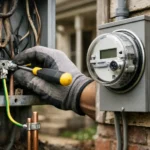
Hearing that aluminum wiring is far more likely to fail than copper gets homeowners’ attention fast, especially when the circuits feed major loads like an oven, AC, cooktop, dryer, dual fuel oven, subpanel, main PG&E riser, ADU, or solar system. If your home has aluminum wiring fed to larger loads, such as oven, ac, cooktop, dryer, duel fuel oven, sub panels, main pg&e riser wire, adu, solar system, should you remove the aluminum given that it is 5500% or 55 times more likely to catch on fire than copper wire? The honest answer is not always, but in many cases you should seriously consider replacement, inspection, or correction by a licensed electrician who understands older East Bay homes and service equipment.
The first thing to clear up is that not all aluminum wiring is the same hazard. Branch-circuit aluminum from the late 1960s and early 1970s, especially smaller 15-amp and 20-amp circuits feeding lights and receptacles, has the worst reputation. That is where many overheating and termination failures occurred. Larger aluminum conductors used for service entrance cables, feeders to subpanels, ranges, dryers, or air conditioning equipment are a different category. Aluminum has long been accepted for larger conductors when it is properly sized, terminated, protected, and installed on devices and lugs listed for aluminum.
That distinction matters because many homeowners hear “aluminum wiring” and assume every aluminum conductor in the house is automatically unsafe. That is not accurate. A main service riser, large feeder, or range circuit in aluminum is not judged the same way as old aluminum branch wiring on bedroom outlets. The risk is real, but the details matter.
When aluminum wiring on large loads is a real problem
Large-load aluminum wiring should not be ignored just because it has worked for years. High current loads create heat. Heat exposes weak terminations, loose lugs, oxidation, undersized conductors, improper breaker connections, and old equipment that was never designed for long-term reliability with aluminum.
The biggest danger is usually not the wire in the middle of the run. It is the connection point. Aluminum expands and contracts more than copper with heating and cooling cycles. If the lug is loose, the wire was nicked, antioxidant was skipped where required, the terminal was not rated for aluminum, or the breaker and panel have a history of poor contact pressure, the connection can overheat. That is how you get melted insulation, burned bus connections, damaged breaker terminations, and, in the worst cases, fire.
This is especially relevant on ovens, cooktops, dryers, condensers, air handlers, subpanels, and service conductors because those loads can draw substantial current for long periods. A bad aluminum termination on a major appliance circuit is not a theoretical problem. It is exactly where experienced electricians often find heat damage.
Should you remove aluminum wiring fed to oven, AC, dryer, subpanels, or solar?
Sometimes yes, sometimes no. Removal is smart when the aluminum installation shows age, heat damage, poor workmanship, code issues, or incompatibility with newer equipment. Removal is also worth considering during a panel upgrade, service change, ADU addition, or solar installation, because that is when circuits are already being reworked and access is available.
If the existing aluminum wiring is properly sized, in good condition, landed on equipment listed for aluminum, torqued correctly, and shows no signs of overheating, replacement may not be mandatory. In that case, a careful inspection and correction of terminations may be enough.
But there are situations where replacement is the better long-term move. If a house has an older panel with a bad reputation, if there is evidence of arcing or burning, if the feeder was extended with mixed metals improperly, or if new equipment requires copper-only terminations, then keeping the aluminum may be false economy. Saving money today can turn into panel damage, appliance damage, failed inspections, or a real safety event later.
The larger loads that deserve the closest inspection
Range and oven circuits are high on the list because they run hot by nature and often operate near their design load. Dryers also deserve attention, especially in older homes where wiring methods and terminations may have been altered over the years. Air conditioning equipment is another common trouble spot because compressor startup and sustained summer use put stress on connections.
Subpanel feeders matter because a failure there can affect a large part of the building, not just one appliance. Main PG&E riser conductors are even more critical. If there is deterioration, damaged insulation, outdated service equipment, or a 100-amp service being pushed past what it should handle, that is not a wait-and-see issue. ADU and solar work also raise the stakes because load calculations, feeder sizing, backfeed rules, grounding, bonding, and equipment compatibility all come into play.
In plain terms, aluminum on a major load is not automatically wrong. Aluminum on a major load with old equipment, questionable terminations, and added modern demand is where experienced electricians start finding expensive problems.
What an electrician should check before deciding on removal
A proper decision starts with a field inspection, not a guess. The electrician should identify the wire size and type, verify breaker and lug ratings, inspect visible terminations for oxidation or heat damage, check panel condition, confirm load suitability, and look for any signs of prior handyman work.
He should also consider the age and type of the panel itself. Aluminum conductors connected to failing or obsolete equipment are a different risk than aluminum conductors connected to a modern, correctly installed panel. This is one reason older Federal Pacific, Zinsco, and damaged fuse-panel conversions deserve extra caution. A bad panel combined with aluminum feeders is a poor combination.
Torque matters too. Many failures happen because lugs were never tightened to manufacturer specifications. That is not a cosmetic detail. It is basic safety. On service equipment, subpanels, and heavy appliance circuits, loose aluminum connections can cook for years before anyone notices.
When replacement makes the most sense
If you are already doing a 200-amp panel upgrade, replacing the main service, adding an ADU, installing solar, or correcting inspection issues during a sale, that is often the best time to replace suspect aluminum conductors. Labor overlap makes the work more efficient, and you avoid paying twice to open up and rework the same system later.
Replacement also makes sense when the aluminum wire has suffered physical damage, when insulation is brittle, when the conductor is too small for the load, or when terminations have already burned once. If there has been one heat event, confidence in that connection is gone. You do not want a temporary fix on a circuit feeding a range, dryer, or service equipment.
For some homeowners, insurance and resale are practical reasons as well. Buyers, agents, and home inspectors get nervous when they see aluminum and older electrical gear together. Even when the system can be repaired safely, full replacement may be easier to explain and easier to sell.
When aluminum can remain in place
There are plenty of cases where larger aluminum conductors can remain, provided the installation is sound. Utility service conductors, large feeders, and appliance circuits are commonly aluminum in modern electrical work. The key is that they must be installed and terminated correctly on listed equipment, with proper conductor sizing and overcurrent protection.
That means no guessing, no mixed-metal shortcuts, no wrong lugs, no double taps where they do not belong, and no damaged breaker stabs or bus bars. If the aluminum wiring passes inspection, the panel and breakers are in good shape, and the connections are properly corrected, removal may not be necessary.
This is where homeowners need straight answers instead of fear-based sales talk. “Aluminum exists” is not the same as “your house is about to burn down.” But “it has worked fine for 40 years” is not a valid safety test either.
The claim that aluminum is 55 times more likely to catch fire
Statistics about aluminum wiring get repeated in dramatic ways, and some are based on older studies of small branch-circuit aluminum wiring, not every aluminum conductor in every application. The broad claim that aluminum wire is 5500 percent or 55 times more likely to catch fire than copper should be treated carefully unless someone can show exactly what wiring type, era, and application the number refers to.
What matters more than the headline number is this: older aluminum wiring is less forgiving than copper, especially at terminations, and known failure patterns exist. That alone is enough reason to take it seriously. You do not need an inflated statistic to justify a real inspection.
A practical answer for East Bay property owners
If you own an older home or small commercial property and aluminum feeds your oven, cooktop, dryer, AC, subpanel, main riser, ADU, or solar equipment, do not assume and do not ignore it. Have the system evaluated by a licensed electrician who regularly works on panel changes, PG&E service upgrades, and older wiring corrections.
In many homes, the right fix is targeted: replace damaged aluminum runs, redo bad terminations, upgrade the panel, and correct grounding and bonding. In other homes, full replacement of the aluminum feeder or appliance circuit is the smarter move, especially where heat damage, obsolete equipment, or major remodel work already justify opening the system.
Geoff Williams has been handling this kind of work since the 1980s, and this is exactly the kind of decision that should be made from the panel and the wire in front of you, not from a blanket rule. If the aluminum is wrong, replace it. If it is acceptable but poorly terminated, correct it properly. If it is safe and suited to the load, do not spend money just because someone used a scary statistic. The right answer is the one that leaves you with a safe, code-compliant electrical system you can trust under real load.