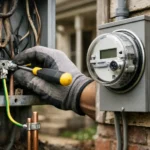
A garage usually starts out needing one light and one outlet. Then a freezer shows up, then battery chargers, then a workbench, then an EV, and suddenly that single outlet is running half the property. That is why homeowners asking about the best ways to add garage power are usually dealing with a real load problem, not just a convenience issue.
The right answer depends on what you want the garage to do. A detached garage used for storage needs a very different electrical setup than an attached garage with power tools, laundry equipment, or a Level 2 EV charger. The biggest mistake is assuming all garage power upgrades are the same. They are not. Some jobs need one new branch circuit. Some need a subpanel. Some expose a bigger problem at the main panel.
Best ways to add garage power without creating new problems
If you want garage power that is safe and dependable, the first step is to match the wiring method to the actual load. A lot of overloaded garages have been pieced together over time with extension cords, power strips, and tapped-off circuits from nearby rooms. That may get power into the space, but it does not give you a circuit designed for garage use.
For light garage use, adding one or two dedicated 120-volt circuits may be enough. This works well if the garage mainly needs receptacles for hand tools, battery chargers, a garage door opener, and general use. A dedicated circuit helps prevent nuisance tripping and keeps garage loads from sharing power with bedrooms, kitchens, or living areas where they do not belong.
If you plan to run larger tools, a compressor, a welder, laundry equipment, or future EV charging, a subpanel is often the better long-term choice. A garage subpanel gives you room for multiple circuits and makes the installation cleaner and easier to expand later. In practical terms, this is often one of the best ways to add garage power because it avoids repeating the same labor every time you need another circuit.
Detached garages take more planning. The feeder has to be sized correctly, the trench or overhead run has to meet code, and grounding and bonding have to be handled properly. That is where experience matters. A detached structure is not just an outlet added on the back wall. It is a separate electrical distribution point that has to be installed correctly from the start.
When a new circuit is enough
A dedicated circuit is usually the most cost-effective option when the garage load is modest and unlikely to grow much. If you only need better receptacle coverage, improved lighting, or a separate freezer circuit, this can solve the problem without turning the job into a service upgrade.
This approach makes sense in attached garages where the existing panel has space and capacity. It also works when the garage is close to the panel and access is straightforward. In those cases, the work can be relatively direct: run the wiring, install GFCI and AFCI protection where required, add properly placed receptacles, and make sure the circuit is labeled and tested.
But this only works if the panel is in good shape. If the home still has an old fuse panel, a Federal Pacific panel, a Zinsco panel, or a crowded breaker box with tandem breakers stuffed everywhere, adding garage power may expose a larger safety issue. That is not upselling. That is field reality. You do not build a new load onto a dangerous or obsolete panel and call it good.
Good uses for a dedicated garage circuit
A single new circuit works best for lighter-duty needs. Typical examples include general-purpose garage receptacles, upgraded lighting, garage door opener power, a refrigerator or freezer, and outdoor receptacles near the garage. It is a practical fix when you need reliability more than expansion.
When a garage subpanel is the better move
A subpanel starts to make more sense when the garage is becoming a real work area or utility space. If you need multiple 120-volt circuits, one or more 240-volt circuits, and room for future changes, a subpanel is usually the cleaner solution.
This is especially true in older East Bay homes where garages were never designed for modern electrical use. Homeowners now want EV charging, shop tools, extra lighting, storage freezers, and backyard power all tied into the garage area. Trying to feed all of that from one or two small branch circuits can become a patchwork job.
A subpanel also improves troubleshooting and serviceability. If there is a problem in the garage, you can isolate it there instead of tracing several unrelated circuits back through the house. For landlords, contractors, and property buyers, that matters. Clean electrical work is easier to inspect, easier to maintain, and easier to explain during a sale.
Signs you probably need more than one new circuit
If breakers are already tripping, lights dim when tools start, or you know an EV charger is coming, you should be looking beyond a single added outlet. The same goes for detached garages, converted garage spaces, and workshop setups. In those situations, a subpanel usually saves money over time because it avoids repeated service calls and rework.
EV charging changes the whole conversation
One of the best ways to add garage power today is to plan around EV charging, even if you are not installing a charger this month. A Level 2 charger is a significant load. If the garage wiring is being upgraded now, it makes sense to think ahead.
Sometimes the right move is a dedicated 240-volt circuit for the charger and one or two separate 120-volt circuits for general use. In other cases, a subpanel is better because it gives the garage its own distribution point for charging, lighting, door openers, and receptacles. Which option is right depends on the house service size, the panel condition, and what else the property is already running.
This is where load calculation matters. You do not guess at available capacity. You calculate it. A 100-amp service may already be stretched by air conditioning, electric laundry, kitchen loads, and added circuits from past remodeling. If so, the garage project may point toward a 200-amp panel upgrade before any new EV circuit is installed safely.
Older homes need a reality check first
A lot of garage power projects in older homes are not really garage problems. They are panel problems, grounding problems, or wiring problems that show up when someone tries to add a new load.
If the home has ungrounded circuits, deteriorated wiring, old two-wire branch circuits, or a panel brand known for failure, that should be addressed before expanding the system. The same applies when home inspectors have already flagged electrical deficiencies. You want the garage upgrade to improve reliability, not sit on top of hidden defects.
That is one reason experienced electrical contractors tend to ask more questions at the estimate stage. What is the panel brand? How far is the garage? Attached or detached? Any plans for tools, HVAC, or EV charging? Is the existing wiring grounded? Those are not side issues. They determine the right scope.
Garage receptacles, lighting, and code details matter
Good garage power is not just about getting amperage into the space. Layout matters too. Receptacles should be where you actually use them, not only where it was easiest to fish a wire. Lighting should support the work being done. GFCI protection is required in garage receptacles, and AFCI rules may also apply depending on the installation.
For detached garages, outdoor runs, and unfinished spaces, the wiring method matters as much as the breaker size. Conduit, burial depth, wet-location fittings, and proper disconnecting means all come into play. These are details that separate a durable installation from one that becomes a callback.
A garage used as a workshop also benefits from separating lighting from receptacle loads. If a tool trips a breaker, you do not want the whole room going dark. That is a small design decision that makes a big difference in everyday use.
What homeowners should avoid
The worst shortcuts are predictable. Running extension cords permanently, tapping a garage off a laundry circuit, overloading a shared receptacle circuit, or adding a high-draw tool to whatever breaker still had room on paper. Those fixes often lead to overheated wiring, nuisance trips, and failed inspections.
The other mistake is underbuilding. If you already know the garage will need more power next year, installing the smallest possible fix today is not always the cheapest option. It can be smarter to install a properly sized feeder or subpanel once and be done with it.
For homeowners, landlords, and buyers, the best result is electrical work that matches both current use and likely future demand. That is how you avoid paying twice.
If you are trying to choose between one new circuit, a 240-volt line, or a full garage subpanel, the answer is usually in the load, the panel condition, and the age of the house. Get those three things right, and the garage power upgrade tends to stay trouble-free for a long time.