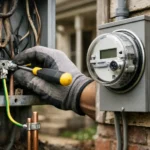
A high power bill feels like proof by itself, but it usually is not. If you are asking, “How do I prove my electricity bill is too high and wrong due to a faulty smart meter? Can I ask PG&E to swap out my smart meter with an analog one, and how much does that cost?” the short answer is this: you need evidence, not suspicion, and a meter swap usually costs money up front and every month after.
From an electrician’s standpoint, the meter is only one possible cause. In older East Bay homes, I have seen high bills caused by failing breakers, damaged service equipment, loose neutral problems, electric water heaters running nonstop, baseboard heat left on, EV charging loads, bad appliance controls, and wiring defects that never show up until someone finally studies the usage. If you start by assuming the smart meter is wrong, you can spend time and money chasing the wrong problem.
How to prove a smart meter is giving the wrong reading
The first thing to understand is that a utility bill is based on total kilowatt-hour use over time. A smart meter does not create usage. It records it. So to prove the meter is wrong, you need to show one of two things: either the meter is measuring inaccurately, or the recorded usage does not match the actual load conditions at the property.
Start with the bill itself. Compare at least 12 months of statements, not just one shocking month. Look at total kWh, billing period length, rate plan, time-of-use charges, baseline allocation, and any seasonal changes. Many people focus on the dollar amount and miss the real issue, which is whether the usage number jumped, the rates changed, or both.
Next, isolate loads inside the house. If possible, turn off all branch breakers and verify whether the meter still shows significant consumption. If everything in the home is shut down and the meter still indicates usage beyond a tiny normal amount, that points to a problem worth investigating. If usage drops to nearly nothing, the meter may be doing exactly what it should, and the load is somewhere in the house, garage, ADU, or equipment tied to the service.
A clamp meter and load testing by a qualified electrician can help. This is where field experience matters. An electrician can check the main service, measure actual current draw, inspect for shared circuits, identify 240-volt loads that cycle unexpectedly, and see whether the home has hidden consumption from water heaters, heat pumps, spa equipment, old refrigeration, crawlspace heaters, or subpanels feeding detached structures.
If you suspect a meter issue, document everything. Keep photos of the meter reads, daily usage screenshots, appliance run times, vacancy periods, and breaker shutoff tests. If you were away for a week and the property was mostly off, but the usage stayed high, that is useful. If a breaker controls a suspect circuit and turning it off sharply changes the usage pattern, that is also useful. Utilities respond better to records than to frustration.
What usually causes a “wrong” PG&E bill
In real houses, a bad bill is more often a usage problem than a bad smart meter. The common causes are heavy electric heating, water heating, EV charging, pool pumps, hot tubs, old freezers, and time-of-use rates hitting during expensive hours. Another common issue is tenant or family usage changing without anyone realizing how much it adds up.
In older properties, electrical defects can play a role too. A failing neutral, overheating connection, damaged underground feeder, or service equipment problem can create abnormal conditions. That does not automatically mean the utility meter is wrong, but it does mean the system needs a proper electrical inspection.
This is especially true in homes with older panels, Federal Pacific, Zinsco, fuse panels, additions done without permits, or detached garages with mystery wiring. Those are the homes where you do not want guesswork.
Can you ask PG&E to swap a smart meter for an analog one?
Yes, in many cases PG&E has allowed customers to opt out of a smart meter and use an analog or non-transmitting meter instead. The exact program details can change, and the company can revise availability, fees, and equipment types over time. So you should always confirm the current policy directly with PG&E before making a decision.
The main point is that this is generally an opt-out program, not a free courtesy swap because you dislike the meter. If you request a non-smart meter, expect fees. Also understand that utilities may not always provide a true old-style analog meter in every situation. Sometimes the replacement is simply a non-communicating or manually read meter option under the utility’s current program rules.
How much does PG&E charge to remove or swap out the smart meter?
Fees change over time, so I am not going to pretend there is one permanent number that never moves. Historically, smart meter opt-out programs have involved an initial setup fee plus a recurring monthly fee. Those charges have often been in the range of a one-time fee plus an ongoing charge for manual meter reading and administration.
In plain terms, you should expect two costs if PG&E approves a non-smart meter option: an initial meter exchange or setup charge, and an extra monthly fee afterward. The exact amount depends on current PG&E rules, your customer class, and whether any discounts or special conditions apply.
What matters for the long run is not just the installation fee. It is the recurring monthly charge. Even a modest monthly fee adds up year after year.
Does it pay in the long run to swap to a dumb meter?
Usually, no, not for bill savings by itself.
A non-smart or analog meter does not reduce your actual electrical consumption. If your bill is high because your house is using too much electricity, swapping the meter will not fix that. You would be paying extra to change the method of measurement, while the underlying loads keep running.
The only time it “pays” is if the smart meter is proven defective and the utility’s correction process results in an adjusted bill or a billing fix. But that is different from saying the dumb meter saves money. The savings would come from correcting an error, not from the analog meter being cheaper to operate.
If the opt-out charge is, for example, an upfront fee and an added monthly fee, multiply that monthly fee across five or ten years. You may spend hundreds or more with no reduction in actual usage. From a practical electrician’s perspective, that money is often better spent on diagnosis: load testing, panel inspection, checking major appliances, verifying EV charging circuits, evaluating electric heat, and finding the real source of high consumption.
The smarter way to approach a suspected bad meter
If you think your PG&E bill is wrong, work in order.
First, review the billing history and rate plan. Second, test whether loads inside the property explain the usage. Third, have the electrical system inspected if the home is older, has a troubled panel, or has any sign of loose connections, damaged conductors, or mystery circuits. Fourth, if the evidence still points to the meter, request a utility investigation or meter accuracy test.
This sequence matters because once you put solid field data in front of the utility, your complaint has weight. “My bill seems crazy” is weak. “With all branch circuits off, the measured draw did not match expected conditions, and the usage pattern stayed abnormal during vacancy” is much stronger.
When to call an electrician before calling PG&E
Call an electrician first if the home has an old main panel, lights flicker, breakers trip, you smell overheating, the service has been modified, there is a detached structure on the same meter, or your usage jumped after adding a charger, HVAC equipment, water heater, or new appliances. These are electrical system questions first, utility questions second.
For homeowners in Oakland, Berkeley, Piedmont, or nearby areas with older housing stock, this comes up a lot. A house built decades ago can hide electrical loads and defects that make the bill look mysterious when it is really a service or wiring issue.
An experienced contractor who understands PG&E service equipment, panels, subpanels, and older home wiring can help you narrow it down fast. That is usually cheaper than guessing for months.
What to ask PG&E directly
When you contact PG&E, ask whether they currently offer a smart meter opt-out, whether the replacement is truly analog or another non-smart option, what the exact one-time fee is, what the exact monthly fee is, and whether a meter test is available if you dispute billing accuracy. Also ask what evidence they want from you and how any billing adjustment would be handled if a defect is found.
That gives you real numbers to compare against the cost of diagnosing the actual electrical usage in the building.
If you want the blunt answer, here it is: prove the problem before you pay to swap the meter. In most cases, the expensive part is not the smart meter. It is the electricity being used somewhere on the property, or the rate structure charging more than you expected.